- Psalm 83: Mercy in Days of Wrath
 Psalm 83 teaches us how to pray when God seems silent and His enemies appear strong. Asaph calls for judgment, yet even in wrath he longs for mercy, praying that his enemies might seek the name of the Lord. Our confidence is that God will defend His people, glorify His name, and make His supremacy known over all the earth.
 - The Perfect Law of Liberty (James 8)
 God’s Word is not a chain that enslaves us, but the perfect law of liberty that sets us free from the bondage of sin. James calls us not merely to hear the Word, but to look deeply into it, allow it to expose what must change, and then live in obedience to its truth. Real Christianity is not Sunday-only religion — it is a transformed life that shows we are doers of the Word and not hearers only.
 - Psalm 82; The Judge of a Misgoverned World
 Psalm 82 speaks with remarkable relevance to a world troubled by injustice, unstable governments and shifting moral foundations. Yet its message is not one of despair, for above every parliament, court and ruler there stands the sovereign Judge of all the earth. The world may be misgoverned by men, but it is never ungoverned by God.
 - The Engrafted Word (James 7)
 I gave the content of James’ Epistle the title: A LIVING VIBRANT FAITH Christianity was not made merely for endurance, but for a life in which God is known and enjoyed. God saves us in order that our lives might be attractive with our great and noble purpose being evident. Such a life touches others… Read more: The Engrafted Word (James 7)
 - Church Report 2025
- A Heifer Blocking the Road
 THE HEIFER ON THE ROAD “For Israel slideth back as a backsliding heifer.”— Hosea 4:16 “And Ephraim is as an heifer that is taught…”— Hosea 10:11 I was out doing some pastoral visitation earlier this week when, on a narrow country road, my way was suddenly blocked by this young lady! She was a young… Read more: A Heifer Blocking the Road
 - Every Good and Perfect Gift (James 6)
 Every good and perfect gift comes from above, from the unchanging Father of lights. In a world darkened by sin, God remains the source of all that is truly good, and through the word of truth He brings sinners from death to life. The great question is not merely what gifts we have received, but whether we have received the gift of new life in Christ.
 - The Hilltop City
 Christ calls His Church “a city that is set on a hill”—visible, watched, and entrusted with the light of the Gospel. In a dark and broken world, the Church must live faithfully, speak clearly, and point men and women to another King and another Kingdom. One day that city will be revealed in all its splendour, when Christ dwells with His people forever.
 - The Consequences of Sin (James 5)
 Sin rarely announces where it is taking us. James traces its deadly course from temptation, to desire, to action, and finally to death — while reminding us that even forgiven sin can leave painful consequences behind. Yet there is victory over the dominion of sin, and that victory is found in Christ.
 - Trusting the Hand that Feeds🍞 𝐌𝐢𝐝 𝐖𝐞𝐞𝐤 𝐌𝐚𝐧𝐧𝐚 – 🐦 𝐓𝐫𝐮𝐬𝐭𝐢𝐧𝐠 𝐭𝐡𝐞 𝐇𝐚𝐧𝐝 𝐓𝐡𝐚𝐭 𝐅𝐞𝐞𝐝𝐬 My elderly father has befriended a little robin which regularly visits his garden. 🎥⬇️ What amazes me is the trust. By nature the little bird is wary of people, yet it knows the hand that feeds it. It knows where kindness has been shown,… Read more: Trusting the Hand that Feeds
- Behold Your God?
 When your strength fails, your fears rise and the future feels uncertain, Isaiah gives one great command: “Behold your God!” He is stronger than every enemy, greater than every problem and tender toward the weakest of His people. A clearer vision of God can change the way we face everything.
 - The Crown of Life (James 4)
 James reminds us that the Christian life is a struggle, but God has placed before His people the glorious Crown of Life. We must resist measuring ourselves by the possessions, abilities or successes of others and instead measure our lives by what God has promised us in Christ. The crown is God’s gift of grace, yet by that same grace we love, follow, rejoice and persevere until faith lays hold of the promised inheritance.
 - NEPAL; When Everything is Swept Away
 🙏🇳🇵 𝗘𝗻𝗱 𝗼𝗳 𝘄𝗲𝗲𝗸 𝘁𝗵𝗼𝘂𝗴𝗵𝘁𝘀 𝗮𝗿𝗲 𝘃𝗲𝗿𝘆 𝗺𝘂𝗰𝗵 𝘄𝗶𝘁𝗵, 𝗡𝗲𝗽𝗮𝗹: 𝗪𝗵𝗲𝗻 𝗘𝘃𝗲𝗿𝘆𝘁𝗵𝗶𝗻𝗴 𝗜𝘀 𝗦𝘄𝗲𝗽𝘁 𝗔𝘄𝗮𝘆 If everything we possessed were swept away by a wall of water; if our loved ones were taken in that terrible moment; if our own lives were consumed, would we have hope? Our hearts cannot fail to have been touched… Read more: NEPAL; When Everything is Swept Away
 - THE FLAMES BEFORE THE SHOWERS
 When God intervenes, everything changes. On Mount Carmel, Elijah stood for God in a time of spiritual darkness, repairing the broken altar, serving faithfully and praying for God to reveal His glory. Then the fire fell—and the hearts of the people were turned back to Jehovah. But before the showers came, the fire had to fall. This study considers God’s sovereign intervention in saving souls, reviving His Church and judging sin. It challenges us to examine our own lives, repair the broken altars, surrender ourselves to God, serve faithfully and pray for Him to come down again in power. Can we expect the showers without first seeking the fire?
 - The Double Minded Man; (James 3)
 James warns that the double-minded Christian is divided in heart, wavering in faith and therefore unstable in his walk with God. Instead, we are called to be steadfast and unmoveable, firmly grounded in the truth of God’s Word and wholly surrendered to Christ. Rather than being like ships tossed upon the sea, may we be like lighthouses—steadfast and sure, shining the light of truth and hope to those navigating the seas of uncertainty and danger.
 - Cultivating Wisdom; James (2)
 Knowledge fills the mind, but wisdom governs the life. Knowledge is the bridesmaid to wisdom; valuable in itself, but incomplete without wisdom to apply it. God’s truth is not given merely to be known, but to be lived.
 - GENUINE TRUTH IN A WORLD OF FAKES
 In a world increasingly filled with artificial intelligence, deception and uncertainty, Jesus reminds us that there is one unchanging foundation: “Thy word is truth” (John 17:17). Because the Bible is God’s inspired and trustworthy Word, we can confidently build our lives upon its truth, rest in its promises, and allow it to transform us into the likeness of Christ.
 - Where the Fires Raged
 But now thus saith the LORD that created thee, O Jacob,and he that formed thee, O Israel,Fear not: for I have redeemed thee,I have called thee by thy name; thou art mine.When thou passest through the waters, I will be with thee;and through the rivers, they shall not overflow thee:when thou walkest through the fire,… Read more: Where the Fires Raged
 - Persevering in Tough Times; James (1)
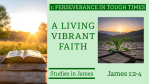 Our first study in James begins with a challenging truth: God uses the trials of life to test, strengthen and mature our faith. A living, vibrant faith is not one that avoids difficulties, but one that learns to trust Christ through them.
 - 67: The City of God
 Augustine lived and ministered during one of the most momentous periods of world history. He died on 28th August AD 430, during the third month of the Vandals’ siege of the city of Hippo. As he died, meditating upon the Penitential Psalms and longing to see the King in His beauty, he was deeply aware… Read more: 67: The City of God
 - 66: The Doctor of Grace“…work out your own salvation with fear and trembling, for it is God that worketh in you both to will and to do of his good pleasure” (Philippians 2:12-13) Augustine’s life experience had educated him in the experience of grace. His theology was experimental. Grace was no mere philosophy or theory. He had experienced the… Read more: 66: The Doctor of Grace
- 65: Pelagius Challenges Grace
 “For by grace are ye saved through faith; and that not of yourselves: it is the gift of God: Not of works, lest any man should boast.” (Ephesians 2:8-9) Pelagius was a British born monk who had spent his entire life in austerity while developing an erroneous yet deeply attractive set of beliefs. By the… Read more: 65: Pelagius Challenges Grace
 - 64: The Donatists; Schismatics or Separatists?
 “And in the midst of the seven candlesticks one like unto the Son of man, clothed with a garment down to the foot, and girt about the paps with a golden girdle.” (Revelation 1:13) Augustine’s North African Church was troubled by a division, which had its roots in the Diocletian persecution almost a century earlier.… Read more: 64: The Donatists; Schismatics or Separatists?
 - 63: The First Published Testimony
 “Come unto me, all ye that labour and are heavy laden, and I will give you rest.” ( Matthew 11:28) Augustine’s rise to leadership within the Church was rapid. Converted in AD 387 he was consecrated as bishop of Hippo in North Africa ten years later. By this time he was preparing his “Confessions”, which… Read more: 63: The First Published Testimony
 - The Twelfth: A Time to Reflect on Liberty
 The marches have ended, but the Twelfth remains an opportunity to reflect on the wider constitutional struggle represented by the Battle of the Boyne and the principles of liberty, conscience and government under law that emerged from that era. As America approaches her 250th birthday, it is worth remembering how the Bill of Rights of 1689 and the settlement defended by William III helped shape the wider tradition of constitutional freedom that influenced nations across the world.
 - 62: The Question of Augustine’s Son
 “Watch ye“ (Acts 16:13) Several years ago I delivered a talk on Augustine. An elderly father and grandfather questioned me at the door – “What happened to Augustine’s son?” This was a sound question and one that I had not quite covered. Augustine lived with a woman for many years, with whom he had fathered… Read more: 62: The Question of Augustine’s Son
 - 61: The Death of Monica
 “Precious in the sight of the LORDis the death of his saints.” (Psalm 116:15) Each of us must one day come to life’s final harbour. From there we embark upon the last journey—from time into eternity. Our earthly labour will be finished and we shall stand before God. After Augustine’s conversion he resolved to return… Read more: 61: The Death of Monica
 - 60: Tolle Lege
 “put ye on the Lord Jesus Christ” ((Romans 13:14) The Holy Ghost so powerfully convicted Augustine, that he was driven to tears and intense soul searching as he sought peace with God Seeking refuge under a fig tree in a quiet garden he heard a child sing a simple rhyme from a neighbouring garden –… Read more: 60: Tolle Lege
 - 59: The Mother, her Son and the Preacher
 “For this child I prayed” (1st Samuel 1:27) The mother was Monica, an extraordinarily devout North African Christian who was bitterly disappointed by her marriage to the spiritually careless Patricius. Augustine was her son. He was a brilliant academic who rejected his mother’s Christian faith. She became particularly concerned for her son’s soul, when he… Read more: 59: The Mother, her Son and the Preacher
 - 58: Feet of Clay
 “Let all bitterness, and wrath, and anger, and clamour, and evil speaking, be put away from you, with all malice” (Ephesians 4:31) Jerome for all his prodigious learning, had little reputation for godly grace and temperament. Whatever he learned from Scripture, he often failed to apply those aspects of Christian grace that reflect humility, patience,… Read more: 58: Feet of Clay
 - 57: A Bible for the Latin World
 “bring…the books, but especially the parchments” (2 Timothy 4:13) The name of Jerome will forever be associated with the translation of the Scriptures. His Latin Vulgate was the greatest literary achievement of the foremost biblical scholar of his generation. Born in 340 AD, dying in 419 AD – Jerome devoted his life to the pursuit… Read more: 57: A Bible for the Latin World
 - 56: The Monastic System Born
 “O wretched man that I am, who shall deliver me from the body of this death?” (Romans 7:24) The 4th century witnessed the rapid growth of organised Christian monasticism, built upon earlier ascetic traditions. This involved withdrawing from the ordinary affairs of the world which often involved taking vows of humility, poverty and chastity. At… Read more: 56: The Monastic System Born
 - 55: The Man with the Golden Mouth
 “A word fitly spoken is like apples of gold in pictures of silver.” (Proverbs 25:11) In the Antioch Church, from which the Paul and Barnabus were sent forth as missionaries, a woman called Anthusa gave birth to a son whom she called John. She instilled Christian virtues into her son, to such an extent that… Read more: 55: The Man with the Golden Mouth
 - The Christian Response to Immigration Riots in Northern Ireland
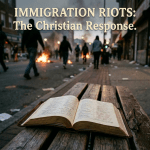 Recent events in Northern Ireland have raised serious questions about immigration, national identity, and community relations. As Christians, we must respond not according to fear or anger, but according to the teaching of Scripture.
 - Reasons to Continue Serving; Lessons from Corinth (12)
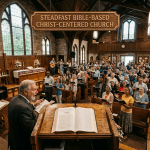 This final study brings Paul’s first epistle to the Corinthians to its triumphant conclusion, reminding believers that despite the trials, failures and discouragements of church life, they must continue steadfastly in the Lord’s work. The great motivation for perseverance is not ourselves but Christ—His death and resurrection, His present consolation, His reigning power, and His promised return. Because Christ is risen, reigning and coming again, every labour performed for Him is certain never to be in vain.
 - Spiritual Gifts; Lessons from Corinth (11)
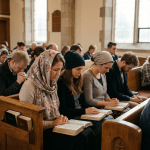 1st Corinthians 14 addresses the contentious issue of spiritual gifts, primarily focusing on the gift of tongues within the early Church. This article emphasises the need for proper understanding and practice, warning against counterfeit manifestations. Peter McIntyre highlights the distinction between genuine gifts for evangelism and modern practices perceived as emotional and unscriptural. The text suggests that the age of spontaneous spiritual gifts ended with the completion of the New Testament scripture. Furthermore, it cautions against the dangers of relying upon experiential Christianity, advocating for a biblically rooted faith. Ultimately, Paul urges believers to seek genuine gifts of the Spirit guided by sound doctrine.
 - 12: Evangelistic in Outreach; FPC Distinctives
 The article teaches that evangelism is central to the identity and mission of the Free Presbyterian Church because the Gospel is the only hope for lost sinners separated from God by sin. Drawing from James 5:19–20, it emphasises that every Christian has a responsibility to reach others through personal witness, Gospel preaching and practical outreach, trusting God to use these means in the conversion of souls. The chapter concludes by highlighting the glorious results of evangelism: sins are forgiven through Christ, lives are transformed by conversion and souls are rescued from spiritual and eternal death.
 - 11: Sanctified in Behaviour; FPC Distinctives
 This article argues that true Christian separation involves not only rejecting theological compromise but also pursuing personal holiness in everyday life. Contrasting biblical worldliness with godliness, it emphasises that believers must resist sinful desires, cultivate Christlike character through the power of the Holy Ghost, and live in a manner that honours Christ in every area of conduct. The chapter concludes with practical exhortations concerning love, self-discipline, Christian liberty, purity and spiritual vigilance, reminding believers that holiness is a lifelong pursuit for every child of God.
 - The Greatest of these is Love; Lessons from Corinthians (10)
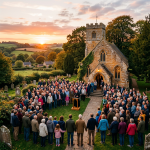 Paul teaches the troubled church at Corinth that God’s answer to division, pride, selfishness, and dysfunction is the transforming power of Christian love. This love — agape love — is the very nature of God, shed abroad in the hearts of believers by the Holy Ghost, and demonstrated perfectly through the sacrificial death of Christ upon the cross. Unlike gifts, abilities, or earthly attainments which fade with time, love never fails and remains the greatest evidence of genuine Christian faith and spiritual life.
 - 10: Biblical in Worship (C): FPC Distinctives
 This article emphasises that the prayer meeting is central to the life, strength and future of the Church, arguing that spiritual decline always follows the neglect of prayer while revival is born through earnest seeking after God. Using the example of the apostolic prayer meeting in Acts 1, the article highlights the importance of unity, persistence, participation and dependence upon the power of the Holy Ghost. Drawing upon the ministry of C.H. Spurgeon and Dr Martyn Lloyd-Jones, the chapter presents prayer as both a duty and a privilege through which believers find peace, spiritual power and blessing for Gospel witness.
 - 9: Biblical in Worship (B); FPC Distinctives
 This article explores the importance of the sacraments as Christ-appointed means of grace within the worship and life of the Church, focusing on Baptism and the Lord’s Supper. It explains the Free Presbyterian Church’s distinctive open stance on baptism, allowing liberty of conscience regarding the subjects and mode of baptism while rejecting baptismal regeneration and encouraging charitable fellowship despite differing views. The chapter concludes by emphasising the spiritual significance of the Lord’s Supper as a sacred act of obedience, thanksgiving, communion with Christ, and nourishment for the believer’s soul.
 - Every Member Matters; Lessons from Corinth (9)
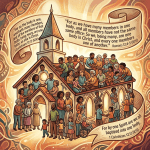 In 1 Corinthians 12 Paul reminds the deeply dysfunctional church at Corinth that believers are not isolated individuals but members of one living body in Christ. Every member has a God-given place and purpose, and the church only functions properly when unity, humility, interdependence, and loving relationships are maintained. The lesson from Corinth is that spiritual health is preserved when believers labour not for personal prominence, but for the good of the whole body and the glory of Christ.
 - MILLENNIAL STUDIES; Part 4 – Postmillennialism and the Great Commission
 This article argues that postmillennialism best reflects the teaching of Scripture by presenting the millennium as a future era of widespread gospel triumph before Christ’s return. Drawing especially from Revelation 20, Romans 11, the Great Commission, and numerous Old Testament prophecies, it contends that the conversion of the nations — including a great ingathering of the Jewish people — will lead to a period in which the influence of Christianity transforms societies throughout the world. While rejecting political coercion and utopianism, the article calls Christians to labour in prayer, evangelism, and missions with confidence that Christ will ultimately subdue the nations through the power of the gospel before His final return and the dawn of the new heavens and the new earth.
 - The Sanctity and Solemnity of the Lord’s Supper; Lessons from Corinth (8)
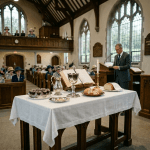 This study brings us to the most sacred and solemn moment of the Christian experience—communing with Christ and with one another through partaking of the bread and wine in faith at the Lord’s Table. The Corinthian church was flawed in that the Lord’s Table had degenerated into a worldly feast, and the true meaning was… Read more: The Sanctity and Solemnity of the Lord’s Supper; Lessons from Corinth (8)
 - Still Waters and True Peace
 𝐌𝐢𝐝𝐰𝐞𝐞𝐤 𝐌𝐚𝐧𝐧𝐚 🍞 🌊 𝐒𝐓𝐈𝐋𝐋 𝐖𝐀𝐓𝐄𝐑𝐒 𝐀𝐍𝐃 𝐓𝐑𝐔𝐄 𝐏𝐄𝐀𝐂𝐄 🌊 Nestling in a quiet western corner on the Co. Fermanagh border with Co. Monaghan is Killyfole Lake. It is an idyllic spot, with a peaceful circular walk around its shore. During our recent beautiful spring weather, I walked this lake for the first time in… Read more: Still Waters and True Peace
 - 𝐓𝐇𝐄 𝐆𝐎𝐃 𝐖𝐇𝐎 𝐌𝐄𝐀𝐒𝐔𝐑𝐄𝐒 𝐎𝐂𝐄𝐀𝐍𝐒 𝐀𝐍𝐃 𝐂𝐀𝐑𝐑𝐈𝐄𝐒 𝐋𝐀𝐌𝐁𝐒
 𝐏𝐚𝐬𝐭𝐨𝐫𝐬 𝐌𝐢𝐝𝐰𝐞𝐞𝐤 𝐌𝐚𝐧𝐧𝐚 🍞 🤲🐑 𝐓𝐇𝐄 𝐆𝐎𝐃 𝐖𝐇𝐎 𝐌𝐄𝐀𝐒𝐔𝐑𝐄𝐒 𝐎𝐂𝐄𝐀𝐍𝐒 𝐀𝐍𝐃 𝐂𝐀𝐑𝐑𝐈𝐄𝐒 𝐋𝐀𝐌𝐁𝐒 🐑🤲 A couple of weeks ago, our devotional looked at When Grasshoppers Look at the Stars, where I pondered the immensity of God, the majesty of the universe, and the apparent insignificance of man. I say apparent because those whom God calls… Read more: 𝐓𝐇𝐄 𝐆𝐎𝐃 𝐖𝐇𝐎 𝐌𝐄𝐀𝐒𝐔𝐑𝐄𝐒 𝐎𝐂𝐄𝐀𝐍𝐒 𝐀𝐍𝐃 𝐂𝐀𝐑𝐑𝐈𝐄𝐒 𝐋𝐀𝐌𝐁𝐒
 - The Head Covering, Does it really matter? – Lessons from Corinth (7)
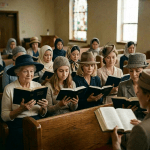 This instalment, of a series looking at contemporary lessons from the Church of Corinth, examines a contentious passage from 1st Corinthians regarding women’s head coverings in church. It highlights the distinction of genders as per biblical teachings, contrasting it with contemporary feminist views that blur these differences. Peter McIntyre asserts that the head covering symbolises God’s ordained order and should be embraced with conviction during worship.
 - 8: Biblical in Worship (A); FPC Distinctives
 Should Worship be Biblical or Fashionable? Amongst evangelical Christians there is great interest in modern and contemporary worship styles. The praise band has been introduced with the thought that this will appeal to younger people and help to enlarge the church. In some cases, this approach works. But does this mean the approach is correct? … Read more: 8: Biblical in Worship (A); FPC Distinctives
 - On the Case of Pastor Clive JohnstonAll evangelical Christians ought to be deeply concerned about the case of Pastor Clive Johnston. Pastor Johnston was arrested for preaching the gospel outside Coleraine Hospital on Sunday 7th July 2024. His only offence was preaching on the fringes of the exclusion zone created by legislation passed by the Northern Ireland Assembly, which prohibits protests… Read more: On the Case of Pastor Clive Johnston
- REMEMBERING THE SERVANT QUEEN
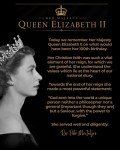 As I watched King Charles III pay tribute to his mother, Queen Elizabeth II, on what would been her one hundredth birthday, my heart and mind returned to those never to be forgotten days when we mourned her passing. Most of us had never met our late Queen yet she was like a friend, a… Read more: REMEMBERING THE SERVANT QUEEN
 - 7: Presbyterian in Government (B); Male Leadership and the Scriptures; FPC Distinctives
 This article argues that Scripture clearly teaches male leadership in the ordained offices of the Church, while affirming the valuable and necessary ministry of women in prayer, service, teaching, and Christian witness. It rejects spiritual chauvinism, emphasising that women are equal heirs of grace and have always played a vital role in the life of the Church, as seen in examples such as Phebe and the women at prayer in Acts. The final challenge is directed toward men, calling them to rise to biblical leadership with godly character, faithfulness, and spiritual maturity for the good of Christ’s Church.
 - Opinionated Saints and Divided Fellowships; Lessons from Corinth (6)
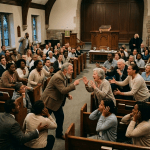 In First Epistle to the Corinthians 8, Paul addresses how strong opinions over non-essential matters can create unnecessary division within the church. He teaches that Christian liberty must be governed by humility, love, and respect for the conscience of weaker brethren, rather than pride or personal preference. When believers learn the difference between fundamental truths and personal convictions, unity is preserved and Christ is honoured.
 - 6: Presbyterian in Government (a); FPC Distinctives
 This article explains that Presbyterianism is not merely a historical label but a biblical system of church government based on the rule of elders. It outlines the distinct roles of ministers, elders, deacons, and the congregation, showing how each is rooted in New Testament teaching and contributes to the order and unity of the Church. Ultimately, it emphasises that authority rests collectively in the eldership under Christ, who alone is the Head of the Church, rather than in individual leaders or external powers.
 - 5: Separatist in Practice; FPC Distinctives
 This article argues that biblical separation from doctrinal error is both necessary and rooted in Scripture, particularly where the Gospel is compromised. It traces this conviction historically through Irish Presbyterianism, highlighting key moments such as the 1927 Davey trial and the events leading to the formation of the Free Presbyterian Church in 1951. The chapter contends that ongoing ecumenical and modernist trends within the Presbyterian Church in Ireland justify the continued need for a separate witness. At the same time, it urges charity, recognising true believers in other denominations while maintaining that faithfulness to truth must remain paramount.
 - WHEN GRASSHOPPERS LOOK AT THE STARS
 Last week many were enthralled by the ingenuity, creativity and sheer courage of NASA’s Artemis 2 mission to the moon. The research, technology and mathematical calculations in sending four astronauts 250,000 miles across space to orbit the moon, returning to Earth to within a mile of their target zone in the Pacific is awesome. People… Read more: WHEN GRASSHOPPERS LOOK AT THE STARS
 - 4: Protestant in Conviction; FPC Distinctives
 This chapter argues that true Protestantism, as upheld within the Free Presbyterian Church, is not a cultural or political identity but the recovery of New Testament Christianity grounded in Scripture alone. It contends that the Protestant Reformation restored essential Gospel truths—especially justification by faith—and is best summarised in the Five Solas. Ultimately, Protestantism is presented as a living, confessing principle that transforms individuals and societies through the power of the Gospel.
 - 3: Reformed in Doctrine (b); Why the King James Version; FPC Distinctives
 This article defends the use of the Authorised (King James) Version as a faithful and reliable translation of Scripture grounded in the preserved Traditional Text. It contrasts this with the Alexandrian manuscript tradition, arguing that modern translations introduce uncertainty through textual variation and critical methods. Ultimately, it affirms confidence in the Authorised Version as maintaining the purity and integrity of God’s Word for the Church.
 - Gifts and Opportunities for the Married and Unmarried; Lessons from Corinth (5)
 Corinth was a city shaped by pagan culture, where Christian morality was neither known nor naturally understood. The moral challenges faced by the early church in Corinth arose, in part, from this cultural background. Into this context, the Apostle Paul addresses practical and doctrinal questions concerning marriage, singleness, and Christian living in 1 Corinthians 7. In doing so, Paul lays a foundation not only for individual households but also for the health and witness of the wider Christian community. In an age where Christian values are often questioned or set aside, these teachings remain deeply relevant. In this chapter, Paul steps back to provide foundational teaching on marriage and singleness—principles that would shape not only the church but, in time, much of western society. In days when Christian culture is being undermined and challenged, this teaching is more relevant than ever. 1 Corinthians 7 provides a balanced and practical framework for understanding marriage, singleness, and Christian living. It affirms the goodness of marriage, the value of singleness, the call to faithfulness, and the importance of contentment in every circumstance. Whether in marriage or singleness, the call is the same: to live wholly for Christ, with lives marked by faithfulness, contentment, and devotion to His will.
 - 2: REFORMED IN DOCTRINE; FPC Distinctives
 In this second article on the distinctives of the Free Presbyterian Church of Ulster, Peter McIntyre sets forth a concise summary of Reformed theology. It highlights the foundational doctrines of the Christian faith as articulated in the Westminster Confession of Faith, establishes a distinctly Christian worldview, and concludes with a clear presentation of the doctrines of the grace of God.
 - 1: WHY DISTINCTIVES? FPC Distinctives
 Why does the Church need standards, and what place do “Distinctives” hold within them? In this opening article, Rev. A. P. McIntyre explores the biblical and historical basis for doctrinal standards, and explains how the Distinctives of the Free Presbyterian Church of Ulster define its identity, guide its practice, and call believers to faithful Christian living—while remaining firmly subject to the authority of Scripture.
 - BECAUSE HE LIVES; Easter Sunday Meditation
 Easter Sunday Meditation “Because I live, ye shall live also.” John 14:19 There is one word in that verse that carries great weight: “because”. It is a word of explanation, a word that gives meaning to what follows. Why can the believer have hope? Because Christ lives. Why can the trembling soul find peace? Because… Read more: BECAUSE HE LIVES; Easter Sunday Meditation
 - GOOD FRIDAY REFLECTION
 ✝️ 𝐆𝐨𝐨𝐝 𝐅𝐫𝐢𝐝𝐚𝐲 𝐑𝐞𝐟𝐥𝐞𝐜𝐭𝐢𝐨𝐧 📖 𝐋𝐮𝐤𝐞 𝟐𝟑:𝟑𝟑𝐀𝐧𝐝 𝐰𝐡𝐞𝐧 𝐭𝐡𝐞𝐲 𝐰𝐞𝐫𝐞 𝐜𝐨𝐦𝐞 𝐭𝐨 𝐭𝐡𝐞 𝐩𝐥𝐚𝐜𝐞, 𝐰𝐡𝐢𝐜𝐡 𝐢𝐬 𝐜𝐚𝐥𝐥𝐞𝐝 𝐂𝐚𝐥𝐯𝐚𝐫𝐲, 𝐭𝐡𝐞𝐫𝐞 𝐭𝐡𝐞𝐲 𝐜𝐫𝐮𝐜𝐢𝐟𝐢𝐞𝐝 𝐡𝐢𝐦, 𝐚𝐧𝐝 𝐭𝐡𝐞 𝐦𝐚𝐥𝐞𝐟𝐚𝐜𝐭𝐨𝐫𝐬, 𝐨𝐧𝐞 𝐨𝐧 𝐭𝐡𝐞 𝐫𝐢𝐠𝐡𝐭 𝐡𝐚𝐧𝐝, 𝐚𝐧𝐝 𝐭𝐡𝐞 𝐨𝐭𝐡𝐞𝐫 𝐨𝐧 𝐭𝐡𝐞 𝐥𝐞𝐟𝐭. On Good Friday, let us pause and draw near in reverence to that solemn hill outside Jerusalem. 🕊️ There… Read more: GOOD FRIDAY REFLECTION
 - The King is Coming; Palm Sunday MeditationToday is Palm Sunday, and I would like to think for a little while about the first Palm Sunday, when Jesus Christ came into Jerusalem to keep the feast of the Passover. We read of it in Matthew 21. He came riding upon a donkey, meek and lowly, yet truly the King. What a scene… Read more: The King is Coming; Palm Sunday Meditation
- Millennial Studies Part 3; The Major Flaws in the Amillennial System
 This article critiques Amillennialism by examining its interpretation of the binding of Satan, its handling of Israel in Romans 11, and its overall outlook on the future of the Church. It argues that these areas reveal tensions and limitations within the Amillennial framework, particularly when compared with the broader testimony of Scripture. In contrast, Postmillennialism is presented as offering a more coherent and hopeful vision of redemptive history, anticipating the progressive triumph of the gospel in the world.
 - WHEN CONFESSION MATTERED; The 1927 Heresy Trial and the Continuity of Presbyterian Witness
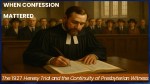 1: Why Did Presbyterianism Divide? This year the Free Presbyterian Church of Ulster marks 75 years of gospel witness since its founding on St Patrick’s Day, 17 March 1951. We give thanks for the mercies of the Lord that sustained the witness. At the same time, we maintain that Christ ultimately regards His Church as… Read more: WHEN CONFESSION MATTERED; The 1927 Heresy Trial and the Continuity of Presbyterian Witness
 - CHURCH SCANDAL SHOCKS SOCIETY (Lessons from Corinth 4)
 The Corinthian Church had many issues that Paul had to grapple with in this first epistle. These included internal divisions and a flawed approach to worship. These included internal Church matters, however, which had little bearing on society at large. The world has little understanding, nor can they see the relevance, of our discussion around theological differences. When a moral scandal erupts, however, among those who profess the name of Christ this is a very different matter. Suddenly everyone is interested and fascinated. This is exactly what happened in the Church at Corinth. It was a Church scandal, which became a public outrage because it truly shocked society.
 - Building Churches through Building Faith (Lessons from Corinth 3)
 “Ye are God’s building” (1 Corinthians 3:9). True church growth is not merely about numbers, but about spiritual depth. Christ is the only foundation, and every believer is called to build upon Him with faith, perseverance, and obedience. As we endure trials, practise discipline, and labour together in fellowship, God strengthens His Church from the inside out. One day, the quality of our work will be revealed. May we build with gold, silver, and precious stones—lives shaped by prayer, holiness, and love—so that our faith endures and Christ is glorified in His Church.
 - MILLENNIAL STUDIES; Part 2 – A Cautionary Word About Dispensationalism
 In our previous study we noted that faithful believers differ on millennial interpretation. This article narrows the focus to one particular system: pre-tribulation dispensationalism. While many sincere Christians hold this view, it deserves careful biblical and pastoral scrutiny. Pre-tribulation teaching proposes a secret rapture, a sharp division between Israel and the Church, and distinct divine programmes unfolding in separate dispensations. At first glance these distinctions may appear harmless — even helpful. Yet when pressed to their logical conclusions, they risk fragmenting the unity of Scripture and obscuring the Bible’s grand covenantal storyline. Is Christ’s return secret or public? Does God have two peoples or one? Is there one gospel across all ages, or differing administrations of salvation? These are not speculative questions. They strike at the heart of redemptive history and carry serious pastoral consequences. This study argues that Scripture presents one unfolding covenant of grace, one people of God, and one gospel grounded in Christ alone. Far from diminishing hope, this covenantal vision strengthens it — pointing not to postponed promises, but to the progressive triumph of the gospel among the nations.
 - The Cross of Christ; Our Point of Unity (Lessons From Corinth 2)
 This study centres on Paul’s declaration, “But we preach Christ crucified,” showing the cross as the Church’s true point of unity. Writing to a divided Corinthian church, Paul directs believers away from personalities, pride, and shallow thinking, and back to Christ alone. The cross heals division, humbles human pride, and defines authentic Christianity as wisdom, righteousness, sanctification, and redemption found only in Christ. It is the heart of the gospel message and the glory of the Church. By glorying only in the cross, believers are united, transformed, and kept faithful to the truth in a distracted and superficial age.
 - MILLENNIAL STUDIES; PART 1 – Personal Questions
 Millennial Studies – Part 1: Personal Questions Eschatology has long been an area of deep conviction—and deep disagreement—within the Church. While my own denomination allows a range of views to be held with humility and charity, Scripture presses us to think carefully about the future course of God’s purposes in history. In my early ministry, I was shaped by a non-dispensational, post-tribulation premillennialism. Yet over time, serious questions began to emerge. How does a millennial age populated by unbelievers square with the New Testament’s presentation of Christ’s return as the final judgment? How can the finality of the cross be reconciled with the reintroduction of temple sacrifices? Why does a literal millennium rest almost entirely on one highly symbolic chapter of Scripture? More than these exegetical concerns, I became troubled by the pastoral implications. Does our eschatology nurture hope, prayer, and expectation of gospel advance—or does it quietly condition the Church to expect only decline until Christ returns? This first study traces the questions that led me to re-examine premillennialism and to reconsider the biblical teaching on the Kingdom of God, the reign of Christ, and the hope of revival in history. It is written not to provoke controversy, but to encourage thoughtful, charitable, and Scripture-driven reflection on matters that profoundly shape our faith, prayer, and mission.
 - A Church Made Perfect By Grace Alone (Lessons from Corinth 1)
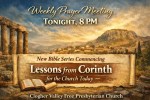 SERIES INTRODUCTION Lessons from Corinth for the Church Today The First Epistle to the Corinthians is one of the most searching and pastoral letters in the New Testament. Written to a young and troubled congregation in one of the most morally complex cities of the ancient world, it reveals both the frailty of God’s people and the faithfulness of God’s grace. The church at Corinth was richly gifted, yet deeply divided; called to holiness, yet frequently entangled with the spirit of the age. Within its walls were problems of pride, immorality, disorder in worship, doctrinal confusion, and strained relationships between believers. Yet despite all this, Paul never denies their identity as the church of God, sanctified in Christ Jesus and sustained by divine grace. This series seeks to draw lessons from Corinth for the Church in our own generation. Though centuries removed, the challenges faced by the Corinthians are strikingly familiar. Questions of unity, moral purity, Christian liberty, worship, spiritual gifts, love, and perseverance remain pressing matters for Christ’s people today. Each study will consider how the gospel of Christ speaks into these areas—not merely to correct error, but to shape a church that is humble, loving, ordered, and steadfast. Above all, this series will remind us that the Church is not made perfect by human wisdom or discipline alone, but by the grace of God in Jesus Christ, who calls, keeps, and completes His people. May the Lord use these studies to deepen our love for Christ, strengthen our unity, and equip us to live faithfully in a Corinthian world.
 - 9: The Christmas Gospel𝗥𝗲𝗮𝗱𝗶𝗻𝗴 𝟵 – John 1:1-14𝗧𝗛𝗘 𝗪𝗢𝗥𝗗 𝗠𝗔𝗗𝗘 𝗙𝗟𝗘𝗦𝗛 ✨ Thank you to Luke for his reading from Knockmany and for the superb trumpet playing. Matthew and Luke, as they related the story of Jesus’ birth capture what Joseph and Mary, the shepherds and the wise men saw – the child born of a woman 👶.… Read more: 9: The Christmas Gospel
- 8: The Christmas Star𝗥𝗲𝗮𝗱𝗶𝗻𝗴 𝟴 – Matthew 2:1-12𝗧𝗛𝗘 𝗪𝗜𝗦𝗘 𝗠𝗘𝗡 𝗦𝗘𝗘𝗞 𝗧𝗛𝗘 𝗞𝗜𝗡𝗚 ✨ Thank you to Taliyah for this beautiful reading and to her dad Paul for the rendition on the flute 🪈. The mystery of the wise men, the magi, who travelled across the desert following the star to greet the new king, has never been… Read more: 8: The Christmas Star
- 7: The Shepherd’s Visit𝗥𝗲𝗮𝗱𝗶𝗻𝗴 𝟳 – Luke 2:8-20 🐑 𝗧𝗛𝗘 𝗦𝗛𝗘𝗣𝗛𝗘𝗥𝗗’𝗦 𝗩𝗜𝗦𝗜𝗧 ✨ The shepherds had a heart and a spirit that the more sophisticated town dwellers of Bethlehem did not have. Where those preoccupied with making money left Jesus out of their thinking, the shepherds hastily abandoned their midnight watch, fixing their priorities on something infinitely greater,… Read more: 7: The Shepherd’s Visit
- 6: No Room in the Inn𝗥𝗲𝗮𝗱𝗶𝗻𝗴 𝟲 – Luke 2:1-7𝗡𝗢 𝗥𝗢𝗢𝗠 𝗜𝗡 𝗧𝗛𝗘 𝗜𝗡𝗡 🚪✨ The nativity story has been relegated into the realm of romantic fairy tales, where the true meaning has been lost because of man’s inability to accept the truth 📖. There was nothing charming about a young woman forced to give birth in a stable. Being… Read more: 6: No Room in the Inn
- 5: Gabriel Visits Mary𝗥𝗲𝗮𝗱𝗶𝗻𝗴 𝟱 – Luke 1:26-38Gabriel Visits Mary✨ 👦🏻👧🏼 So Judah and Kezia are the real stars today … what a beautiful setting and what beautiful voices. ⭐️🫏 Enter the stage of human history one of the most famous and remarkable women who ever lived, the Virgin Mary; the young woman chosen to give birth to… Read more: 5: Gabriel Visits Mary
- 4: Peace for the World𝗥𝗲𝗮𝗱𝗶𝗻𝗴 𝟰 – Isaiah 11:1-9 PEACE 𝗙𝗢𝗥 𝗧𝗛𝗘 𝗪𝗢𝗥𝗟𝗗 ✨👦🏻👦🏻👧🏼 Today we have a special treat from three more very special little people. Enjoy the Dalton family read a poem written by their Aunty Jayne. 👧🏼👦🏻👦🏻. The Old Testament Scriptures identify the Messiah as to His humanity, His nationality and His family. He would be… Read more: 4: Peace for the World
- 3: Unto us a Child is Born𝗥𝗲𝗮𝗱𝗶𝗻𝗴 𝟯 – Isaiah 9:2,6,7 ✨ 𝗨𝗡𝗧𝗢 𝗨𝗦 𝗔 𝗖𝗛𝗜𝗟𝗗 𝗜𝗦 𝗕𝗢𝗥𝗡 ✨ 👧🏼👦🏻 Thank you to the two very special little people at the end – what a performance! 👧🏼👦🏻 At Christmas we reflect upon a child who was born to bring hope to a world filled with hopelessness, to bring light to a… Read more: 3: Unto us a Child is Born
- PSALM 81; A Psalm for the Solemn Feast Day
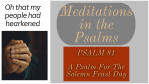 Psalm 81 – A Psalm for the Solemn Feast Day “Blow up the trumpet in the new moon… on our solemn feast day.” Psalm 81 calls God’s people to joyful, reverent worship, rooted in remembrance and obedience. It reminds us that public worship is no empty ritual, but a holy gathering where God speaks, hearts are searched, and souls are fed. As Israel gathered to remember redemption and receive God’s Word, so we come on the Lord’s Day to listen, repent, and be satisfied with the finest of His provision. “Oh that my people had hearkened unto me…” Will we listen—and be filled?
 - 2: The Saviour Promised to Abraham𝗥𝗲𝗮𝗱𝗶𝗻𝗴 𝟮 – 𝗚𝗲𝗻𝗲𝘀𝗶𝘀 22:15-18 ✨ 𝗧𝗛𝗘 𝗦𝗔𝗩𝗜𝗢𝗨𝗥 𝗣𝗥𝗢𝗠𝗜𝗦𝗘𝗗 𝗧𝗢 𝗔𝗕𝗥𝗔𝗛𝗔𝗠 ✨ This reading contains the revelation that the man who would save mankind, would be born of the family of Abraham; He would be a man who would bless all families of the earth regardless of ethnicity. Hope for all mankind 🌍! Many years… Read more: 2: The Saviour Promised to Abraham
- 1: THE FIRST PROMISE OF A SAVIOUR𝗥𝗲𝗮𝗱𝗶𝗻𝗴 𝟭 𝗚𝗲𝗻𝗲𝘀𝗶𝘀 𝟯 𝘃 𝟭𝟯 𝟭𝟵✨ 𝗧𝗛𝗘 𝗙𝗜𝗥𝗦𝗧 𝗣𝗥𝗢𝗠𝗜𝗦𝗘 𝗢𝗙 𝗔 𝗦𝗔𝗩𝗜𝗢𝗨𝗥 ✨ 𝘈𝘯𝘥 𝘴𝘰 𝘵𝘩𝘦 𝘊𝘩𝘳𝘪𝘴𝘵𝘮𝘢𝘴 𝘴𝘵𝘰𝘳𝘺 𝘣𝘦𝘨𝘪𝘯𝘴 … 🎄 The Christmas story begins almost at the commencement of human and world history 🌍.Not quite the beginning, because our first parents were initially blessed with everlasting life in a disease free paradise 🌿.… Read more: 1: THE FIRST PROMISE OF A SAVIOUR
- Nine Christmas ReadingsChristmas is a very special time in our church calendar ✨ While, over the years, it has become increasingly commercialised, our desire is always to bring it back to the true meaning of Christmas ✝️ Beginning tomorrow 📖, over the course of nine days, we invite you to join us for 𝐓𝐡𝐞 𝐍𝐢𝐧𝐞 𝐋𝐞𝐬𝐬𝐨𝐧𝐬 𝐨𝐟… Read more: Nine Christmas Readings
- PSALM 80; Visit this Vine
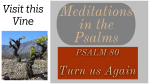 The wild boar may ravage the vine, but it cannot destroy the root. For anyone longing for personal or national renewal, Psalm 80 offers hope.
 - Psalm 79; How Long, Lord
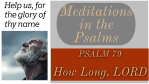 “How Long, Lord?” — A Cry for Our Times (Psalm 79) Psalm 79 opens with a desperate question that echoes across centuries: “How long, Lord?” Born from the ashes of Jerusalem’s destruction, this psalm captures the grief of a man staring at ruins—ruins of a city, a temple, and a people once devoted to God. But its message is not ancient history. It speaks directly into our own age. As Israel mourned the defiling of the temple, we too must face the defiling of God’s house in our day—truth diluted, holiness minimized, and worldliness welcomed into the very place meant for worship. Psalm 79 confronts us with the reality that judgment begins at the house of God, yet it also shows us the path forward: humble repentance, earnest prayer, and a renewed passion for God’s glory. Amid the lament, a spark of hope rises. Even in the darkest moments, God preserves a remnant, strengthens what remains, and restores His people for the honour of His name. Psalm 79 is more than a cry of despair—it is the beginning of revival.
 - PSALM 78; From the Fathers to the Children
 Psalm 78 calls us to remember the stories of God’s works—stories that instruct, warn, and inspire each new generation. By looking back at Israel’s history, we learn how easily hearts drift, how quickly grace is forgotten, and how faithfully God preserves His people.
 - Psalm 77; ASAPH’S TEARS IN THE NIGHT
 Psalm 77: Asaph’s Tears in the Night Have you ever lain awake in the darkness, your heart heavy with worry, your pillow wet with tears? In Psalm 77, Asaph records just such a night of anguish — a time when faith faltered and questions flooded his soul. Yet in his honesty before God, he discovers a path from despair to renewed trust. Through tears and trembling, Asaph learns that even when God seems silent, He is still near, still faithful, still leading His people like a shepherd through the storm. This heartfelt meditation explores the Psalmist’s journey from doubt to devotion, reminding us that our darkest nights can become sacred ground where faith is refined. As we remember God’s past mercies and look to Christ, our souls find rest in the One who never forgets to be gracious. (A devotional reflection on Psalm 77 — “Asaph’s Tears in the Night.”)
 - After Darkness, Light: How a German Monk Changed the World — and Reached UlsterAfter Darkness, Light: How a German Monk Changed the World Over five centuries ago, a miner’s son named Martin Luther lit a flame that changed the course of history. In an age when the Bible was locked away and salvation was sold for silver, Luther rediscovered the truth that “the just shall live by faith.” His bold stand against corruption — and his translation of Scripture into the language of the people — unleashed a movement that swept across Europe, reshaped nations, and reached as far as Ulster itself. From Wittenberg to Bangor, the Gospel light spread, bringing freedom, education, and faith to ordinary men and women. This post traces that story — from the darkness of medieval superstition to the radiant dawn of God’s Word rediscovered — and reminds us that the same light still shines today: Post Tenebras Lux — After Darkness, Light.
- WHAT IS PROTESTANTISM?As we commemorate another Reformation anniversary it is worth asking the question – ‘What is Protestantism?’ To some, Protestantism represents a church; to others, a political ideology, a sectarian identity, or a cultural association. There is a measure of truth in each of these perceptions. Since the Reformation, many churches have borne the name Protestant.… Read more: WHAT IS PROTESTANTISM?
- GODLY CONTENTMENT
 Contentment isn’t having everything we want — it’s being satisfied with all God gives.
 - THE GODLY MAN’S WALK
 The godly life is a daily walk ordered by the Lord, shaped by His Word, sustained by His grace, and upheld by His hand.
 - THE GOD OF ISRAEL; OUR GOD
 Moses’ last words remind us: God is above us, beneath us, before us, with us, within us, and lifting us. The God of Israel is our God, revealed fully in Christ alone — our refuge, our joy, our salvation.
 - The Christian Journey: Embracing Our Heavenly Destination
 Heaven is the Christian’s true destination — the place of no more: no more curse, no more tears, no more death, no more separation. At the centre is Christ, the Lamb who bore our curse, wiped away our sorrow, and conquered death in victory. Let this hope inspire believers to live faithfully — and invite seekers to come to the cross, where there is still room.
 - THE ETERNAL LOVE OF THE EVERLASTING FATHER
 As explored in the previous study, “Tears Wiped Away by God’s Handkerchief,” the entrance into eternal joy is paradoxically marked by tears—tears that God Himself will wipe away. But who is this God that comforts so tenderly? He is a Father—not a distant deity, but a loving, present, personal God.
 - TEARS WIPED AWAY BY GOD’S HANDKERCHIEF
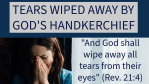 Why are there tears at the very threshold of eternal joy? This is the riddle that Revelation hints at, and one that invites deep reflection. This is a curious conundrum – a riddle which will never be solved in time. Eternity is dawning. Heaven is beginning for the ransomed souls. They are entering paradise where… Read more: TEARS WIPED AWAY BY GOD’S HANDKERCHIEF
 - Psalm 76; Harnessing the Wrath of Man
 This text teaches us that the sovereign God can seize control of human wrath. He can bring it under His control. Angry men with their wicked aspirations, unknown to themselves, carry out God’s purposes.
 - 2024 IN REVIEW2024 IN REVIEW…Pastoral letter reviewing 2024 in the life of our congregation. This letter accompanied the published financial report for the year in question.
- Between Two SeasLo! on a narrow neck of land,‘Twixt two unbounded seas, I stand,Secure, insensible;A point of time, a moment’s space,Removes me to that heavenly place,Or shuts me up in hell. Telford, John. 1900. The Life of the Rev. Charles Wesley. London: Wesleyan Methodist Book Room.
- PSALM 75; God Presiding over World Affairs
 In an age of war, moral collapse, and political uncertainty, Psalm 75 shines as a beacon of truth. It reminds us that behind all human affairs stands the sovereign hand of God. For promotion cometh neither from the east,nor from the west, nor from the south.But God is the judge:he putteth down one, and setteth… Read more: PSALM 75; God Presiding over World Affairs
 - Psalm 74 and Prayer for the Defeat of Assisted Suicide
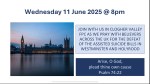 This proposed legislation preys on the most vulnerable. Experience from other countries shows that such a law will quickly morph into full blown euthanasia given time. Once the sanctity of life is breached the flood-tide will quickly overwhelm. The experience of abortion indicates that that this is so. Does the fact that 90% of all Downs Syndrome babies are aborted not demonstrate that we as a society do not value disability. If God in His sovereignty permits this wicked, cruel and pernicious Bill to pass let it not be because we have not prayed enough!
 - PSALM 73; God is Good
 IS GOD STILL GOOD WHEN MY CIRCUMSTANCES APPEAR TO BE BAD?….A CALL TO PERSONAL DEVOTION, FAITHFULNESS AND WORSHIP, ESPECIALLY IN HARDSHIP.

Clogher Valley Free Presbyterian Church
Teaching the Scriptures & Preaching the Gospel in a Fallen World
Co Tyrone, Northern Ireland
|

