
For the sons of Korah…How amiable are thy tabernacles
Pictures of True Worship from the Heart of a Man Seeking After God
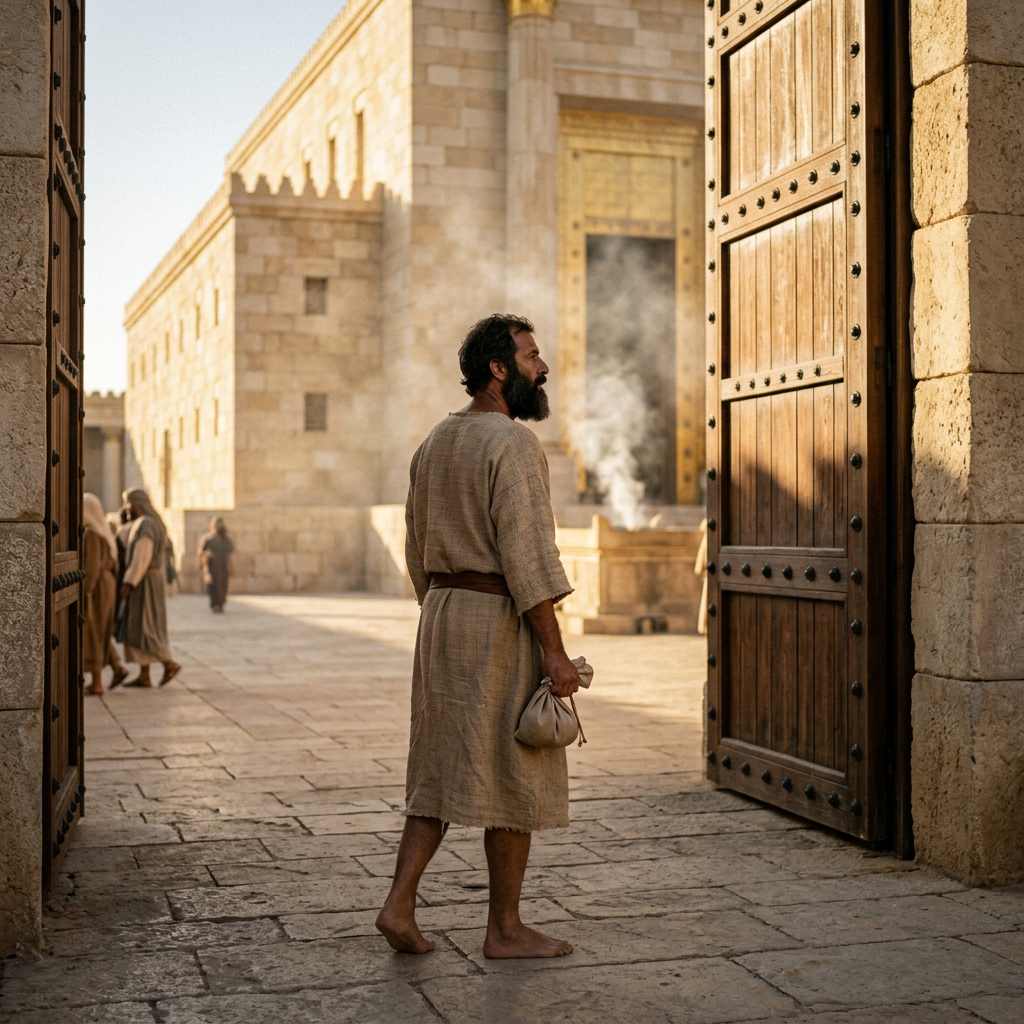
The sons of Korah were a branch of the family of Levi who had a very specific task. They were the keepers of the gates of the tabernacle appointed by King David, a service that we assume continued on into the temple in Solomon’s time (1 Chronicles 9). The sons of Korah therefore spent all their time in the place of worship.
This Psalm, dedicated to these faithful servants of Jehovah, focuses upon worship.
This Psalm is not merely about worship as a duty. True worship reaches beyond outward observance; it engages the heart, awakening within the soul a longing for the living God.
The Psalmist is concerned with true worship. This Psalm is written with the true worshipper in mind.
Christ in later years would teach what true worship was:
“God is a Spirit: and they that worship him must worship him in spirit and in truth.”
John 4:24
This Psalm in a very practical manner reveals, what spiritual worship is.
This is a devotional Psalm of the highest order, one of my personal favourites.
As we ponder these ancient words may our souls find the courts of the Lord’s House even more amiable; lovely and beautiful.
The Heart of the True Worshipper
“How amiable are thy tabernacles, O LORD of hosts!
My soul longeth, yea, even fainteth for the courts of the LORD:
my heart and my flesh crieth out for the living God.
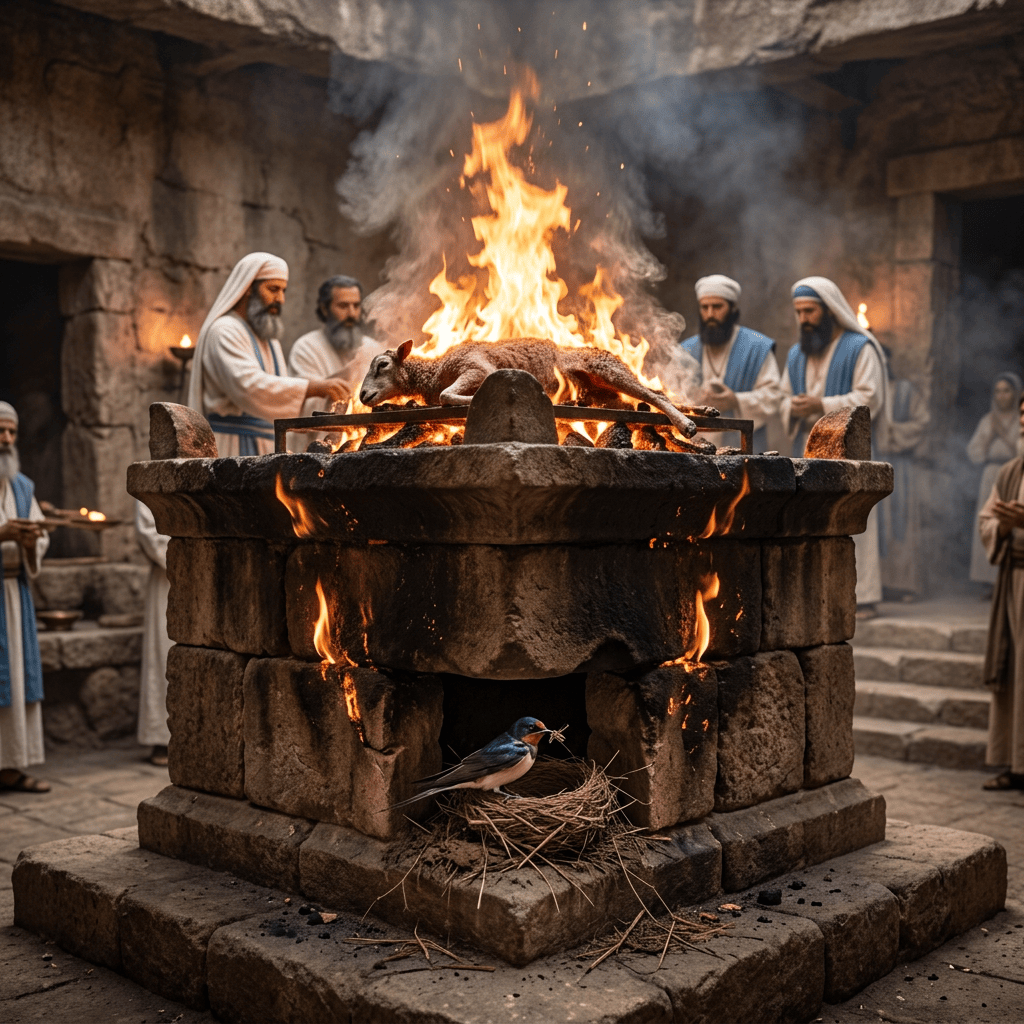
Yea, the sparrow hath found an house,
and the swallow a nest for herself, where she may lay her young,
even thine altars, O LORD of hosts, my King, and my God.”Psalm 84:1-3
The Psalmist is a thirsty man in a wilderness, in a barren land. His drought is not one of the body but of the soul. He is crying out for the living God. It is not merely the place of worship he longs for. It is for God. Not an idol – not a piece of stone or wood – But the living God.
True worship is a meeting with God. It is not appearing in a set place at an established time to practiced well worn rituals such as Psalm singing and hymn singing. True worship is not gathering with a society of familiar friends treading the paths that our parents and grandparents walked in. While place and time is important, while company of God’s people is needful, while the singing and praying is necessary, while the preaching is necessary – all of this is lost if we are not meeting with God. The true worshipper must have a heart for God; a heart that is lost and alone without God.
The Psalmist reflects with a sense of jealousy upon the swallow which found a place near the altar where she made her nest and raised her young. This was as close as anyone could get to God, right under the altar.
We need a heart for intimacy with God. Like the swallow near the altar, we find shelter beside the place of sacrifice. Yet at Calvary we are not consumed by the fire of judgment, for Another has entered those flames on our behalf. From the cross there comes warmth, comfort and reconciliation with God.
Lead me to Calvary
The Character of the True Worshipper
“Blessed are they that dwell in thy house:
they will be still praising thee. Selah.
Blessed is the man whose strength is in thee;
in whose heart are the ways of them.
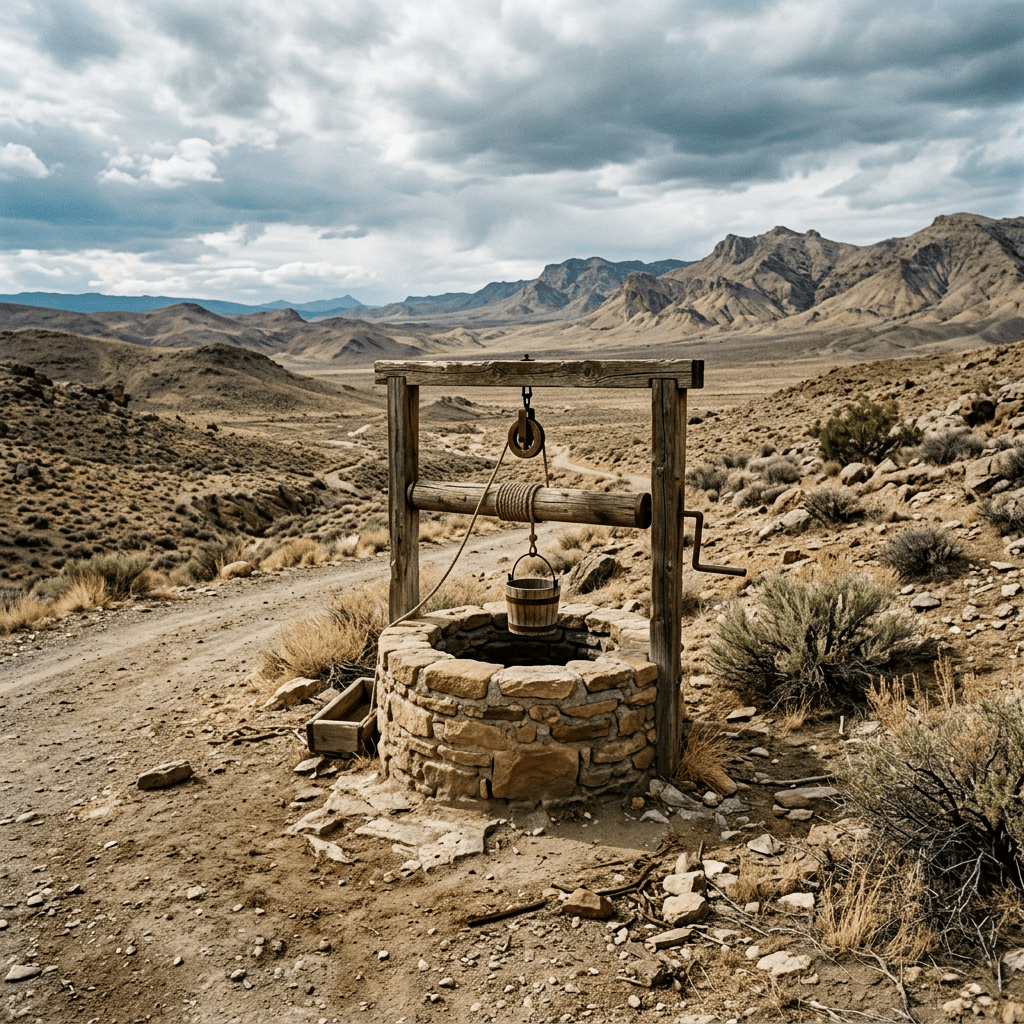
Who passing through the valley of Baca make it a well;
the rain also filleth the pools.
They go from strength to strength,
every one of them in Zion appeareth before God.”Psalm 84:4-7
One aspect of the true worshipper’s character is continuance and commitment. There is a consistency in his conduct. Here is one who is faithful. He is not dissuaded or discouraged. He stays at his post worshipping God. He dwells in the Lord’s House. While others fall away he is still worshipping God.
Another element to his character is divine strength. His life is an echo of Paul’s prayer for the Ephesians – he is strengthened with might by the Spirit in the inner man (Ephesians 3:16).
This man is also characterised by endurance in days of adversity. When passing through the valley of Baca — the valley associated with weeping – he draws water from the well. He does not neglect worship in tough times. This is when worship is more precious as God refreshes his soul.
This man inevitably makes progress as he grows from strength to strength as he appears before God.
More about Jesus would I know
The Prayer of the True Worshipper
“O LORD God of hosts, hear my prayer:
give ear, O God of Jacob. Selah.
Behold, O God our shield,
and look upon the face of thine anointed.”Psalm 84:8-9
This man comes to the place of worship filled with prayer that God would come into His life.
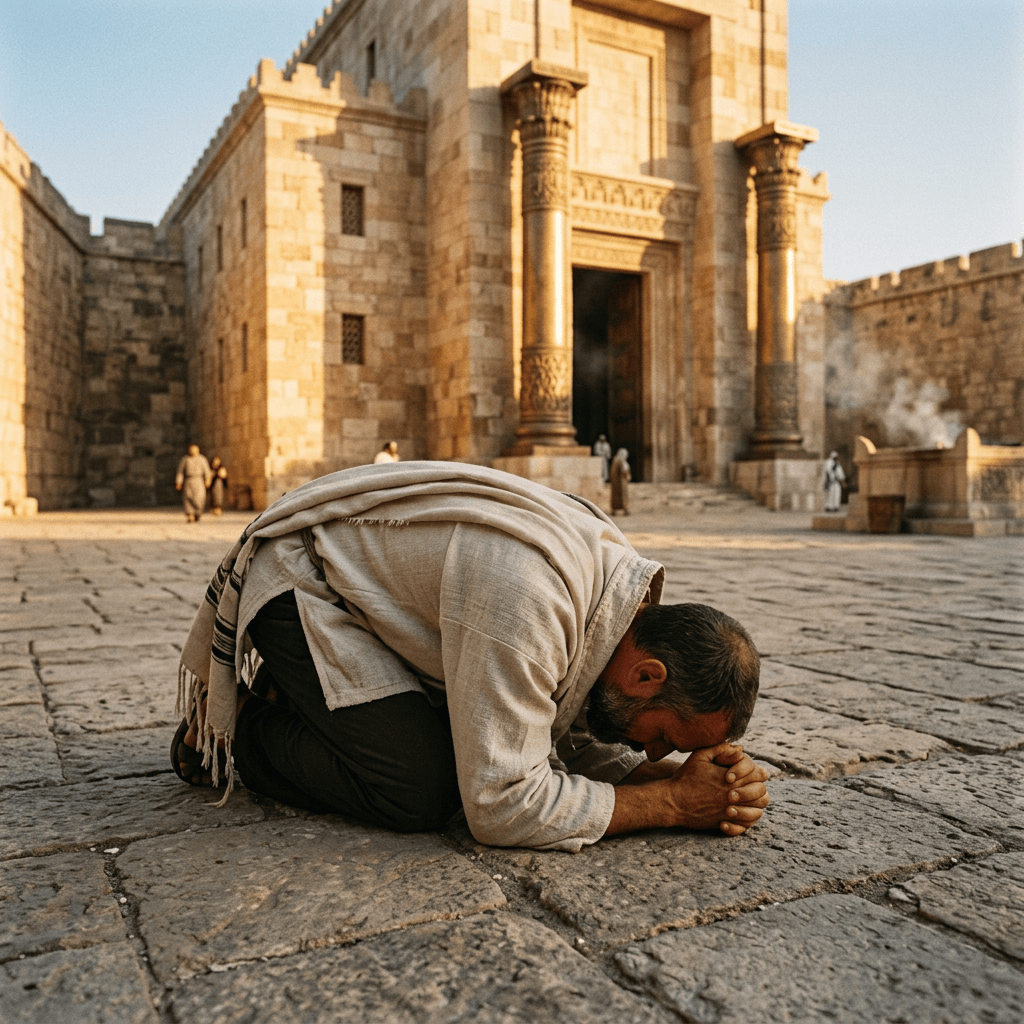
Asking God to look upon the face of His anointed iss most pertinent. The anointed one was the Messiah, the Christ. Was the worshipper praying the anointed one, the High Priest as He transacted sacred business on behalf of the people? Was the worshipper praying for the anointed King as he led the nation? Was he praying for the anointed prophet, for a Jeremiah or Isaiah, who stood in the precincts of the outer temple proclaiming the Word of the Lord.
Wherever or whoever he was praying for – we echo the sentiment with the words “For Jesus’ sake”. For the sake of your Son – our Prophet, Priest and King. Bless your Son and so bless us through Him.
In this respect we too are anointed. We have received the oil of the Spirit, as it flows to us from the Head of the body who is Christ. We are the royal priesthood, the Kingdom of priests who derive our authority from Christ. Therefore we pray for ourselves. Look upon the anointed one. Give me Christ’s blessings.
“Bold I approach the eternal throne,
And claim the crown through Christ my own.”
The Priority of the True Worshipper
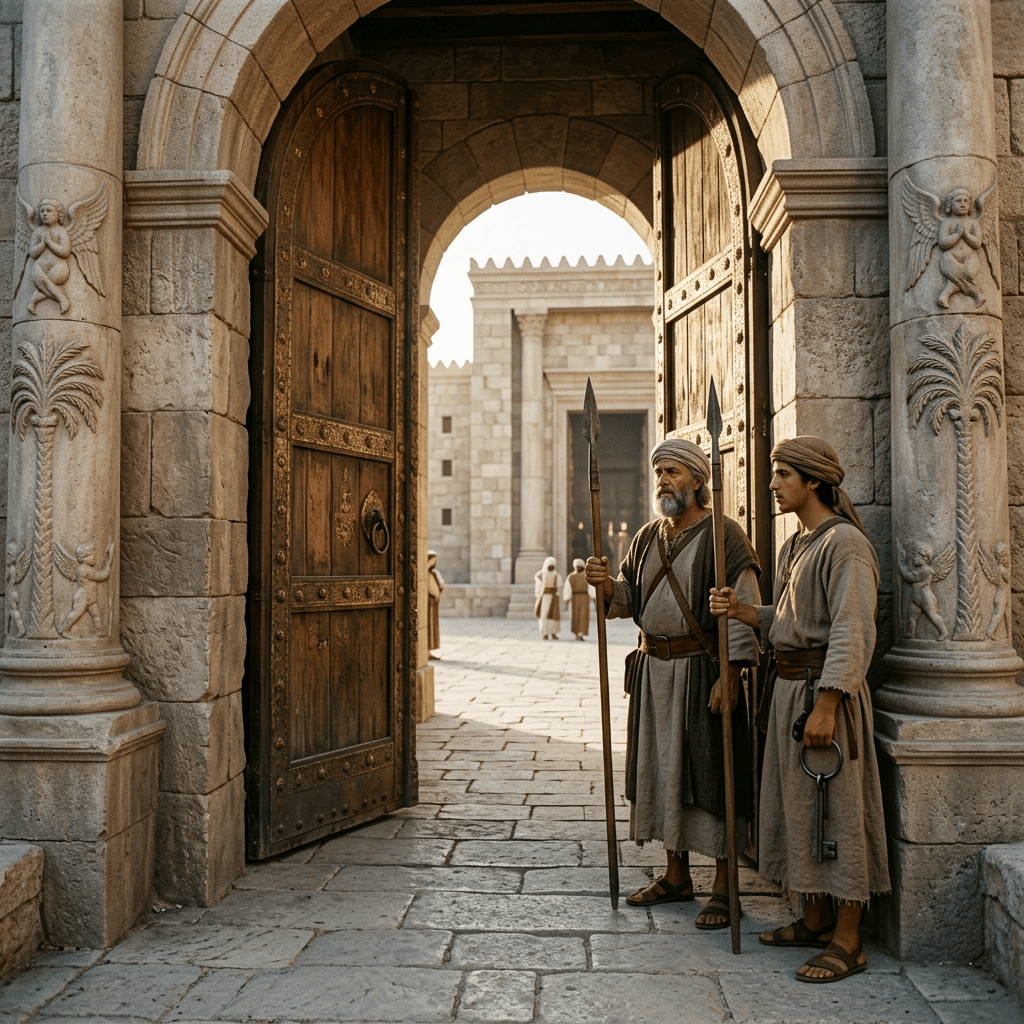
“For a day in thy courts is better than a thousand.
I had rather be a doorkeeper in the house of my God,
than to dwell in the tents of wickedness.”Psalm 84:10
These are words that take us back to the sons of Korah. They did not lead the praises or offer the sacrifices. They simply kept the doors. But they were happy for their lot as the Lord’s servants. They did not want recognition or commendation. Their joy was in their service, simple yet vital.
For the sons of Korah, the writer took them back to the terrible rebellion against the authority of Moses their infamous forefather was guilty of. For this crime Korah perished in one of the most devastating judgments in all Bible history as the earth opened up and swallowed him along with his supporters into the depths of Hell.
While the account in Numbers leaves the impression all belonging to Kirah, Dathan and Abiram died – this was not the case. At a later time we learn this:
Notwithstanding the children of Korah died not.
Numbers 26:11
What grace is written into that sentence. Their father went down into the pit, but the children of Korah died not. Generations later their descendants stand at the doors of God’s house. They were not merely spared from judgment; they were given a place of service.
Now we find them not just spared but serving. Saved from the pit—and serving at the door.
They regarded it as a grace to serve. They were saved from the pit of destruction. Delivered from the tents of those wicked men, they were now doorkeepers in the Lord’s house.
Never complain about doing work for the Lord. Remember what you have been saved from and count it an honour just to serve Him. These people were doorkeepers. This was their place. We need to know our place in the work. Without each servant fulfilling his or her place the work will not go forward. God is interested in everything that we do. Donald Grey Barnhouse wrote that “God is interested in the simplest of tasks by the simplest of men”. There is no insignificant work in the service of God. Men may distinguish between great tasks and small ones; God looks for faithfulness. The Korahites were doorkeepers, yet Scripture describes them as “mighty men of valour” and men possessing “strength for the service” (1 Chronicles 26:6, 8). Whatever our place, let us fill it well for Christ.
The least you do for Jesus will be precious in His sight
The Gifts for the True Worshipper
“For the LORD God is a sun and shield:
the LORD will give grace and glory:
no good thing will he withhold from them that walk uprightly.”Psalm 84:11

Grace and Glory! What a beautiful, quotable phrase, rich in texture – Grace for this life and glory in the next. These are the gifts for the true worshipper.
As we come to worship God our empty hands stretch forward. Through the sacraments, prayer and the Word – grace is bestowed. Our hands are empty but God fills us with the riches of His grace.
How greatly we need the Communion Feast. We come as paupers. We need to feed by faith upon Christ.
How definitely we need prayer. We come with barren hearts. O for the springs of living water.
How vital is the Word. This is the means of grace whereby our sin is revealed, where Christ is presented, where wisdom is set before us that we might walk in the way everlasting.
The promise for those who walk in the everlasting is liberal in its extent.
no good thing will He withold from them that walk uprightly
Serve God, do what’s right, put Him first and we will be enriched in more ways than we every thought possible. He will give you far more than you could every ask or think. The Goodness of God!
For those who enjoy grace, glory beckons. One day we shall see Christ face to face. The shadows will flee. The darkness will give way to the eternal day. The tears will be wiped away. Every gathering of God’s dear people is a foretaste of the “general assembly and church of the firstborn whose names are written in heaven” (Hebrews 12:23).
Oh – what must it be to be there!
The Happiness of the True Worshipper
“O LORD of hosts,
blessed is the man that trusteth in thee.”Psalm 84:12
Blessed reflects the yearning of the Hebrew for happiness. True happiness could only be found through true worship. Only the true worshipper could be truly happy.
Here is the secret of the true worshipper’s happiness. His blessedness does not ultimately arise from a building, a service, a song or even the company of God’s people. “Blessed is the man that trusteth in thee.” He is happy because God is his God. The worshipper who longs for God in verse 2 ends by resting confidently in God in verse 12. True worship flows from faith, and faith discovers that there is no happiness comparable to trusting in the Lord.
Trust and obey, there is no other way,
To be happy in Jesus, but to trust and obey.


Leave a Reply