“Knowledge puffeth up, but charity edifieth. And if any man think that he knoweth anything, he knoweth nothing” (1st Corinthians 8:1-2)
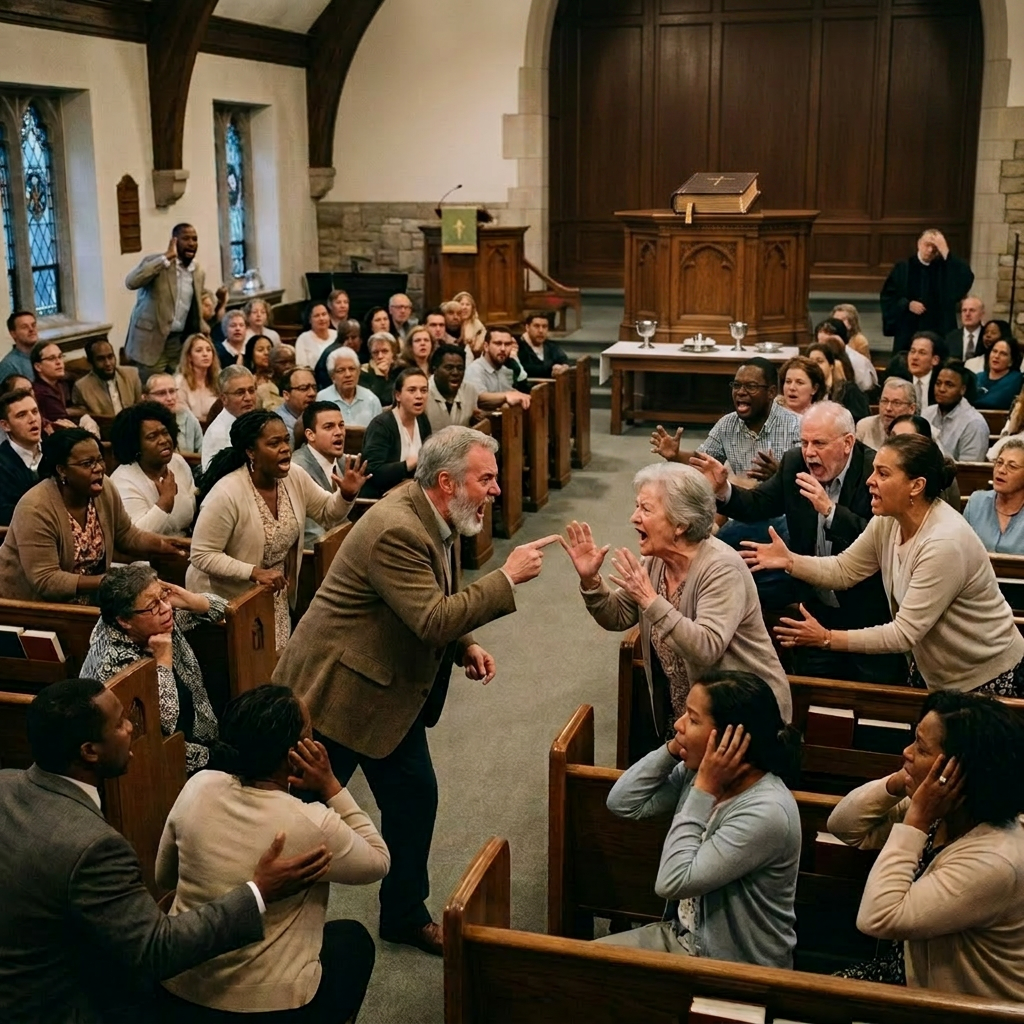
We have all met opinionated people. They seem to have a view on everything—people, economics, politics, religion, theology, church practice—the list goes on. But the opinionated person does not simply hold a view; he expects everyone else to listen to it, accept it, and often follow it. If you cannot see things his way, or if you question his reasoning, you are quickly judged as ignorant, careless, worldly, or even spiritually compromised.
When that spirit creeps into the church, it creates real damage. Fellowship becomes strained, grace gives way to suspicion, and unity is replaced by quiet division. When a few believers begin to act as though everyone must think exactly as they think, speak exactly as they speak, and practice Christianity exactly as they practice it—or else they are not truly walking with God—it becomes a recipe for conflict. What begins as personal conviction can quickly be elevated into a universal rule, and preferences are treated as if they were principles of the faith.
Relevance
This is a most relevant topic.
As Free Presbyterians, we come from a history of standing firmly for truth. Our separation from the Presbyterian Church in Ireland was necessary in 1951 because the fundamentals of the faith were at stake. Yet separatist movements can sometimes drift from needful division over doctrine into needless division over preference. We need to be awake to that danger.
We are also shaped by an Ulster-Scots temperament, often marked by strong convictions and firm opinions. That strength can be a blessing when truth is under attack—but it can also make unity more difficult when the issue is not fundamental.
Within our denomination we have been most adept at dealing with some difficult and divisive issues in a most magnanimous manner. This is positive and we can take some learning from this experience.
Examples of Free Presbyterian Tolerance
Baptism is a prime example. Within our fellowship one can be a paedo-baptist or a credo-baptist. One can believe in sprinkling, pouring or immersion and every view is respected. We are free from the narrow sectarian attitude sometimes found among either Baptists on the one hand, or traditional Presbyterians on the other..
Another example is Bible prophecy. One can be Premillenialist, Amillenialist or Postmillenialist and be equally respected. We can teach our own views but do so with love for other brethren.
A further example of our open spirit is membership of the Loyal Orders. I personally am not a member of any of the Loyal Orders (many of our people are and many are not) but I fully accept that these organisations do much good work in preserving our history and in advancing Protestant standards among our people. Therefore am I going to criticise those who are involved? It is an area where people have freedom to choose according to their conscience. This has always been the stance of our denomination.
Points of Difference with which we Struggle
There are other areas, however, in which we struggle – perhaps more so in recent years.
Let me advance two examples.
One relates to politics. Subsequent to the St Andrews Agreement some within our ranks have become opinionated as to what political parties Free Presbyterians should or should not belong to. Granted – a Christian should not campaign on a manifesto containing policies which contradict the Moral Law, nor should any representative vote or use their influence in such a way. But that is quite different from dictating to fellow believers whether they follow a particular political or economic system. Political parties are secular organisations – from this perspective they are little different from a secular workplace where there are people and practices that a Christian doesn’t necessarily agree with. It is not the responsibility of the Church to organise politically nor should we expect political parties to function like a Church. Political movements often consist of Christians and non-Christians who share common objectives in the realm of constitutional issues (in the case of Northern Ireland Unionism or Irish Nationalism) or traditional left wing versus right wing dynamics. Christians have a role to play in influencing society for good within these structures. We are thankful for those Christians who serve in public life, and we ought to be in prayer for them. The Church ought to be politically neutral. We must not be neutral on the great moral issues but on matters of party politics neutrality should be strictly enforced as people have a right to their conscience.
Another difficulty we have relates to music. We have been quite clear – church music should not dominate the worship. The instruments are there to help us sing. But at times certain pieces sung by groups and soloists have caused angst. On occasions the only criticism has been the authors of the pieces that have been sung. The criticism has been so severe that we have been accused of drifting towards apostasy. I suggest that if you analyse every hymn and hymn writer in our hymnbook you will find much to criticise. This kind of controversy is nothing new. Since I was a boy I can remember endless discussion about what should be sung in Church and what shouldn’t. We should not sing false doctrine nor should should we engage in worship which is dominated by the music. Aside from this a substantial proportion of these differences can be explained by personal taste and culture. In our American Churches for example accordions and guitars would never have been acceptable. That’s fine. But our culture is very different. Even within our culture, however, there will be likes and dislikes in the realm of music. We ought not to dictate to each other. Preferences should never never become principles nor should they be treated like dogma.
On issues like these, 1st Corinthians 8 is immensely helpful.
The church at Corinth was divided over meat offered to idols and later sold in the marketplace. Should Christians buy it? Should they eat it? This issue aroused strong opinions and threatened fellowship.
In answering the question, Paul lays down the principle of Christian liberty. Believers are at liberty to exercise conscience in matters where Scripture has not given direct command. This principle is essential for peace and unity within the church. When it is ignored, unnecessary division soon follows.
THE PRIDE PROBLEM
“Now as touching things offered unto idols, we know that we all have knowledge. Knowledge puffeth up, but charity edifieth. And if any man think that he knoweth any thing, he knoweth nothing yet as he ought to know. But if any man love God, the same is known of him.” (1st Corinthians 8:1-2)
In Corinthian terms; both parties believed they were absolutely right. There was no ground given to the alternative opinion. Both groups claimed superior knowledge and insight over the other. Paul, however, showed that both groups were puffed up with pride. They had knowledge but they didn’t exercise it with humility, nor did they display any of God’s love and grace to those who felt differently. There was nothing wrong with holding an opinion. We are permitted to have our thoughts and views. This is what makes us human. The Corinthians expressed their views on this matter of meat offered to idols, however, in entirely the wrong manner. No grace, no love, no humility.
Understanding the Arguments
As concerning therefore the eating of those things that are offered in sacrifice unto idols, we know that an idol is nothing in the world, and that there is none other God but one. For though there be that are called gods, whether in heaven or in earth, (as there be gods many, and lords many,) But to us there is but one God, the Father, of whom are all things, and we in him; and one Lord Jesus Christ, by whom are all things, and we by him. Howbeit there is not in every man that knowledge: for some with conscience of the idol unto this hour eat it as a thing offered unto an idol; and their conscience being weak is defiled. But meat commendeth us not to God: for neither, if we eat, are we the better; neither, if we eat not, are we the worse. (1st Corinthians 8:4-8)
Paul entered into this controversy not so much as to affirm one particular stance, but to heal the division.
In order to accomplish this he advanced the doctrine of Christian Liberty. What is the basis of Christian liberty? It is humility and love. Humility in accepting that I may be wrong and love in respecting the contrary views of our brethren.
This concept gave rise to a famous saying, quoted by many throughout the often fractious history of Christendom:
In Essentials Unity,
In Non-Essentials Liberty,
In All Things Charity
The difficulty is this – if we quarrel over non-essentials we devalue the essentials which are the core doctrines of the gospel. Also by elevating the non-essentials we turn the gospel into a legalistic formula. When preferences are elevated into spiritual law, legalism begins to overshadow the gospel of grace. A constant emphasis upon personal opinion in effect erodes the definition of truth itself. This is most dangerous. Christian liberty, however when properly practiced helps to not only guard the church’s unity but it protects her core beliefs.
In healing this Corinthian division, Paul taught these people to understand each other’s perspective.
Those who ate the meat offered to idols did so in the belief that the idol was nothing. Whether the meat was offered to the idol or not was no relevance. The meat was unchanged. Therefore eating the meat was allowable.
However, not everyone had that knowledge. Some felt contaminated and defiled because they ate something that was presented at the pagan temple. Perhaps they felt compromised in spirit by consuming such food.
The contrary arguments were each powerful in their own right. Each had a certain validity. Rather than condemning one another Paul urged restraint and understanding.
In so so doing he taught Christian Liberty based on love and tolerance in order that the unity of the Church might be protected.
Taking the Humble Place for the Sake of Unity
“But take heed lest by any means this liberty of your’s become a stumblingblock to them that are weak. For if any man see thee which hast knowledge sit at meat in the idol’s temple, shall not the conscience of him which is weak be emboldened to eat those things which are offered to idols; And through thy knowledge shall the weak brother perish, for whom Christ died? But when ye sin so against the brethren, and wound their weak conscience, ye sin against Christ. Wherefore, if meat make my brother to offend, I will eat no flesh while the world standeth, lest I make my brother to offend.” (1st Corinthians 8:9-13)
Christian Liberty, when properly practiced teaches us to take the humble place for the sake of our brethren. Therefore, we must be careful lest we wound the weaker brother, who cannot see our perspective. Better to say nothing than to cause offence on what is a minor matter. In the Corinthian saga – better to refuse the meat than to hurt the harmony of the Church.
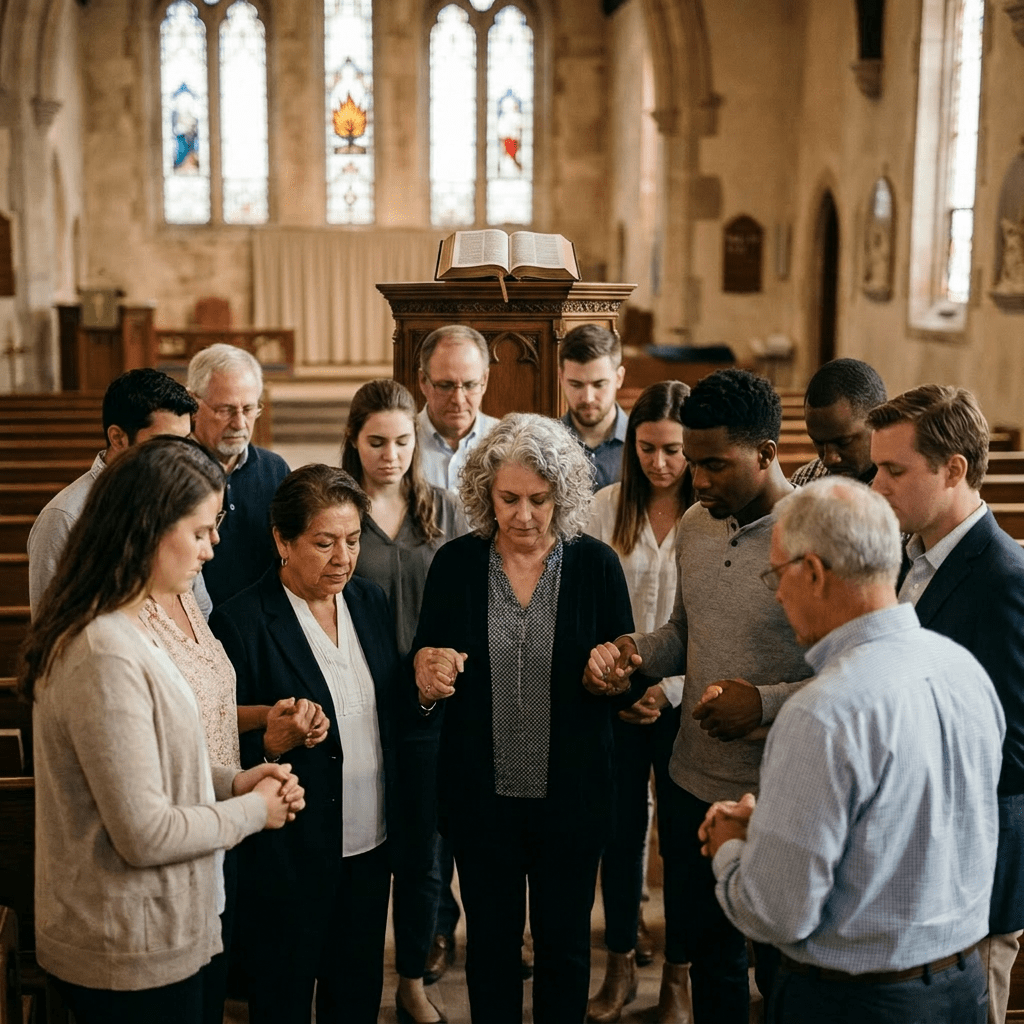
When our personal opinions are laid to one side, love for the brethren takes precedence, the unity of the church is preserved, and Christ Himself is exalted. That is the true spirit of Christian liberty.
The Example of Paul
In the following chapter Paul returns briefly to this subject of Christian Liberty by way of personal testimony:
“For though I be free from all men, yet have I made myself servant unto all, that I might gain the more. And unto the Jews I became as a Jew, that I might gain the Jews; to them that are under the law, as under the law, that I might gain them that are under the law; To them that are without law, as without law, (being not without law to God, but under the law to Christ,) that I might gain them that are without law. To the weak became I as weak, that I might gain the weak: I am made all things to all men, that I might by all means save some. And this I do for the gospel’s sake, that I might be partaker thereof with you.” (1st Corinthians 9:19-23)
Paul had liberty, in that he was in his own word, “free from all to men”. He was bound only by God’s Word, not by the shifting opinons of others.
Neverthless, for the gospel’s sake, in order that he might save some he was made all things to all men.
Paul was a missionary who traversed the frontiers encountering different cultures. He understood the importance of adapting and in so doing he was able to differentiate between principle and preference.
Missionaries very often are sharply tuned to this, in a way that those who have never traveled beyond their “own backyard” are not. In some countries where Christianity has little influence on public life, believers are required to work on Sundays and must gather for worship on other days, often on Saturdays. This is not out of choice but necessity. The prevailing culture is so opposed to Christianity that God’s people have to work within these restrictions. The purists could easily argue “give up your jobs, worship on Sundays, put God first”. But who will be be there to put food on that man’s table? Would he not also risk sin by failing to provide for his family in such circumstances? There are some who treat every problem as a black and white issue. But many issues are not black and white. Discretion and common sense are required in find a path through the circumstances that are forced upon the Church.
For many Roman Catholics in Ireland, Protestantism has been viewed as little more than an Anglo-British political project. The long association that northern Protestants have had with Unionist politics has reinforced this opinion. This political and cultural version of Protestantism has obscured the core truth of the Reformation – that men and women can know God personally through faith in Christ alone without intervention by the Church and her Priests. This revolutionary truth has been lost to the Irish Roman Catholic. Is it not incumbent upon the Protestant evangelical Church to seriously consider how we can break through these barriers that we might win our fellow country men and women for Christ?
In becoming all things to all men, Paul challenges the prejudices of every generation and calls us to fervent evangelism. He urges us to lay aside lesser differences, sacrifice personal pride, and seek above all else the exaltation of Christ and the salvation of souls.


Leave a Reply