A Misunderstood Tradition
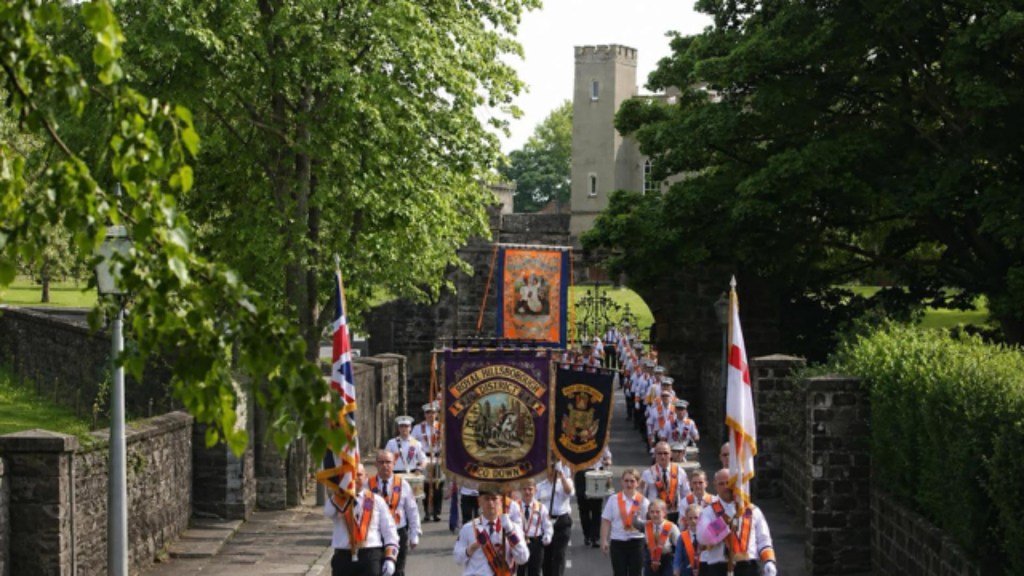
The Twelfth has passed for another year. The marches are over, the music has stopped – but what’s it really all about!
The pageantry, tradition and stirring music of the Twelfth are often misunderstood by people both within and outside Northern Ireland.
For many, it is simply seen as a celebration of a battle. But the events remembered on the Twelfth represent something far greater: a turning point in the history of liberty and constitutional government.
Should we not all pause and reflect on the shadow of the last time two British kings fought for the Crown—a struggle whose consequences still shape our world today?
A Battle for Freedom
The Twelfth takes us back to the world before William III and Mary II and before the Bill of Rights of 1689. It was a world where arbitrary power was a real threat, where religious and political repression was common, and where freedom of conscience was often denied.
The European Dimension
The victory of William III at the Boyne in 1690 was part of a much wider struggle. Before coming to the British throne, William had emerged as the defender of the Dutch Republic against the ambitions of Louis XIV of France, whose model of absolute monarchy threatened the balance of Europe. William’s leadership helped preserve a Europe where no single ruler could dominate the continent.
The Revolution Settlement that followed did not create modern democracy overnight. That was still a long way ahead. But the principles that would help shape the modern democratic world were laid down.
America’s 250th Birthday: Has She Forgotten the Boyne?
The Bill of Rights of 1689 was one of the great constitutional documents of the modern age. It established that the Crown was subject to the law, that Parliament had a central role in government, and that certain liberties had to be protected. Its influence reached far beyond these islands, helping to inspire later constitutional developments across the world, including the American tradition of rights and representative government, which in turn influenced the Irish political thinkers whose challenge to British rule led to the Irish Free State and subsequent Irish Republic.
Tracing our Freedoms to 1690
The freedoms we enjoy today—to worship freely, to express our views, to question those in power and to choose our representatives—developed over centuries, but the foundations were laid in that great constitutional settlement.
Recognising the Threat of Intolerance
These freedoms should never be taken for granted.
Sadly, there are signs in modern society that we are becoming less tolerant of genuine disagreement. A free society must allow people to express honest and respectful differences of opinion. Debate should be answered with argument, not attempts to silence.
At the same time, concerns about immigration policy should never become hostility towards individuals. Many who come to our country work hard, contribute their skills and strengthen our communities. A free society must combine the right to discuss difficult issues with respect for the dignity of every person.
The murder of Ann Widdecombe, and the involvement of counter-terrorism police in the investigation, is a reminder of how fragile civilised debate can become when disagreement gives way to hatred and violence. Whatever the outcome of that investigation, violence and intimidation have no place in a democratic society.
So is there a case for reflecting upon the principles associated with William III and Mary II in 1688 and consolidated after the Boyne in 1690? Absolutely!
Preserving Cherished Freedoms
The Twelfth is not merely about remembering a military victory. At its best, it is about remembering the precious inheritance of liberty, constitutional government and freedom of conscience.
As Scripture reminds us:
“Be watchful, and strengthen the things which remain, that are ready to die.”
Revelation 3:2


Leave a Reply