
The Foundations, Fellowship and Fountains of the Church
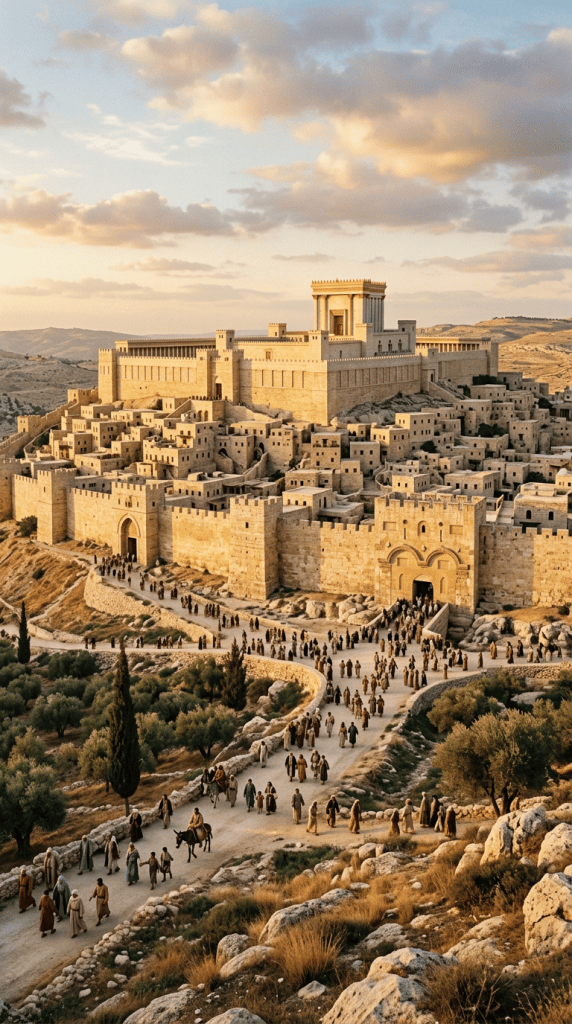
“Glorious things are spoken of thee, O city of God.” (Psalm 87:3)
Psalm 87 is one of those psalms which glories in Jerusalem, the city of David, the holy city, the city of the great King, and the place where the temple was situated upon Mount Zion. The psalmist delights in the privileges and blessings associated with this place. Yet there is more here than a celebration of an earthly city. Jerusalem, in the Old Testament, points us forward to the Church of Jesus Christ in the New Testament.
When we read this psalm, our minds are immediately drawn to the Church, the spiritual centre of God’s dealings with His people. The Church is precious because Christ is precious. She is the bride of Christ, purchased with His own blood. Just as Jerusalem was built around the temple, and the temple occupied the central place, so the Church is gathered around Christ and His finished work of atonement. As Israel in the wilderness gathered around the tabernacle, so God’s people are gathered around their Saviour.
It is with this spiritual significance in view that we consider the glory of Zion. There are several wonderful truths concerning the Church which emerge from this psalm.
1. The Foundations of Zion
“His foundation is in the holy mountains.” (Psalm 87:1)
Ancient mountain fortresses were formidable places. Their strength was not simply in the walls which surrounded them, but in the mountains upon which they were founded. To conquer such a city was no easy undertaking. Its foundations were deep, and its position gave it considerable strength.
The Church of Jesus Christ has foundations which are deeper still. They are not merely found in her history, her traditions, her buildings or even her earthly institutions. These things may have their place, but the foundations of the Church go much deeper. They are embedded in Christ Himself.
Paul reminds us, “For other foundation can no man lay than that is laid, which is Jesus Christ” (1 Corinthians 3:11).
Consider what is bound up in that foundation.
THe Church has been founded according to the eternal decree of God. He has chosen a people to be His. God the Father and God God the Son have entered into a covenant of grace whereby they have promised to redeem these people from throughout every every place, from among every people and from every age. But at the heart of this foundation is Christ, the Saviour of the World.
Therefore the foundation of the Church, the solid rock on which we stand is – The person of Christ, the second person of the Trinity; His incarnation, when the eternal Son of God took upon Himself our humanity; His substitutionary death, when He bore the penalty of our sin; His resurrection, when He rose victorious over death; His ascension and present intercession at the right hand of God; and His promised return as Judge of the living and the dead.
All these truths belong to the very foundation of the Church.
There can be no compromise concerning the person and work of Christ. When Christ’s deity, His humanity, His atoning death or His bodily resurrection are denied, the very foundation is being corrupted. A church may retain its name, its buildings and its outward appearance, but if it abandons the Christ of Scripture, it has departed from the foundation upon which the true Church is built.
We must therefore be careful that everything we believe, teach and practise rests upon Christ. Our confidence is not in ourselves, our numbers or our history. It is in the unchanging Saviour upon whom the Church is founded.
2. The Gates of Zion
“The LORD loveth the gates of Zion more than all the dwellings of Jacob.” (Psalm 87:2)
Why does the psalmist single out the gates of Zion? The gates were an important feature of any ancient city. They served a double purpose. They were places of protection, but they were also places of welcome and entrance.
When danger threatened, the gates were closed. The enemy was kept outside, and the inhabitants were protected. Yet in ordinary times the gates were opened. Visitors entered, trade was conducted and strangers were welcomed within the city.
There is a lesson here for the Church.
There are times when the gates must be closed. The Church must guard the truth of God. Error must not be welcomed, and the enemy must not be permitted to undermine the faith once delivered unto the saints. We must be vigilant against false teaching and every attempt to corrupt the Gospel.
However, the gates must not remain closed to those who would enter. The Church must never become so protective of herself that she ceases to welcome those who need the Gospel.
We must keep the enemy out, but we must welcome the stranger in. We must guard the truth, but we must also throw open the gates of the Gospel. The invitation of Christ is still, “Whosoever will, let him take the water of life freely” (Revelation 22:17).
There must be both a holy watchfulness and a gracious welcome. A Church which has no concern for the purity of the Gospel is failing in her duty. Equally, a Church which has no desire to see sinners come within the sound of the Gospel has lost sight of her mission.
The Lord loveth the gates of Zion.
3. The Priority of Zion
The contrast in verse 2 is also significant.
The Lord loves the gates of Zion more than all the dwellings of Jacob.
The dwellings of Jacob take us beyond Jerusalem to the towns, villages and homes where the ordinary people of Israel lived. These were places of family life, business, employment and all the ordinary interests which occupied their days.
There was nothing wrong with these things. Family life was important. Their homes, their livelihoods and their daily responsibilities all mattered. Yet the psalmist reminds us that Zion occupied a special place in the affections of God.
There is a lesson for us here. The Church must occupy a central place in the spiritual lives of God’s people.
We have homes to maintain, families to care for, employment to attend to and many other responsibilities. These things are all important. But the Church must never become an incidental part of our existence, something which is fitted in whenever everything else has been attended to.
By our example we want to guide others into appreciating the Church. They must see our love for the Word of God, our affection for the people of God, our faithfulness in attendance and our appreciation of the means of grace.
If we constantly grumble about the Church, speak critically of God’s people and treat the services of God’s house as an inconvenience, we should not be surprised if people around us develop the same attitude,
The Lord has a special love for Zion. We ought therefore to have a deep affection for the Church which Christ has purchased with His blood. It is not perfect, for it is made up of sinners saved by grace, but it is precious to the Lord.
Augustine of Hippo in his famous exposition of the Church, “The City of God, challenges is us to set our affection for the heavenly city above the earthly:
“…two cities have been formed by two loves; the earthly by the love of self even to the contempt of God; the heavenly by the love of God, even to the contempt of self”
4. The Glory of Zion
“Glorious things are spoken of thee, O city of God.” (Psalm 87:3)
What a wonderful description of the Church! These words have given us one of the great hymns of the Christian faith, written by John Newton:
"Glorious things of thee are spoken,
Zion, city of our God.
He whose Word cannot be broken
formed thee for His own abode.
On the Rock of Ages founded,
what can shake thy sure repose?
With salvation's walls surrounded,
thou may'st smile at all thy foes."
There are indeed glorious things to be said about the Church of Jesus Christ.
The Church is not simply another human organisation. It is the dwelling place of God among His people. In the Old Testament, the temple was the place associated with the visible manifestation of God’s glory. His presence was symbolised in the midst of His people.
But in the New Testament, we discover something even more wonderful. God’s people themselves are described as His spiritual temple.
Paul writes that believers are “builded together for an habitation of God through the Spirit” (Ephesians 2:22).
What a tremendous truth! God does not dwell in temples made with hands. He dwells among His redeemed people. The Church is His spiritual habitation, and every believer is part of that living temple which is still being built.
Therefore, we should speak gloriously of the Church. We should speak well of what God has established and appreciate the privileges which He has given us.
May God save us from a spirit of constant grumbling. Grumbling is a terrible thing. It dishonours God, discourages His people and robs us of the joy of appreciating His goodness.
Think of Israel in the wilderness. God had delivered them from the bondage of Egypt, supplied their needs and promised them a land flowing with milk and honey. Yet they repeatedly complained. They looked back upon Egypt with an affection which forgot the bitterness of their bondage. They murmured against the provision of God, and their unbelief brought consequences upon them.
How easily the same spirit can enter the Church. We become so occupied with what we think is wrong that we fail to appreciate what God has given us.
When I consider the blessings we enjoy in our denomination, I am particularly thankful for its commitment to the Word of God and the Gospel of Jesus Christ. We have our faults and failings, as all earthly churches do. But there are believers in many parts of the world who would dearly love to enjoy the privileges of a faithful Gospel ministry and a church in their own community.
We should never take these blessings for granted. Let us appreciate what God has given us and speak of Zion in the language of the psalmist: glorious things are spoken of thee.
5. The Citizenship of Zion
“I will make mention of Rahab and Babylon to them that know me: behold Philistia, and Tyre, with Ethiopia; this man was born there.” (Psalm 87:4)
One of the most remarkable features of this psalm is the reference to nations which would not ordinarily be associated with Jerusalem or the people of Israel.
Rahab, a name used here for Egypt, Babylon, Philistia, Tyre and Ethiopia are all mentioned. These were nations and territories beyond the immediate boundaries of Israel. Some were associated with hostility towards God’s people.
Yet the psalmist speaks of people from these places being recognised as belonging to Zion.
What a remarkable anticipation of the spread of the Gospel!
The gates of Zion are not to be understood as being open merely to those who have a natural connection with Israel. The purposes of God extend to the nations. His elect are found among people of different lands, backgrounds and languages.
In the Old Testament there were glimpses of this wider purpose, but in the New Testament the great commission makes it plain. The Gospel is to be preached among all nations. The invitation of salvation is not confined to one race, nationality or geographical territory.
Christ has died for sinners, and the Gospel must be carried to every nation under heaven. The Church is not an exclusive earthly community defined by ancestry or national identity. It is a spiritual kingdom into which sinners are brought by the grace of God.
Then the psalmist goes further:
“And of Zion it shall be said, This and that man was born in her: and the highest himself shall establish her.” (Psalm 87:5)
The emphasis is upon those who belong to Zion. Their citizenship is recognised, and their names are associated with the city of God.
We are reminded of the importance of the new birth. It is not enough to have been born into a Christian home, brought up within the privileges of the Church or associated with a faithful denomination. We must be born again.
Our citizenship in the kingdom of God is not inherited through our earthly parents. It is granted through the saving grace of God. We must experience that work of the Holy Spirit by which a sinner is brought from death unto life.
Paul, writing to the Philippians, declares: “For our conversation is in heaven” (Philippians 3:20). The word translated “conversation” is the Greek politeuma, from the same word family as our English word politics. It speaks of a commonwealth, a community of citizens. For the Philippians, who lived in a Roman colony and enjoyed the privileges of Roman citizenship, this language would have been readily understood. Paul reminds them that, although they lived on earth, their true citizenship was in heaven. They belonged to a heavenly commonwealth, under the authority of a heavenly King. This is our true identity.
What a blessed thing it is to belong to the heavenly kingdom! Earthly citizenship can be lost, earthly homes can be left behind, and earthly kingdoms will pass away. But those who belong to Christ have an inheritance which is incorruptible, undefiled and that fadeth not away.
This Kingdom is the truest of commonwealths. Unlike the League of Nations and its successor, the United Nations, this is a commonwealth which cannot fail. Here is a vision of one humanity, drawn from every nation, under one King and united in one purpose. It is a unity which no earthly institution can manufacture, for it is founded upon the sovereign authority of Christ. Here alone is the answer to the divisions, conflicts and brokenness of our world. This is the expansive vision of the psalmist: people from every land and nation finding their place in the city of God. Example
"Saviour, since of Zion's city
I through grace a member am,
let the world deride or pity,
I will glory in Thy name.
Fading is the worldling's pleasures,
all his boasted pomp and show;
solid joys and lasting treasures
none but Zion's children know."
6. The Fountains of Zion
“As well the singers as the players on instruments shall be there: all my springs are in thee.” (Psalm 87:7)
The psalm concludes with a wonderful picture of the joy and life of Zion.
There are singers and there are players upon instruments. The city is filled with praise. It is a picture of a people rejoicing in the goodness of God and delighting in His salvation.
That is the privilege of the Church. We gather to worship, to sing and to praise the Lord. Worship is the most vital ingredient of Church life. Without our established times of public gathering when the Church gathers as a corporate intergenerational body to worship, the Church has no purpose. The Church is not a mere social organisation – we are a body called out of darkness into the light, to show forth the praises of God.
Yet our praise is not simply an earthly exercise. It anticipates that great day when the redeemed multitude will gather in the presence of Christ and sing the praises of Him who loved us and washed us from our sins in His own blood.
But there is another important expression in this verse: “All my springs are in thee.”
Jerusalem was a city with a valuable natural water supply. Its springs were an important source of strength and security. A city with its own dependable water supply was much more difficult to besiege, for its inhabitants were not entirely dependent upon outside provision.
The spiritual lesson is beautiful. The Church has been entrusted with the living Word of God. Here is a resource which the world cannot supply and which the Church must never surrender.
Christ spoke of living water. In John 7:38 He declared:
“He that believeth on me, as the scripture hath said, out of his belly shall flow rivers of living water.”
The Church has been entrusted with the Gospel, and her task is to draw from that inexhaustible supply and distribute its life-giving truth to a thirsty world.
Think of the Reformation. Martin Luther came to understand the great truth of justification by faith alone. He discovered afresh that a sinner is justified not by his own works or merits, but through faith in Jesus Christ. That truth became like a spring of living water in his own soul.
And the waters flowed outwards. Through Luther’s preaching and writings, the truth of the Gospel touched lives throughout Germany and beyond. It influenced other Reformers and helped bring the light of the Gospel to nations across Europe.
We owe a great debt to those who, in former generations, drew from the wells of salvation and faithfully proclaimed the truth of God.
But the need has not diminished. There are thirsty souls all around us. They need the living water of the Gospel. They need to hear that Christ saves sinners, that His blood cleanses from all sin and that eternal life is found in Him alone.
The Church must never become a reservoir which simply holds the water for itself. The springs of Zion must flow outwards. We must preach the Word, proclaim the Gospel and make known the riches of God’s grace.
"See, the streams of living waters,
springing from eternal love,
well supply thy sons and daughters
and all fear of want remove.
Who can faint while such a river
ever flows their thirst to assuage?
Grace, which like the Lord, the Giver,
never fails from age to age."
The Glory of Being Part of Zion
What a blessed thing it is to belong to the Church of Jesus Christ!
Its foundations are secure because they rest upon Christ. Its gates must be guarded against error, yet opened wide to welcome sinners. Its place in the lives of God’s people must be cherished. Its glory is found in the presence of God among His people. Its citizenship embraces the redeemed from every nation, and its springs supply the living water of the Gospel to a needy world.
May we never take these privileges for granted.
Let us love the Church, pray for the Church, support the Church and faithfully proclaim the Gospel through the Church. Above all, let us ensure that our confidence remains in Christ, the foundation and head of His people.
“Glorious things are spoken of thee, O city of God.”
May God help us to be faithful to Him.


Leave a Reply