A visit to Edinburgh, Scotland’s ancient capital, is of great interest to lovers of our Presbyterian and Scottish history.
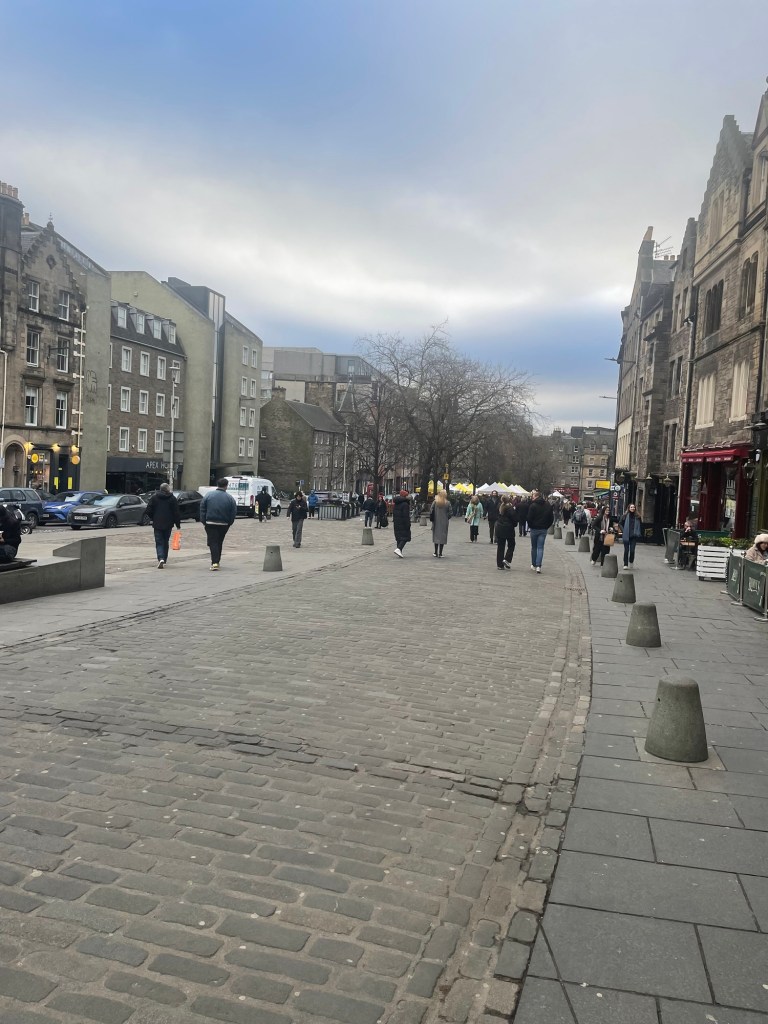
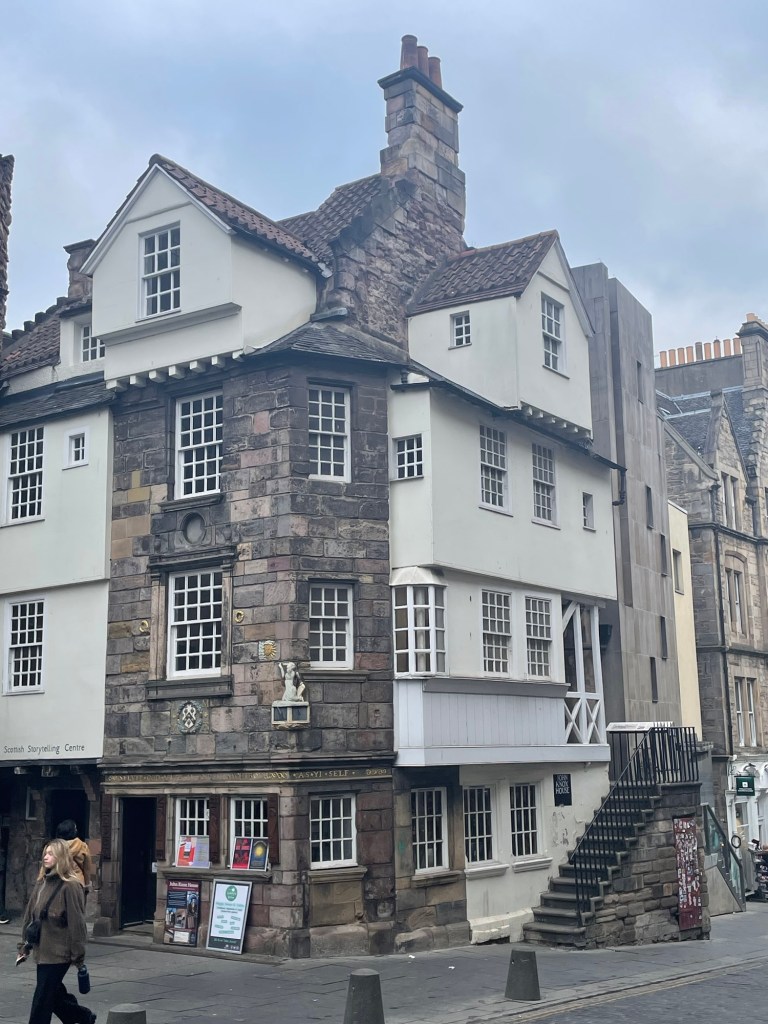
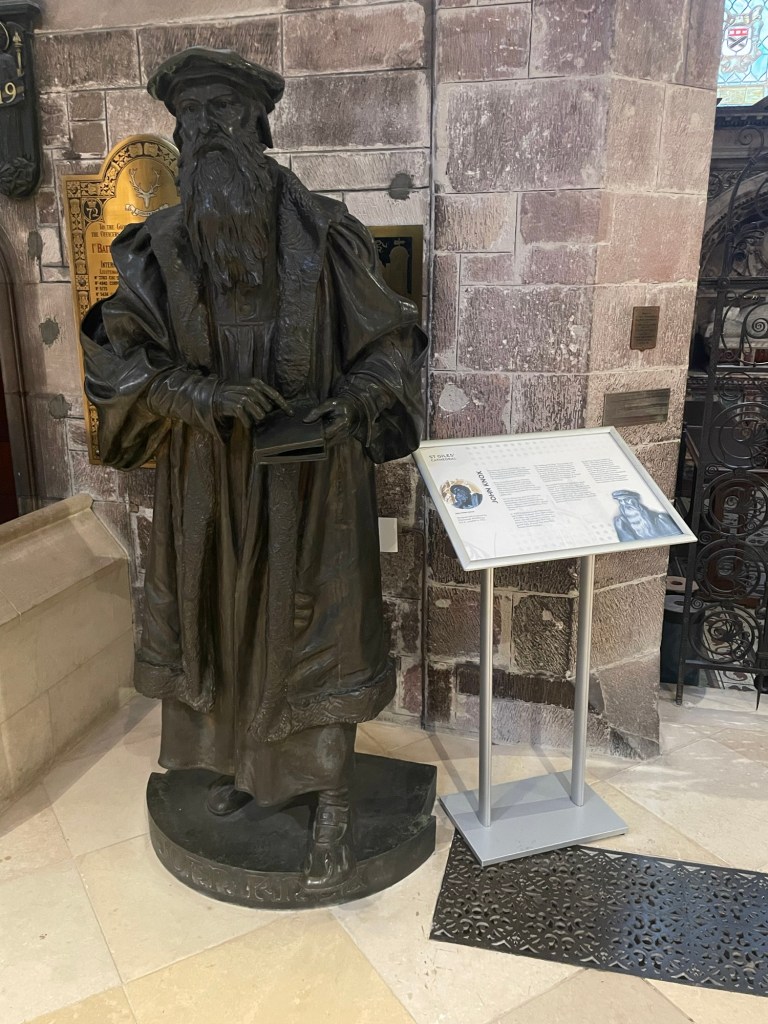
A simple stroll will inspire the spirit of any true Protestant. The Grassmarket bore witness to the execution of faithful Protestant martyrs. Walking from here to the historic Old Town, the Royal Mile takes us past the home of John Knox, the father of the Scottish Reformation. Reaching St Giles we come to the place where Janet Geddes sparked a revolution by throwing her stool at the Dean!
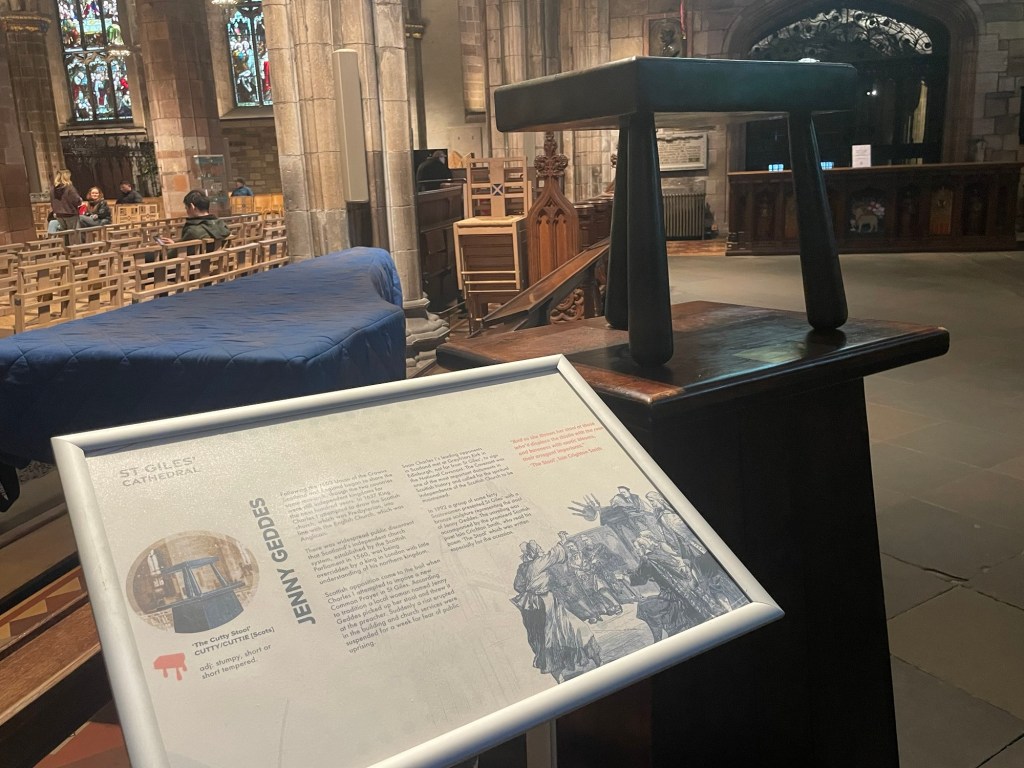
Janet Geddes three legged stool in St Giles.
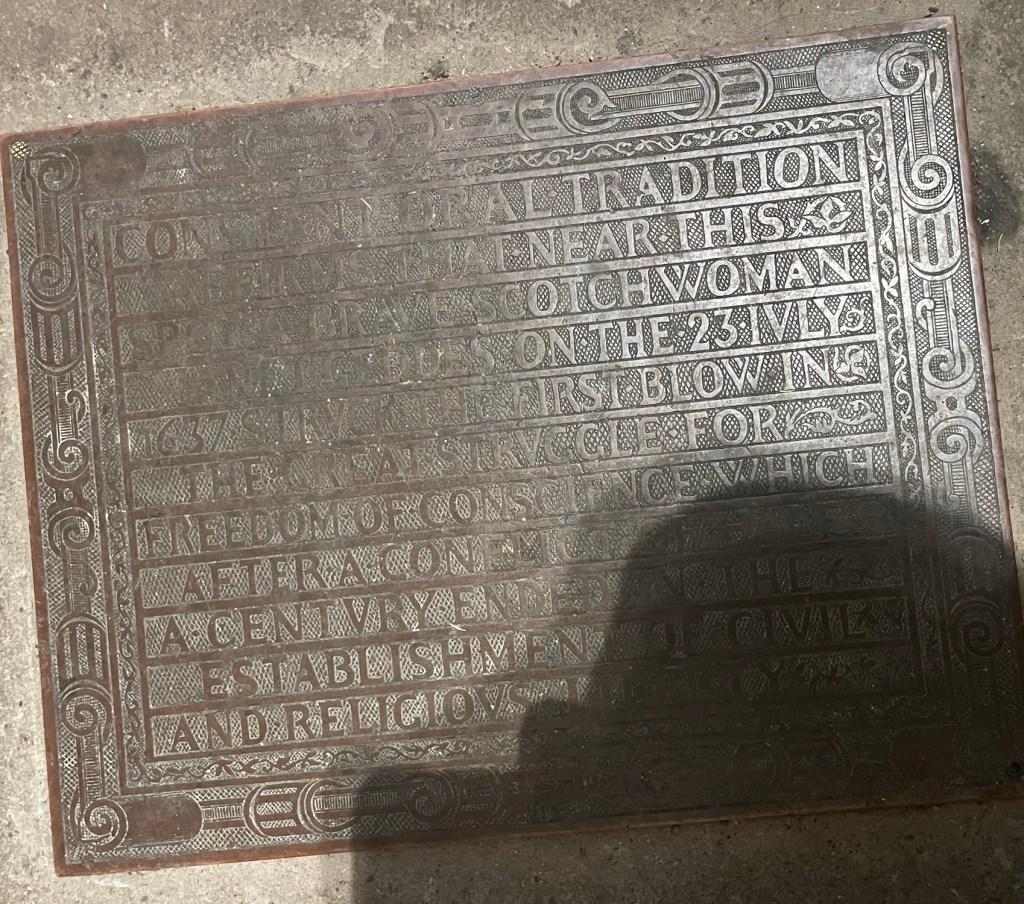
Wording on St Giles plaque:
“Constant oral tradition, affirms that near this spot a brave Scotchwoman Janet Geddes on the 23 July, 1637, struck the first blow in the great struggle for freedom of conscience which, after a conflict of half a century ended in the establishment of civil and religious liberty.”
While these locations are a must see, Greyfriars Kirkyard, to my thinking, trumps them all.
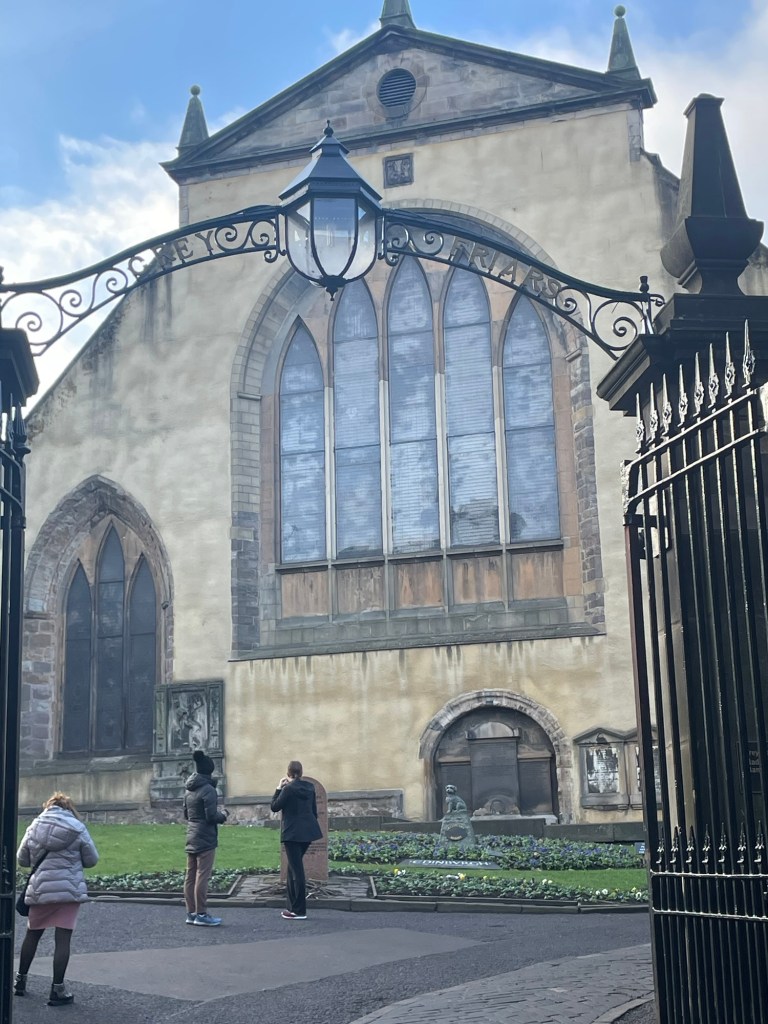
On a recent visit to the old burying ground, I paused as a tour guide was extolling the virtues of “Greyfriars Bobby”. This little terrier, for faithfulness, earned himself a grave, a monument, a Disney movie and international fame.
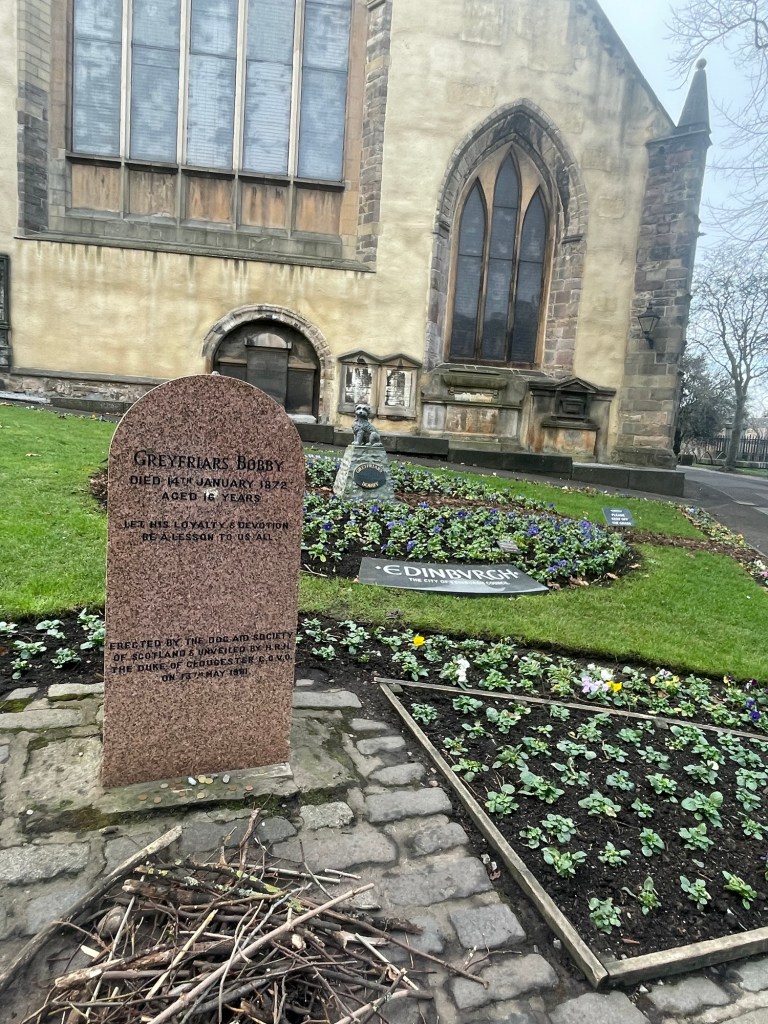
I couldn’t help but wonder if the tour guide would talk with the same passion about our Protestant heroes. While the story of Greyfriars Bobby is charming, surely the courage and sacrifice of our Covenanting forefathers deserve far greater recognition.
If only the stones of Greyfriars could speak!
This was the place where thousands of Scots signed the National Covenant. This was the determined response to the disorder that followed Janet Geddes’ protest. The Covenant was Scotland’s freedom manifesto when the people, led by Church and State, defiantly opposed English interference in their beloved Kirk, usurping Christ as head. Furthermore this Covenant led to a war with England, which Scotland won, guaranteeing twenty years of peace. This defeat for Charles I, so destabilised his reign that the English Civil War ensued, bringing about his downfall.
The stones of Greyfriars also could tell the story of the Covenanters’ Prison, where thousands were held in the most barbaric conditions. Their only crime being loyalty to the Covenant.


But the old stones of the Covenanters’ Memorial still speak:
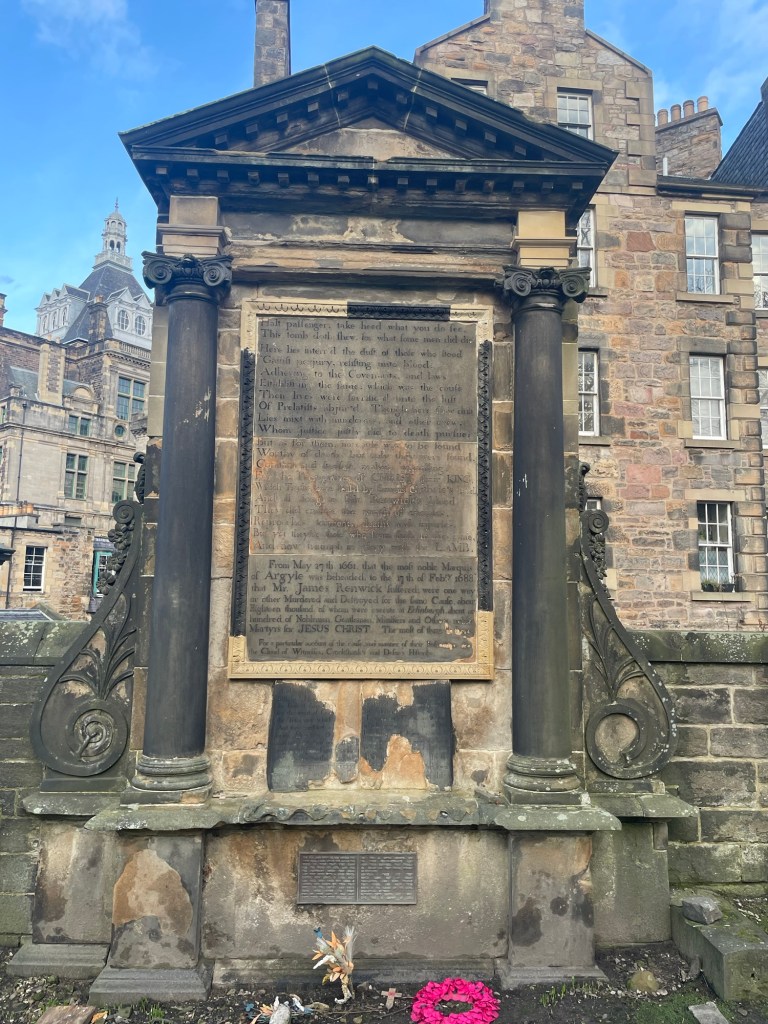
“Halt passenger, take heed what do you see…”
How many stop to decipher words which eulogise those who resisted unto blood, “but now they triumph in glory with the LAMB”?
From the execution of the Marquis of Argyll in 1661 until the martyrdom of James Renwick in 1688 , 18,000 died for freedom in a country and among a population as small as Scotland!
Yet many visit Greyfriars preferring to learn about a dog!
Before leaving, however, I was perturbed by the interpretive panel near the entrance, which I believe presents an inaccurate view of the Covenanters. They are accused of being against the restitution of Charles II, of being guilty of cruelty on a par with the regime and whose history has been romanticised. Such a summary fails to portray the historical context and, by this failure, becomes misleading.
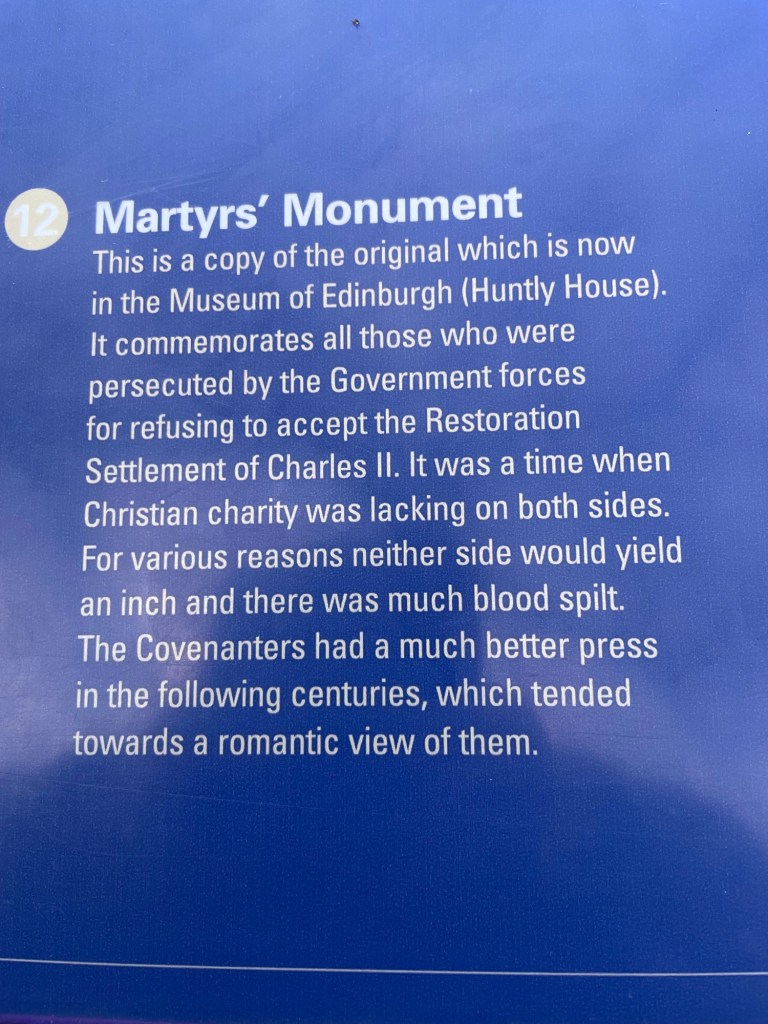
On every count this is a misrepresentation.
1: The Scots wanted a Scottish King, they opposed England during Cromwell’s rule seeking to bring Charles II back. The Covenanters only opposed the King because he was removing their freedoms, interfering in the Church and not granting conscientious opposition to his policies.
2: The Covenanters made strategic mistakes during their struggles and at times were responsible for actions which could be interpreted as savage and cruel. This can only be understood against the backdrop of a systematic effort to cleanse Scotland of all opposition. Unarmed men were murdered such as John Brown of Priesthill for conducting a Bible Class. Women such as the two Margarets who were drowned at Wigtown, were murdered for simply refusing to attend parish worship.
3: The Covenanters are the fathers of civil and religious liberty. They fought and died for freedoms we now take for granted in any civilised country. We owe these courageous men and women privileges that are immensely treasured today. We are their children.
When will Scotland waken from its spiritual slumber and recognise the Martyrs’ blood as the cornerstone of our freedoms, infinitely surpassing the death of a canine?
The key lesson from the Greyfriars’ stones is the importance of zealously protecting that which we cannot afford to lose. The legacy of these committed Christians of yesteryear resonates into the 21st Century asking questions as to how we value and safeguard our liberties. The Covenanters may have been children of their cruel times, but they rightly understood the importance of freedom of worship, the right to a private and unfettered conscience and the liberty to oppose oppression. We stand dwarfed by their shadow, let’s not lose what they died to bequeath. By grace may God help us to maintain their legacy as faithful custodians.


Leave a comment