

1: Early Prophetic Teaching
I am part of a denomination which has an open stance with respect to eschatology, a biblical understanding of the future course of world history.
This open stance respects the three interpretations of the Millennium in Revelation 20 commonly known as Premillennial, Amillennial and Postmillennial (all are briefly explained is the Glossary at the end of this post).
This means that while a variety of views are permitted, all must be held in love with due respect given to those of a differing persuasion.
Such is the weight of Scripture teaching upon the future course of world history, it is inevitable we will and must enquire for ourselves, reaching an established personal conviction.
Throughout my years of ministry in Clogher Valley it will have been evident that I have a particular view of the prophetic Scriptures, which varies from that which others have taught. At times this raises questions. Therefore, this article is part of a series of studies which explains my position.
As I write, I pray for humility, showing respect to others who have a differing position. Dr Alan Cairns in his Dictionary of Theological Terms advocated humble toleration on the basis that “all three approaches to the subject of the millennium have their problems.” This is a topic worthy of honest and open discussion but is no place for narrow dogmatism.
While this series will eventually argue for a postmillennial understanding of Scripture, this first study explains why I came to question premillennialism.
Throughout my formative years the prevailing teaching I was exposed to was premillennialist. This was a particular brand of premillennialism which is sometimes called posttribulation. The posttribulation position is nondispensational. Therefore, those who adopt this school reject the scheme laid out by Scofield in his Bible and, in so doing, reject the fallacy of the secret rapture.
The nondispensational premillennialist, however, anticipates the return of Christ and a literal thousand-year reign over all the earth from Jerusalem. This return will be the catalyst for the conversion of Israel and will usher in an era of peace and prosperity for all nations, predicated upon gospel blessings.
The premillennialist, however, is preoccupied with the ten toes of Daniel’s statue, the recreation of the old Roman Empire as a political force. There is a belief in seven years of Antichrist rule, the latter stages of which will be ‘The Great Tribulation’. Therefore, identifying Antichrist and interpreting the signs of the times become important indicators heralding the return of Christ. In my younger years, the development of the European Common Market and its evolution into a body with closer political structures was widely identified as the ten toes of Daniel’s statue.
2: Emerging Questions
As I began to think these matters through, doubts emerged. While initially being surprised to discover that some earnest believers were amillennialists, that surprise soon gave way to intrigue upon learning that many of our favourite Protestant Reformers understood the millennium as indicative of the present state of the Church.
Further questions emerged in my mind as the European Community outgrew the ten-kingdom interpretation and continued to develop. No longer was this political project as important, it seemed to me, in the minds of premillennial thinkers or in their teaching.
3: The Prophetic Timetable Problem

The greatest question I had, however, concerned the overall scheme—the prophetic program itself. Premillennialism has a rigid system of thought. There is the seven years of Antichrist rule, the tribulation during the latter stages of his reign, the return of Christ, the conversion of the Jews and the binding of Satan, the millennial reign, the final apostasy against the reign of Christ, and finally the last judgment.
4: Judgment and Unbelievers in the Millennium

This gave me a problem. The Scriptures are unequivocal: Christ’s return is the Day of Judgment. Yet unbelievers are present in the world during the Millennium, for they will join forces with Satan after he is released for his little season at the end of the period. Where do these unbelievers come from if judgment has already taken place at the return of Christ?
Scripture uniformly presents Christ’s return as the climactic judgment of the world. Yet premillennialism requires a population of unbelievers after that return. This creates, what seemed to me to be, an irreconcilable contradiction. While premillennialism attempts to resolve this tension in various ways, none adequately account for the New Testament’s consistent presentation of Christ’s return as the final, universal judgment.
Many Christians do not realise that as we sing “When the Trumpet of the Lord shall sound and time shall be no more” premillennialists are most uncomfortable. It may be a greatly loved hymn containing, in my view an appropriate Biblical challenge – but it is not premillennial in eschatology.
For the premillennial thinker time continues for another thousand years after the trumpet sounds.
On hearing one premillennial teacher—whom I held in the greatest respect as a dear man of God—questioned closely on this issue, I became convinced that premillennialism, in my mind, posed serious questions as a biblical scheme. He was pressed on the Scriptures that teach Christ will come to judge and how this could be reconciled with the emergence of an ungodly cohort during the millennium.
His response was to offer an interpretation of 2nd Thessalonians 1:7–8, which came across as a forced misinterpretation of the Word of God. The passage states that the Lord Jesus will be revealed “in flaming fire, taking vengeance on them that know not God, and that obey not the gospel of our Lord Jesus Christ.” He claimed that the key words were “know not” and “obey not,” and then argued that some would be too young to know and therefore too young to obey. Consequently, the children of unbelievers would be spared. They would then develop into an ungodly generation that would eventually rise up against Christ at the close of the millennium.
To me, this appeared as a forcing of Scripture to fit the premillennial narrative. Many premillennialists emphasise what they understand to be a consistently literal interpretation of Scripture, yet this explanation was anything but literal. I learned a lesson that day. Premillennialists face significant difficulties with their rigid timetable of events and, at times, struggle to align everything in a biblically coherent manner. That being so, I once posed this question to another premillennial colleague who disagreed with the explanation that was offered, and did indeed show some surprise. Being presented with confusion regarding such a key matter did nothing to draw me to the premillennial scheme.
5: Millennial Sacrifices and the Finality of the Cross
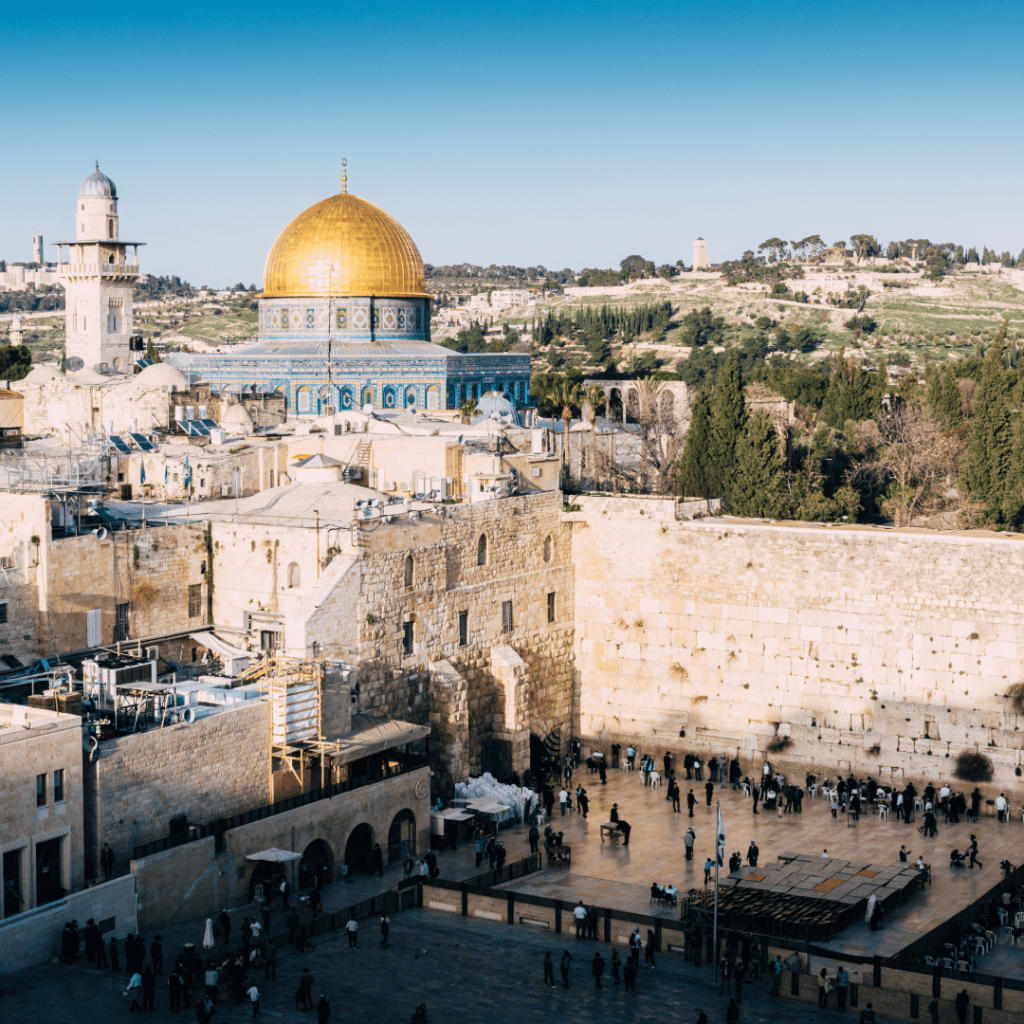
Another problem premillennialists encounter, which also presents confusion, is the offering of sacrifices during the millennium. If Ezekiel’s temple is to be erected during this thousand-year reign, sacrifices must follow (Ezekiel 40–48). But does this not stand in direct opposition to the gospel, wherein one sacrifice has been offered once and for all, and temple worship, along with the Levitical priesthood, has been abolished?
Recognising this tension, premillennialists often teach that these sacrifices will be commemorative rather than expiatory.
Others, however, argue that there can be no millennial sacrifices at all, leading to divisions within the system itself. Dr Alan Cairns, himself a premillennialist, argues that the commemorative interpretation is “a weak response to what every premillennialist recognises as the strongest challenge to the entire position.” He therefore maintains that Ezekiel’s temple is not millennial. Dr Cairns goes further still, arguing that even in Zechariah 14, which he understands as millennial, the sacrifices denote “spiritual truth … not the reintroduction of the Old Testament sacrificial system” (Cairns, Alan; Dictionary of Theological Terms, Let the Bible Speak, 2024, pages 318–319).
Hebrews is abundantly clear that Christ has offered one sacrifice for sins forever. The veil is rent forever (Hebrews 7:24–27; 10:11–14).
6: The Exalted Christ in a Fallen Millennial World
The nature of the millennium itself is a problem I see increasingly within premillennial thought.
Despite the prosperity and blessedness of this reign, the world remains a fallen place. Christ, as the exalted and glorified Redeemer, therefore presides over a world that is not fully subject to Him. He may rule with a rod of iron, yet hearts remain unchanged. The world is still cursed by sin and its effects. This effectively returns Christ to a state of humiliation while in His state of exaltation. He is humbled once again.
When Paul writes to the Thessalonians (1 Thessalonians 4:14–18) and to the Corinthians (1 Corinthians 15:51–54), Christ returns and living saints are instantly glorified, going out to meet the Lord in the air. Dead saints are reunited with their bodies and resurrected, responding to the sound of the last trumpet. An entire company of glorified saints would therefore enter the millennium only to inherit a fallen world and coexist with unredeemed mortals.
7: The Symbolic Nature of Revelation
The literal thousand years present another difficulty. Revelation 20 is the only passage of Scripture that explicitly mentions this timeframe, and it appears nowhere else in the Bible. Revelation is replete with numbers, most of which are clearly symbolic.
Does the one hundred and forty four thousand sealed in Revelation 7 literally restrict the number of the redeemed, or is it a symbolic multiple of twelve, representing completeness and divine order? The number twelve appears repeatedly: the twelve tribes, the twelve apostles, and the twenty-four elders, themselves a symbolic group representing both Old and New Testament saints. The book is sealed with seven seals, followed by seven trumpets and seven vials. If these numbers are symbolic, why should the millennium alone be pressed as a literal timeframe?
In a book saturated with symbolic imagery, why is chapter twenty interpreted differently?
8: Kingdom Theology
Kingdom theology is another aspect of premillennialism with which I struggle.
The New Testament Church is God’s Kingdom on earth. It is a Kingdom that extends beyond borders and frontiers, uniting cultures and languages. It breaks down the ancient barriers between Jew and Gentile, creating one new man (Ephesians 2:11–22).
The Church is the Kingdom community, possessing a new humanity and a new Christian order for the world.
Is the Kingdom future, or is it present? Christ said the Kingdom is within—or among—us, born in our hearts. Is Christ a King today, or is He yet to be crowned? Is He not triumphant now as King of kings and Lord of lords? Do we truly await a future Kingdom, or is the Kingdom already here?
This is not to deny a future consummation. Christ will return to establish a new heaven and a new earth. The old fallen universe will be consumed with fire, and a new eternal state will emerge wherein righteousness dwells. Yet this future Kingdom is the consummation of the present Kingdom, not its replacement. All things will finally be made new (2 Peter 3:13).
The Millennial kingdom, however, places the Jew at the heart of the Church rather than as part of the Church. This is based on the return of Christ to the state of Israel and the city of Jerusalem, and appears to contradict the New Testament purpose of the Church in the overthrow of the old covenant order.
9: Premillenialism and Revival
Another feature of my formative spiritual education was a strong belief in revival. From my earliest Christian experience, revival was understood as a gracious work of God in history—an outpouring of the Spirit that brought spiritual renewal to the Church and gospel blessing to the nations.
Acquaintance with premillennial thinkers, however, gradually led me to the conclusion that within this framework the literal millennium becomes the true hope for the world and the Church. In practice, the present age is viewed not as one of gospel advance, but of inevitable decline. Revival, if acknowledged at all, is regarded as an exception rather than an expectation.
While many premillennialists are most passionate in their promoting of foreign missions and while their evangelistic zeal is undiminished they baulk at the idea of international revival.
I heard one teacher argue that while revivals may come in localised settings he could not see a case for worldwide revival among the nations.
As a result, hope takes on a negative character, for the future is said to be necessarily preceded by the emergence of Antichrist and a period of tribulation. Expectation therefore becomes one of doom and gloom rather than victory and blessing. The hope of revival is slowly extinguished and, in practical terms, becomes scarcely worth praying for, given the belief that Christ’s return and His Kingdom are drawing imminently near.
This raised serious and troubling questions for me. Should we pray for revival at all? If we are only to pray for what lies within the will of God, is it wrong—even sinful—to pray for revival? Is Christ’s return so imminent, and are the days so dark, that the era of revival is now over? Are the promises of gospel blessing to the nations no longer to be expected in history?
These were not merely academic questions. They struck at the heart of Christian hope, prayer, and mission. A theology that subtly discourages prayer for revival and conditions the Church to expect only decline appeared to me increasingly at odds with both Scripture and the history of God’s dealings with His people. Wrestling with these issues would eventually draw me toward postmillennial thinking, where revival, gospel advance, and the growth of Christ’s Kingdom once again occupy a central place in God’s redemptive purposes for history.
10: Antichrist and Historic Protestant Thinking
One final problem worth considering is the Antichrist.
Protestants have long taught—indeed this view was prevalent even before the Reformation—that the Papacy represents the state or system of Antichrist. He sits in God’s temple, the Church, acting as God, with pretentious claims of infallibility and supremacy over Christendom (2 Thessalonians 2).
Premillennialists, however, teach a political Antichrist—a final personal embodiment of evil. While he may be both political or religious he must be either a system or a person. But can his roots be drawn from the political systems of the world or must he be primarily religious or spiritual in character.
If the Church is the Kingdom, it follows that Antichrist will arise within that Kingdom. Has premillennialism been guilty of deflecting attention away from the true Antichrist?
While it is true that there will always be a spirit of antichrist in the world, manifesting itself religiously, culturally, and politically, the insistence that this opposition to Christ must be embodied in one final individual is a defining feature of premillennialism and one that must be carefully questioned.
Having wrestled with these questions, I began to realise that Luther and Calvin, along with a multitude of others, cannot be dismissed as mistaken, as some would allege. This was a matter about which I could neither be complacent nor ambivalent. Further thought and prayer were required before I finally came to a settled view on what the Scriptures teach concerning the future.
Taken together, these considerations led me to conclude that premillennialism, while sincerely held by many godly believers, presents a system fraught with internal tensions—exegetical, theological, and pastoral. Its understanding of the judgment, the Kingdom, the work of Christ, the nature of history, and the hope of revival failed to satisfy what I saw as the overall trajectory of Scripture.
This realisation did not immediately resolve all my questions. Rather, it compelled me to re-examine the biblical teaching concerning the Kingdom of God, the reign of Christ, and the progress of the gospel in the world. What emerged from that study was not merely a questioning of premillennialism, but a growing conviction that Scripture teaches a future of revival, an eschatology of Holy Ghost power, for Christ’s Church in this broken and sinful world.
The next blog in this series will examine my objection to the pretribulation version of premillennialism and the serious flaws in the Dispensational scheme of which it is a part.
GLOSSARY
Eschatology – Many premillennialists emphasise what they understand to be a consistently literal interpretation of Scripture
Premillennial – The belief that Christ will return bodily before a millennial reign described in Revelation 20, commonly understood as a future period of Christ’s rule.
Posttribulation – A premillennial view holding that Christ returns after the Great Tribulation, typically rejecting a pre-tribulation rapture and the Dispensational theory.
Secret Rapture – A Dispensational teaching that Christ gathers His Church prior to the Tribulation in a coming distinct from His public return.
Dispensationalism – A theological system popularised by the Scofield Reference Bible, dividing history into distinct dispensations and often distinguishing sharply between Israel and the Church.
Amillennial– The view that the millennium of Revelation 20 is symbolic of the present reign of Christ during the New Testament age, rather than a future earthly period. The term ‘amillennialism’ is potentially misleading, as it does not deny the millennium but interprets it symbolically.
Postmillennial – The belief that Christ will return after a prolonged period of gospel advance and widespread obedience to Christ among the nations
 Clogher Valley Free Presbyterian Church