
Bible Readings
1st Corinthians 1:1-9; 6:9-10
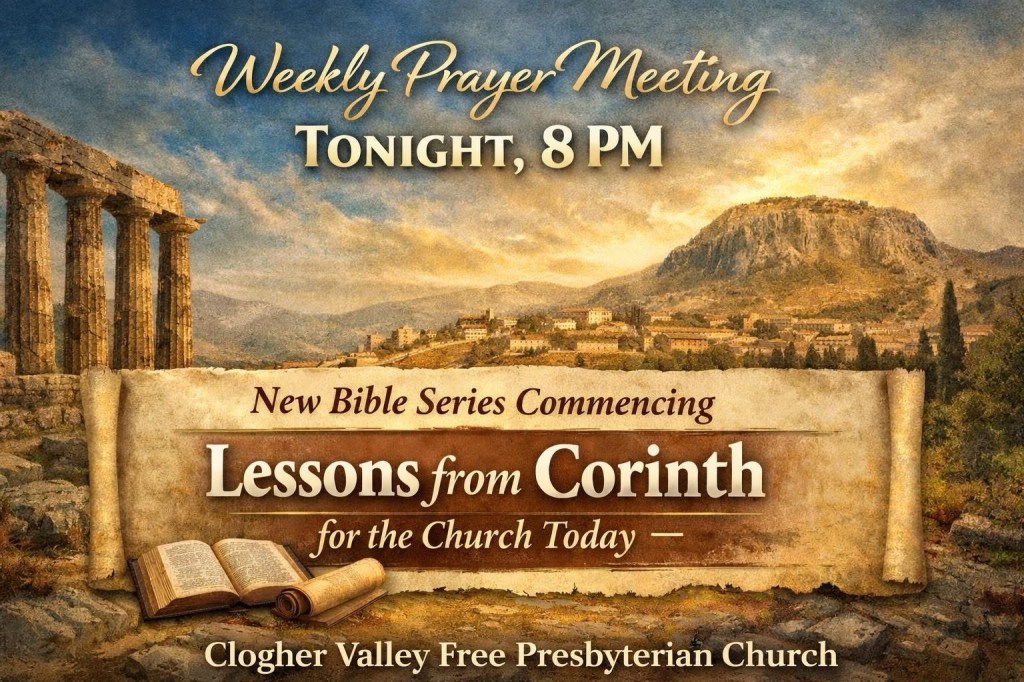
This study is the first of a series drawing lessons from the Corinthian Church for the 21st Century Christian Church in our generation.
Series introduction
The story of the planting of the Church at Corinth can be read in Acts 18:1-17.
This was a congregation personally planted by the Apostle Paul on his second missionary journey. Along with the congregations in Galatia, Philippi, Thessalonica and Ephesus – Corinth is one of the churches with whom Paul is most associated.
Paul entered Corinth after being imprisoned at Philippi, forced to leave Thessalonica and Berea. He also came to Corinth alone having parted from his companions prior to his entry into Athens – the old citadel of ancient Greece.
It was here that he was introduced to Aquila and Priscilla, the Christian couple who, sharing his tent making trade, would be long associated with the Apostle. God visited His servant with a special promise in this city and for these people – that he would be given much people. He needed this promise. Corinth was reputed to be the most immoral city in the Roman world. To the Corinthians, whose very name was dishonorable beyond the walls of the city, Paul preached Christ, claimed the promise of God and claimed these slaves of sin for the Gospel.
The Apostle remained one year and a half in Corinth before moving on. He was a firm believer in discipling and mentoring. The Christian life is a work in progress and the community of which we are a part is flawed at its very best. Therefore, Paul wrote two inspired teaching letters to the flock that he had planted.
It is evident that his relationship with the Corinthians was deeply complex. When he first came among them it was with weakness and fear (2:3). Such was the shallow nature of the people that he found himself in a popularity contest with Apollos (3:4). He had other deeper problems to address such as sexual promiscuity and turning the Lord’s Supper into a pagan feast. Therefore the first letter was a putting into order the things that were wrong among God’s people.
As Paul begins, however, he does so positively. What can be more positive than the grace of God? He would return to this theme later in the letter.
Despite our flaws we too are a congregation made perfect by grace alone.
This study shows how God views His church not through its failures, but through the finished work of Christ.
THE CALLED CONGREGATION
In 1:9 Paul acknowledges that these people “were called by God into the fellowship of His Son, Jesus Christ our Lord”. This calling was by grace alone, for which Paul thanked God (1:4).
It is in his opening address, however, that Paul articulates the full extent of this gracious calling (1:3).
a – “the church of God which is at Corinth”. Everything which the Apostle would write to these people was predicated upon this identity. The people were accountable to God, the work was the Lord’s. They were duty bound to hear His instruction.
b – “sanctified in Christ Jesus, called to be saints”. Despite their shortcomings they were the Lord’s saints. This is the prism through which God views, even His struggling people. This encourages us as we labour with our sin. This is how we should frame the people of God, we are all God’s saints. We have been set apart for peculiar favour.
c – “with all that in every place call upon the name of the Jesus Christ, both theirs and ours”. The local body is one part of a universal Church. Our Presbyterian structures acknowledges this truth and we ought to treasure the unity we have with our sister churches and with other Christians. Corinth was quite different from Rome, Philippi and Ephesus yet they were all Christ’s body in sacred unity.
THE GIFTED SAINTS
“That in everything ye are enriched by him, in all utterance, and in all knowledge…ye come behind in no gift” (1:5,7)
The Corinthians yearned for gifts and at times in their haste they developed practices which were counterfeit gifts. What they didn’t realise was that God had enriched them with more gifts than they realised.
As Christians we are complete in Christ. Within His body He has enriched each one one of us, giving us unique talents and opportunities for service. We need to be content with these gifts, praying they would be developed and lived out in our experience.
THE CONFIRMED CHRISTIANS
“waiting for the coming of our Lord Jesus Christ: who shall also confirm you unto the end, that may be blameless in the day of our Jesus Christ. God is faithful” (1:7-9)
The people had their sins and their failures. But one day they would be blameless. God would preserve HIs people for eternity.
THE CONVERTED SINNERS
“Know ye not that the unrighteous shall not inherit the kingdom of God? Be not deceived: neither fornicators, nor idolaters, nor adulterers, nor effeminate, nor abusers of themselves with mankind, Nor thieves, nor covetous, nor drunkards, nor revilers, nor extortioners, shall inherit the kingdom of God. And such were some of you: but ye are washed, but ye are sanctified, but ye are justified in the name of the Lord Jesus, and by the Spirit of our God.” (6:9-11)
This famous passage, known as “such were some of you”, colours our attitude towards the Corinthian Christians. In converting the Corinthians God brought a people with baggage into the Church. Their lifestyles were typical of the Corinthian moral climate. These people had indulged in all manner of sexual sin including homosexuality. They had indulged in all kinds of sensual gratification.
But no longer. They were now washed in Jesus blood, sanctified by the Spirit and justified in the name of Jesus Christ.
The baggage of the past, however, meant that Paul had problems to deal with which were unique to Corinth. The Church struggled at times with moral failure, which required the strength and tact of a faithful pastor. But still these were the Lord’s people loved and cherished by the Great Shepherd of the flock.
As evangelical Christians we tend to live in a sheltered environment. Little do we realise but the spirit of Corinth is all around us. From drugs to sexual sin, we have it all. For the Church to make progress we must pray that God will break new ground and convert such sinners, that it will be the talk of the district. Yet these sinners need our patience, our understanding and our love because their conversion will bring new challenges to the Church.
We would do well to examine our own hearts at this point. Is there, at times, a subtle spiritual pride that can creep in among us? Are there moments when we may find ourselves uncomfortable, because there are some sinners we would rather not have sitting on our pews? Do we do as Christ did when he stopped with the woman at the well or protected the woman taken in adultery? Or are we more comfortable passing by on the other side. Is evangelical pride or spiritual snobbery the idol that rules our hearts?
For example – Are we more concerned with what women are wearing or not wearing hats or what men are wearing or not wearing ties than we are with the souls of men and women? I believe in the head covering (these studies will cover this topic) and in dressing with reverence in God’s house. Our Presbyerian heritage gives us good order. But we must always remember the Lord looketh upon the heart. A church without understanding, love and patience will never be equipped to break new ground for the gospel.
Ultimately the “such were some of you passage” teaches us the power of the gospel. The gospel is without discrimination. It is presented to all men and women and has the power to change all manner of lives and lifestyles. It a message that teaches conversion through repentance. The converted sinner may not be all that he should be but neither is he what once he was.
Let us be encouraged in what God has done for us, poor sinners as are by nature. Let persist in praying, reaching, witnessing – looking for conversions that will challenge our pride and shake our community.
 Clogher Valley Free Presbyterian Church
Leave a comment