
This post is a summary taken from the transcript of a talk given to Lisbellaw District No 2Loyal Orange Lodge on Saturday 16th October 2025. The complete lecture is available on YouTube.
At first glance, Martin Luther might seem an unlikely figure to appear on the bannerette of Lisbellaw District Loyal Orange Lodge — a German monk from the sixteenth century, living in a world vastly different from our own. And yet, what he did over five hundred years ago still burns brightly among us. Luther lit a spark — a spark that became a flame, and that flame became a great light. The Reformation wasn’t merely an episode in church history; it was the rediscovery of the Gospel light itself, and that light continues to shine.
The Story of the Bible — and the Spark That Changed Everything
If we want to understand the Reformation, we must begin with the Bible. The Reformation is, at its heart, the story of God’s Word being restored to His people. The key verses that inspired Luther — and continue to inspire us — are found in Romans 1:16–17:
“For I am not ashamed of the gospel of Christ: for it is the power of God unto salvation to every one that believeth… For therein is the righteousness of God revealed from faith to faith: as it is written, The just shall live by faith.”
Those words changed Luther’s life, and they changed the world.
Before Luther, before the Reformation, Europe was spiritually dark. The Bible — the very Word of God — was kept from ordinary people. It existed only in Latin, a language long dead to common folk. Worshippers sat in churches where prayers were spoken in words they couldn’t understand, while the Scriptures were locked away behind the walls of monasteries. The church of that age insisted that only priests and scholars could interpret God’s truth. Faith had become tangled in superstition, fear, and corruption.
The world before The Reformation was dominated by this darkness. Yet God was at work, preparing the ground for change.
A century before Luther, a brave Czech preacher named Jan Hus proclaimed that salvation came by faith in Christ alone. For that, he was condemned and burned at the stake at the Council of Constance, 1415. His last words proved prophetic – “You’re going to burn a goose, but a hundred years from now, you’ll have a swan that you can’t cook or boil”. Within one hundred years, God indeed raised up a man whose calls for reform could not be silenced.
Then came 1455, and with it one of the greatest inventions in human history: the printing press. Johannes Gutenberg’s press would forever change the world’s access to knowledge. The very first book printed was a Bible. Even though it was still in Latin, the printing press laid the foundation for something miraculous — the mass distribution of Scripture in the language of the people.
And in 1516, a scholar named Erasmus published the first printed Greek New Testament, opening the door for men like Luther and William Tyndale to translate God’s Word into everyday tongues. The timing could not have been more divine. Just one year later, in 1517, Luther nailed his Ninety-Five Theses to the church door in Wittenberg — an act that would shake the world.
The World Before Luther
To truly appreciate what Luther did, we need to understand what came before. Medieval Europe was dominated by a powerful church that claimed authority not only over souls, but over nations. The papacy controlled vast wealth and dictated to kings. The poor were told that forgiveness could be bought through indulgences — payments to the church that supposedly reduced punishment for sin.
The gospel of grace had been replaced with a message threatening only fear.
Ordinary people lived in terror of death, purgatory, and hell. They were told that Christ was too holy to approach directly, that they must come through Mary or the saints, that salvation could only be found through the sacraments and the church’s approval. The simplicity and beauty of faith in Christ alone had been lost.
But God, in His providence, was preparing a man — and a movement — to bring the light back.
The Miner’s Son Who Shook the World
Martin Luther was born in 1483 in Eisleben, Germany, the son of a miner. His father wanted him to become a lawyer, to earn a respectable living. But one night, caught in a violent thunderstorm, young Luther was struck by fear of death and made a vow: “If I survive, I will become a monk.” True to his word, he entered an Augustinian monastery.
Life in the monastery was hard and austere. Luther sought peace with God through fasting, prayer, and self-punishment. He later said, “If ever a monk got to heaven by monkery, it was I.” Yet despite his efforts, he found no peace. He saw only a God of judgment, not of grace.
Then came the turning point. Sent to teach theology at the University of Wittenberg, Luther began to study the Psalms, Galatians, and Romans. There he discovered something revolutionary: righteousness was not earned but received. Salvation was not a ladder we climb to reach God — it was a gift God freely gave through Christ.
When Luther grasped the meaning of Romans 1:17 — “The just shall live by faith” — his heart was set free. “It felt,” he wrote later, “as though I had entered paradise itself.”
A Fire on the Church Door
In 1517, Luther heard of the work of the Dominican friar Johann Tetzel selling indulgences — promising forgiveness in exchange for money to fund the Pope’s new cathedral, St. Peter’s Basilica in Rome. Outraged, Luther wrote Ninety-Five Theses, statements challenging this corruption and calling for reform. He posted them on the door of Wittenberg Church on October 31st.
That date — October 31st — should be remembered not as Halloween, but as Reformation Day, the day the Gospel light broke through the darkness.
The Theses spread rapidly, thanks to the printing press. Within weeks, copies were read across Germany and beyond. The church reacted with fury. Luther was summoned to recant, but he refused. At the Diet of Worms in 1521, he stood before Emperor Charles V and declared, “Here I stand, I can do no other. God help me.”
That single stand — a monk defying the might of empire and papacy — was one of the defining moments of history.
The Power of the Printed Word
God had perfectly aligned the events of history. The invention of printing, the spread of Erasmus’s Greek New Testament, and Luther’s rediscovery of the Gospel all converged. Luther became one of the first great authors of the printing era, writing and publishing prolifically. His works spread faster than any before, reaching millions hungry for truth.
In 1522, Luther completed his translation of the New Testament into German. For the first time, ordinary men and women could read the Bible in their own language. This proved to be a defining moment, in the development of the German language and of the Reformation itself. God instead of being remote suddenly became real and intimate. No longer did people require the Pope and his legion of priests to dispense the sacraments in order that they might know God. The voice of the divine was now heard in German. The ordinary could meet the extraordinary and the natural could meet the spiritual in the pages of Holy Scripture.
A Bible for the Ploughboy
William Tyndale, inspired by Luther, soon followed in England, declaring that he would make the ploughboy know more of the Scriptures than the learned priests. Tyndale’s English Bible would shape not only faith but the English language itself.
Prohibited from publishing and printing his work in England Tyndale was forced to flee to Europe. As the contraband Scriptures flooded England the powers of State and Church led by Henry VIII and Cardinal Thomas Wolsey were determined that Tyndale must be stopped. Tyndale was betrayed in Antwerp, Belgium, strangled, and burned at the stake in 1536. His dying prayer was, “Lord, open the King of England’s eyes.” Within a few years, God answered that prayer through the The Great Bible which was published with the King’s approval. This translation based upon the work of Tyndale was placed in every Church so that even the poorest could have access to the Scriptures. Tyndale’s translation can still be heard today in the majesty of the King James Version, which in 1611, was the pinnacle of Reformation scholarship. The Scriptures at great cost had reached the English ploughboy. As English speakers we can trace our Bible from Tyndale right back to the German monk and his vision that God must be accessible to all.
The Gospel Light Reaches Scotland and Ulster
The fire that began in Germany spread to Scotland through a young nobleman named Patrick Hamilton. He had studied in Europe and encountered Luther’s teachings. Returning home, he preached justification by faith — and was burned at the stake in 1528. His courage lit a torch that others carried forward: George Wishart, who also gave his life for the Gospel twenty years later, and his pupil John Knox, who became the leader of the Scottish Reformation.
Knox famously prayed, “Give me Scotland, or I die.” God answered that prayer. The Gospel took hold, Presbyterianism was born, and with it came a love of education, liberty, and Scripture. Schools and universities flourished. The conviction that every believer could know God personally and read His Word for themselves transformed not only the church but society itself.
Many of our ancestors here in Ulster trace their faith to that Scottish Reformation. When King James I encouraged settlement in Ulster during the early 1600s, many Scots came — not only seeking land, but freedom to worship according to conscience. Among them were Presbyterian ministers who carried the same Book Luther had loved, the same message Knox had preached, and the same Gospel that had once set a German monk free.
One early minister, Robert Blair of Bangor, wrote upon arriving in Ulster:
“I met unexpectedly so sweet a peace and so great a joy, as I beheld it as my welcome hither… The Lord proved the same to me in Ireland as He had been in Scotland.”
Thus the Reformation flame burned on — from Wittenberg to Geneva, from Geneva to Edinburgh, and from Edinburgh to Ulster. It was the Gospel light, spreading after darkness.
The Legacy That Shaped the Modern World
Luther’s message went beyond theology. It changed how people saw themselves. He taught that every believer is both a king and a priest — directly accountable to God, with dignity and purpose. That truth inspired revolutions in freedom, education, and democracy. Nations that embraced the Reformation flourished. Concepts we take for granted — individual rights, literacy, representative government — all grew from the soil of a rediscovered Gospel.
The Reformation birthed a missionary movement that carried the Bible to every corner of the earth. Men like William Carey in India, who fought against the cruel practice of widows being burned alive, traced their passion for justice back to Luther’s rediscovery of grace.
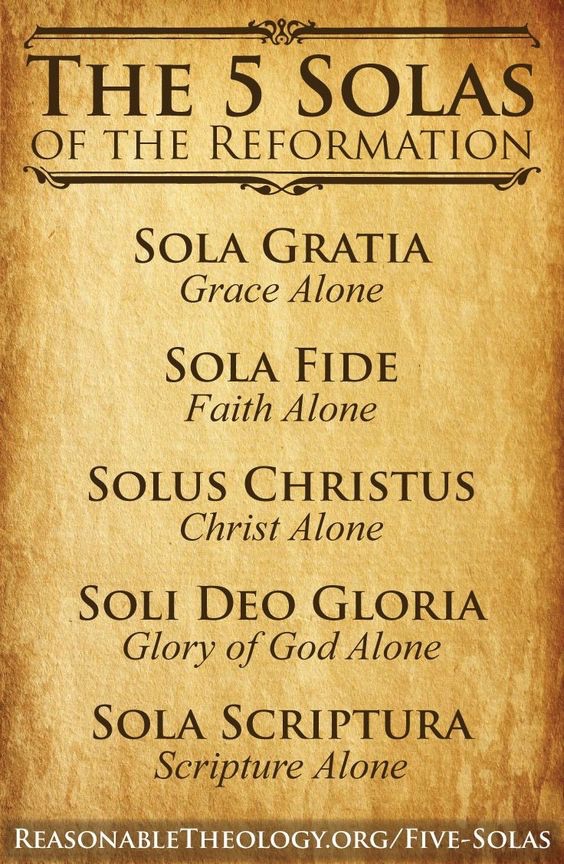
The Reformation’s message is timeless: Grace alone. Faith alone. Scripture alone. Christ alone. To God’s glory alone.
 Clogher Valley Free Presbyterian Church
Leave a comment