
DEFINING THE SUBJECT
Church History is the study of Christianity from the close of inspired history in the New Testament to the present. This includes the study of the people whose lives and ministries shaped the development of the Church and the growth of movements within the body Christ. Very often at the heart of our Christian past are the martyrs of the cross and their profound influence upon the Church of the future. Church History also involves the study of controversies within the Church and the divisions that they sparked. As these disputes were largely theological the Church learned to carefully define doctrine in order that heresy might be avoided in the future. This particular aspect of Church History is known as Historical Theology. Church History, therefore, studies the heretics and the apostasy of the Church as well as the champions of the faith, the revivals and missionary endeavours.
A VITAL DISCIPLINE
Church History (and Historical Theology) is a most vital discipline of Christian study. Many of the great theologians in history, including the Church Fathers were historians, who took with seriousness, the importance of recording and learning from the past. Outside of Scripture, preachers derive more material for their sermons from Church history than any other source. A Bible College which does not regard the importance of Church History is unworthy of the name.
RELATIONSHIP WITH SECULAR HISTORY
Furthermore Church History frequently intersects with what we may loosely call secular history. Indeed the title for this article may well have been “Why Should the Christian Study History”; the answer would be substantively the same. Secular history has influenced the Church and the Church has likewise influenced the State. Governments, Emperors and Nations have persecuted Christianity, while Christian virtues eventually made their way into the ethos of every country in the western world. Any student of Church History will therefore, only understand each period by knowing something of the secular background. Every Church historian is also an historian of all history. Therefore, those who study the history of the Church see the big picture. Secular historians who major on temporal matters in the affairs of men only get a snap shot; they miss the most important historical truths of all.
1: CHURCH HISTORY IS THE STUDY OF GOD’S PERSON
At the heart of all history is the providence of a Creator who is no absentee landlord, but the supreme Governor whose sovereignty has entire world as well as the whole universe in His hands. There is no branch of learning, which can be effectively studied without a faith in the God that is. The logic of Maths, the communication through language, the wonders revealed by cosmology and discoveries of science can only be effectively understood through the lens of Scripture and faith.
This was a lesson, which Nebuchadnezzar learned after his period of insanity imposed by God as judgment because of the sin of human pride:
And all the inhabitants of the earth are reputed as nothing: and he doeth according to his will in the army of heaven, and among the inhabitants of the earth: and none can stay his hand, or say unto him, What doest thou?
Daniel 4:35
CHURCH HISTORY IS THE STUDY OF GOD’S PATTERN
History is the key to understanding God’s revelation in Scripture
The Bible begins with a fact – “In the beginning God created”. Our view of the world and humanity is informed by this event. Our understanding of humanity, however, is developed with the knowledge that our first parents sinned and as a consequent were visited with hardship snd death. The world, that was once perfect, was broken; a brokenness that we feel to the present.
REDEMPTION
At the heart of God’s revelation is the redemption of his fallen human race. The history of the Messiah is predicated by the family and nation into which he was born; which dominates the Old Testament story. The Gospel is based upon the works of Matthew, Mark, Luke and John; brief books which contain the most precious story ever told. The teaching of the New Testament and subsequent history of the Christian Church hangs upon the most triumphant fact of all – the Resurrection. Atheists and those of non-Christian religions struggle when confronted with the consistency and credibility of the Gospel record, which points to this greatest fact of all. It is only when this fact is successfully disproved that Christianity is undermined. After 2,000 of progress from total obscurity and apparent defeat the Christian faith has nothing to prove.
If God uses the facts of inspired history to such devastating effect, then we must be deeply interested in the facts which follow the New Testament – the works of God among His people in all of history.
CHURCH HISTORY IS THE STUDY OF GOD’S PROGRAMME

Christ revealed His plan for His Church in future history, a plan which continues to progress:
“And I say also unto thee, That thou art Peter, and upon this rock I will build my church; and the gates of hell shall not prevail against it.”
Matthew 16:18
Not only the writings in the Book of Acts but all of history ever since records how God is fulfilling this programme in the building of Christ’s Church. We should be intensely interested in God’s programme for Church expansion as detailed in our Christian past.
This programme is one of persecution

This was the first reality of Christian witness for our earliest brothers and sisters. Throughout much of the Church’s history she has suffered discrimination, prohibition, imprisonment and martyrdom. This commenced prior to the close of the New Testament age with the deaths of James and Stephen and the banishment of John to Patmos. While their deaths are not recorded it is certain that Paul and Peter had both cruelly met with death at the hands of Roman barbarism. Until the rise of Constantine to the seat of the Emperors in the fourth century, the Romans persecuted Christianity in varying degrees and intensity. This terrible period was exemplified by the raging battle between the dragon (Satan) and the woman (the Church) in Revelation 12. This struggle wages to the present as Satan vies to destroy the Kingdom of Christ, but the gates of hell shall never prevail. The Colosseum at Rome represents more clearly than anywhere else the sufferings of the little flock. As Christians were driven hideously into the arena to be torn apart by wild beasts before a fanatical crowd of spectators God was building His Church. Their faith and courage changed many lives. The blood of the martyrs became the seed of the Church. It is reported in the 19th Century that when a group of tourists visited the Colosseum the guide described the ground that they walked on as the dust of the martyrs of God. Also in Revelation we see the martyrs under the altar crying:
” And they cried with a loud voice, saying, How long, O Lord, holy and true, dost thou not judge and avenge our blood on them that dwell on the earth?”
Revelation 6:10
God does not forget the martyrs, neither should we!
God’s program also includes purification
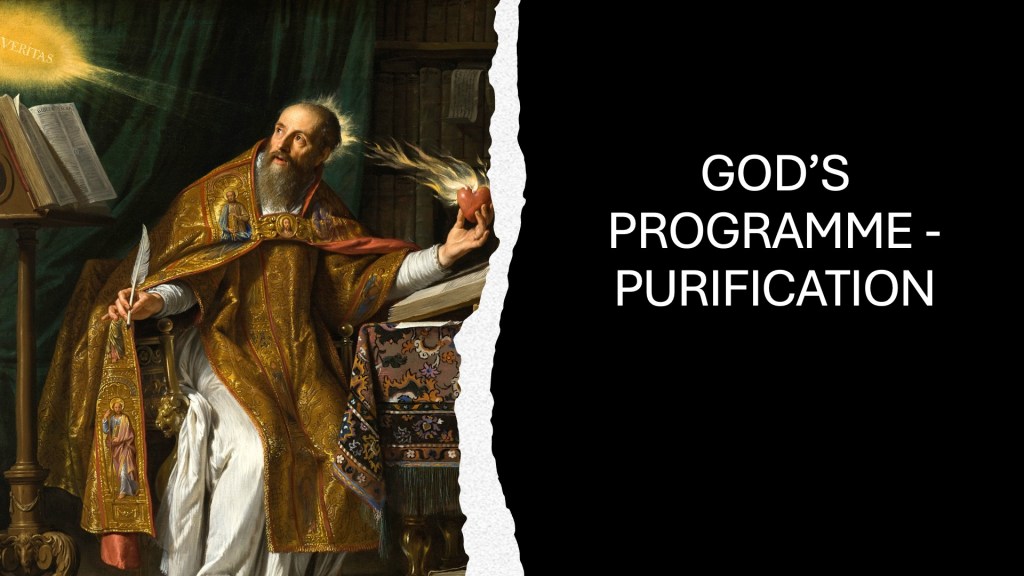
The progressive and constant purification of the Church is an enduring theme throughout the history of Christianity. This is so because the body of Christ often becomes polluted with falsehood, as Paul’s warning to the Ephesian elders concerning men even arising of their own selves, drawing away disciples after them, indicated (Acts 20). Heresies arising among the faithful necessitates controversy, a more careful definition of truth and brings about either the excommunication of the false teacher or the withdrawal of the faithful.
In the 4th Century Arius of Alexandria caused much havoc among Christians by teaching that Christ was a created being; He wasn’t the Son of God and the Trinity did not exist. The popularity of Arius’ teachings (which still exist today as Arianism) necessitated the Council of Nicea (325AD) which affirmed the faith of the Church in the Trinity and the Deity of Christ. The Nicene Creed continues to be one of the most significant Christian creeds in all of history and continues to be useful in separating truth from error.
We believe in one God, the Father Almighty, Maker of all things visible and invisible.
And in one Lord Jesus Christ , the Son of God, begotten of the Father [the only-begotten; that is, of the essence of the Father, God of God], Light of Light, very God of very God, begotten, not made, being of one substance with the Father; by whom all things were made [both in heaven and on earth]; who for us men, and for our salvation, came down and was incarnate and was made man; he suffered, and the third day he rose again, ascended into heaven; from thence he shall come to judge the quick and the dead.
And in the Holy Ghost.
Arius and his followers continued to caused havoc and division among the Church and were it not for the bold and uncompromising of Athanasius of Alexandria the battle won at Nicea would have been lost forever. The Arians eventually formed their own churches and withdrew from mainstream Christianity.
Another example of the purification of the Church is the controversy between Pelagius and Augustine in the 5th Century. Pelagius was a British born monk who taught that works and not faith were was the essential precondition of salvation. It was a message which inflated human human pride and proved most popular; coming from a msn who lived a strict and disciplined life. In Africa, however, there was a Bishop called Augustine who had been converted dramatically after a life deep immorality. Knowing the power of grace Augustine resisted the teachings of Pelagius with vigour. While victory for Augustine was secured and grace alone was affirmed something of the falsehood lingered in Christianity developing into the semi-pelagianism of the Roman Catholic communion. As for Augustine, his confessions remain one of the classic testimonies in all of history. His teachings had a most profound effect upon Luther and Calvin 1,000 years later, as a another great purifying movement arose – the Protestant Reformation. In truth – this controversy never truly leaves the Church.
Through the constant purification of the Church, God has maintained a stream of undiluted truth. There are no new doctrines to discover, no books to add to Scripture and there are no different creative practices to add into congregational worship. Charles Wesley wrote of “Truth, unchanged, unchanging”, which for me is one of the finest examples of godly hymnology.
UNCOVERING OUR ROOTS
To discover what we believe, we uncover our roots. Rome claims antiquity urging upon the Church the Papacy of Peter and the continuity of his successors. To argue against their position we too must go back, where we will discover that the Bishop of Rome only had precedence after the collapse of the Roman Empire and even then his dominance was gradual. By a careful sifting of the evidence we discover that the early Christians never elevated the Bishop of Rome. As that office was gaining in authority the Celtic Church of Patrick and Columba remained distinct, stubbornly clinging to the true tradition of apostolic Christianity. Especially in a Ireland, more than any other part of Europe we can trace the continuity of truth back, almost to the days of the apostles.
In building His Church Christ also ensures that His work enjoys preservation
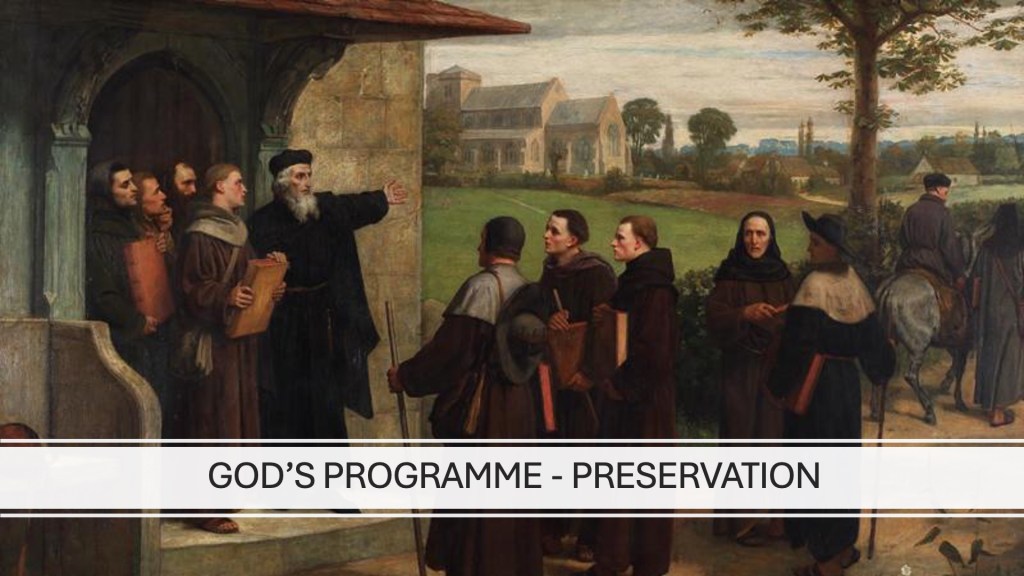
The preserving of Christianity is one of the great arguments for its credibility. Troubled by persecution by its enemies and heresy from within its ranks which resulted in terrible schisms – Christianity progressed to become the most influential and transformative force in the history of the world. The growth of Christianity is one of the great enigma’s of history. Often the body of believers has been small, weak and powerless – a speck of dust waiting to be crushed by the great and wicked secular and spiritual forces that are rampant in the world. Christianity had no empires or armies and rarely were the powers of the State truly sympathetic. But the Church had something, and still has, which the darkness of this world does not enjoy – TRUTH. John Wycliffe, the English theologian who is known as ‘the morning star of the reformation’ declared – “the truth shall prevail”. This was no more evident than in the 16th Century Reformation. Apostate Christendom filed Europe, controlled its wealth and dominated Kings and Queens. The Reformers boldly denounced the status quo as they returned Christendom to truths that had been almost lost. They were but minnows swimming in murky waters of hungry predators. Thousands of early Protestants lost their lives throughout Europe as persecutions developed. But the speck of dust was a seed and in the seed was life. And life cannot be extinguished. A mighty oak grew out the Reformation – as Protestantism transformed the not only Europe but large parts of the world. How can we account for such preservation if we discount the miraculous and he power of truth?
God’s programme for ministry also includes propagation
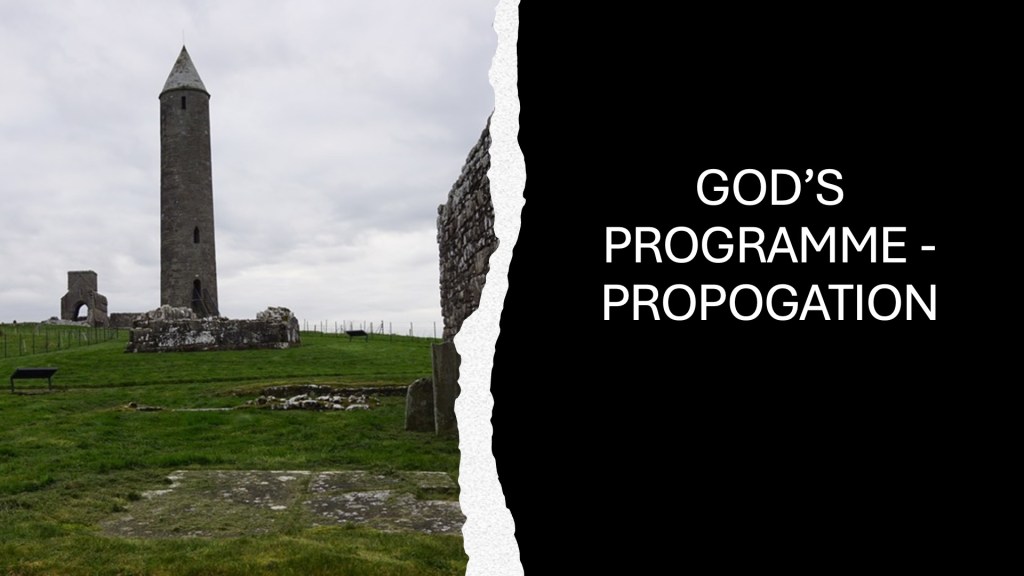
Remaining with the theme of the seed; fruitfulness requires watering and sunshine, which results in the spreading of the plant through pollination. It is God’s plan for His Church to grow and overspread the world. Therefore in our history we learn about the preachers and missionaries and their evangelistic efforts. Patrick of Ireland, Columba of Iona and Aidan of Lindisfarne lived a long time ago but they were part of a Celtic movement which was restless in energy – existing to advance the Gospel in a society steeped in paganism. During the Dark Ages God raised up Peter Waldo of Lyons in France who spawned a godly race known as the Waldensians who alone spread the message of Christ in Europe when often they only possessed a few pages of Holy Scripture. In the 18th Century the preaching of Whitefield moved souls in their thousands on both sides of the Atlantic during the Evangelical Awakening in Britain and the Great Awakening in the North American colonies. These are but a few scattered examples of ministries owned by God which enabled the Gospel to go into all the world, in obedience to the Great Commission.
CHURCH HISTORY IS THE STUDY OF GOD’S PRIORITY
There are many events which are aspects of God’s plan for the world, they have a role to play but are only subordinate to His ultimate purpose. God big priority for the world is His Church.
CAESAR AUGUSTUS
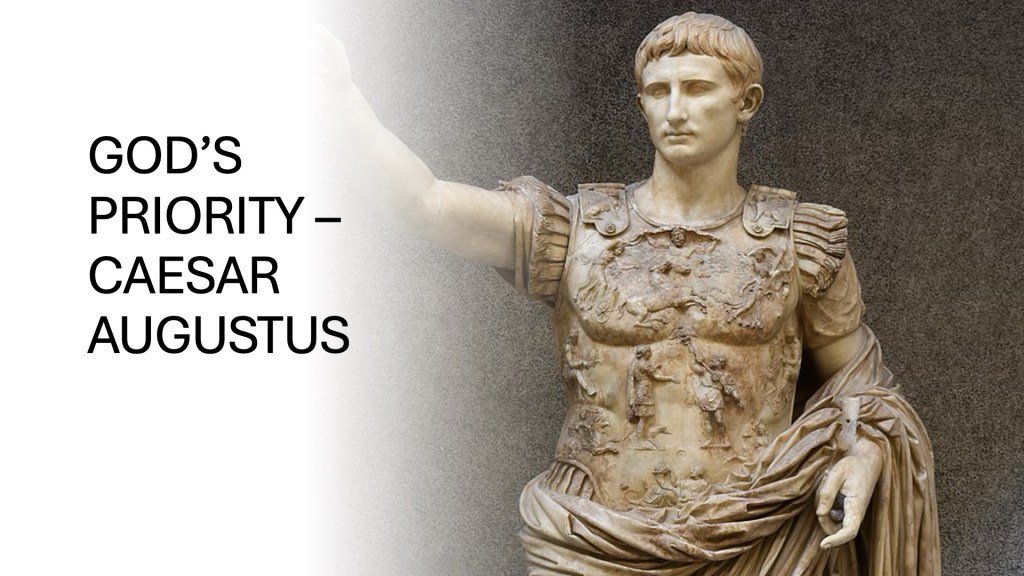
A pertinent illustration of this in Bible history is Caesar Augustus taxing his vast dominion. Octavian, who took the name Augustus, transformed Rome from a Republic to an empire becoming the first of a long line of Emperors. His power, however, was decreed by God and used for bringing of Joseph and Mary to Bethlehem at the very time when Christ would be born. The child born in Bethlehem was King of empire greater than Rome; an empire that would never pass away. This was God’s priority.
CONSTANTINE THE GREAT

We observe this priority also when Constantine won the throne of the Caesar’s after the fierce persecution by Diocletian. The verdict will always be open in the genuineness of Constantine’s conversion to Christianity. What is beyond dispute, however, is the new era of freedom his accession brought to persecuted believers throughout the world. The civil war and political upheaval that preceded Constantine’s enthronement were methods in the hand of God to bring peace to his beleaguered flock. The very religion that Diocletian attempted to exterminate became the official faith of the empire.
WILLIAM PRINCE OF ORANGE
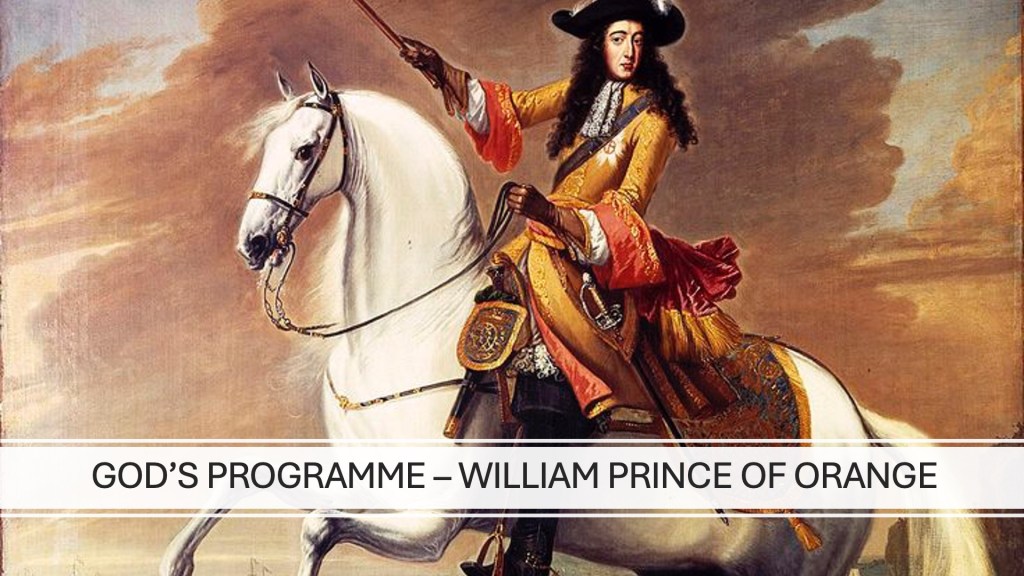
A more modern example is seen in the arrival of the Prince of Orange at Torbay in June 1688, beginning “The Glorious Revolution”. After the disastrous reigns of Charles II and James II, when faithful servants servants of God were imprisoned, with some martyred, and when Romanism was making a return to England William III brought peace and freedom. This freedom had been king prepared for. In Britain Oliver Cromwell won the principle of Parliamentary Government fifty years before the Revolution. In Holland William came from a succession of Protestant champions who had boldly withstood the claims of the Spanish King over their territory. He had been hardened in the crucible of a struggle for freedom. Furthermore in the providence of God William married his cousin, Mary the daughter of James II. It was this marriage which the Roman Catholic James strangely allowed, which gave him a legitimate claim upon the crown of England.
At the heart of world history is the Church of Christ. Earthly in Kingdoms will fade but the Church will remain. Every nation, empire and civilisation will collapse but the Church alone will,triumph because Christ is King of Kings.
CHURCH HISTORY IS THE STUDY OF GOD’S PEOPLE
God delights in His people. The study of Church history is the consideration of those whom God delights in! This study especially examines the biographies of those who made history. Church history is essentially a collection of biographies; the stories of people who lived and died for Christ, bequeathing a precious legacy of truth for successive generations.

These lives whether it be Spurgeon, William Carey or Hudson Taylor continue to inspire us to go out and make history in this generation to serve the One who puts Christ at the heart of history.
Therefore I encourage Christians to read biographies of the heroes and heroines of the faith, whose example we follow.
Wherefore seeing we also are compassed about with so great a cloud of witnesses, let us lay aside every weight, and the sin which doth so easily beset us, and let us run with patience the race that is set before us,
Hebrews 12:1
Recommended Reading to Get You Started on Your Church History Journey
Sketches From Church History; SM Houghton – survey of Church History from the close of New Testament times.
History of Protestantism; JA Wylie – classic treatment of the history of the Protestant faith.
Christian Leaders of the 18th Century; JC Ryle – short biographies of Christian leaders such as George Whitefield, John Wesley and their contemporaries.
Light from Old Times; JC Ryle – biographies of the Protestant reformation martyrs in England.
History of Presbyterianism in Ulster; Thomas Hamilton – account of our Presbyterian heritage in Ireland.
 Clogher Valley Free Presbyterian Church