
Video of this presentation available on YouTube
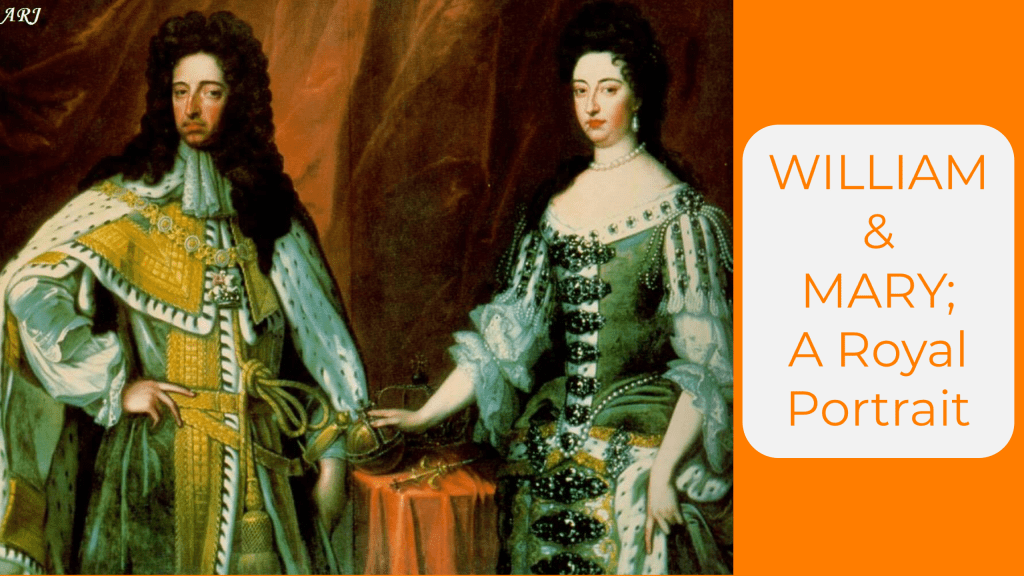
Among the Kings and Queens of Britain and Ireland William 3rd and Mary 2nd occupy a most unique position as the only jointly crowned heads of state in our illustrious history. Their story is one of family rivalries, of European conflicts and of dramatic revolution. All of this, however, would only have been possible because William and Mary loved another and were joined together in holy matrimony. Therefore this story is ultimately a love story; one which which transformed the history of our nation.
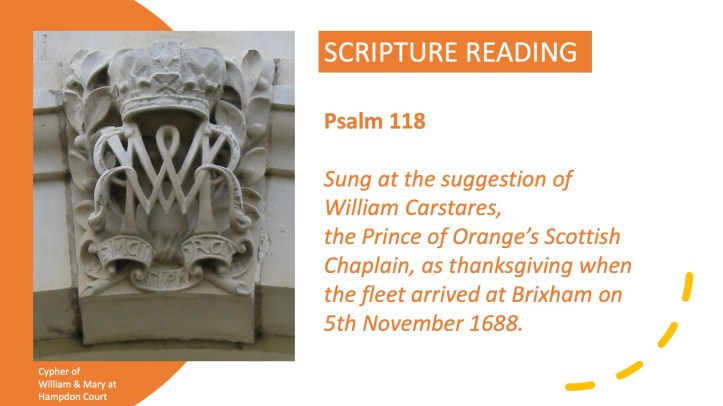
William and Mary were a Christian couple, who shared staunchly Protestant convictions. They were a couple who prized the Scriptures and who frequented the place of prayer. All that they accomplished they did so for God’s glory, in obedience to His Word and through determined intercession. This is illustrated by the singing of the 118th Psalm by the King as his invasion force docked at Torbay in November 1688, at the beginning of what would be termed “The Glorious Revolution”.
O PRAISE the Lord, for he is good:Psalm 118, Metrical
His mercy lasteth ever.
Let those who are of Israel say,
His mercy faileth never.
Now let the house of Aaron say,
His mercy lasteth ever.
Let those that fear the Lord now say,
His mercy faileth never.
I in distress called on the Lord;
The Lord did answer me:
He in a large place did me set,
From trouble made me free.
The Lord himself is on my side,
I will not be afraid;
For anything that man can do I shall not be dismayed.
The Lord doth take my part with them
That help to succour me;
Therefore on those that do me hate I my desire shall see.
‘Tis better in the Lord to trust
Than trust in man’s defence;
Better trust in the Lord than make Princes our confidence.
For Presbyterians it is of special interest that the Prince of Orange was encouraged by a Scottish Presbyterian Chaplain, indicating the favourable influence which the faith of our fathers had upon him in his spiritual journey.

(public domain)
The events of 1688 were a defining moment not only in the lives of William and Mary, but in the history of our nation. Everything that we recognise not only in Britain but around the world in terms of freedom and democracy can be traced to the Williamite Settlement of 1688.
Or can it? Historian Simon Schama argues most convincingly that there was an unstoppable momentum towards a settlement which included free speech and free Parliaments ever since the days of Cromwell. In a sense William and Mary completed the task that Cromwell began:
Whatever else it was, the English state of 1700 was unquestionably not the Stuart monarchy of 1603 or 1660. But William’s Government did have a true predecessor – and that was the Protectorate of Oliver Cromwell. For the regime that had been all too briefly established in 1657 – of a single person and a Parliament guaranteeing regular elections and limited tolerations looks like a the authentic blueprint of what actually came to pass in 1688.
Simon Schama, The British Wars
Cromwell had demonstrated that change was inevitable but England still needed a Monarch. William and Mary, were brought to the Kingdom for such a time, to usher in the beginnings of what we now call a constitutional monarchy.
Let us now take a step back, looking at the early lives of William and Mary and the influences which shaped and moulded them before they met one another, let alone embraced each other in matrimony.
The young Prince of Orange was born on 4th November 1650 in the Hague, which at that time belonged to the United Provinces of the Netherlands.
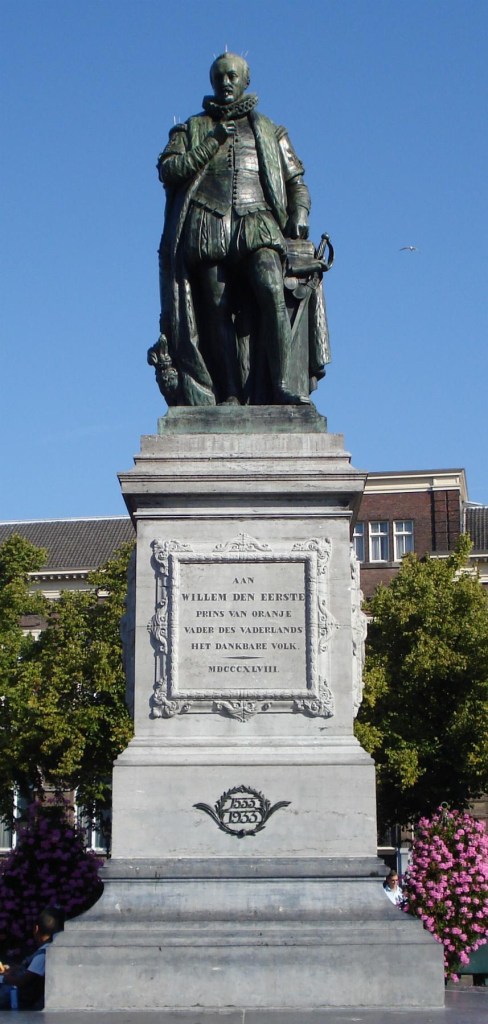
He was known as the Prince of Orange because his family inherited a Principality in southern France known as Orange. By the time he was born his family were the most famous and the wealthiest family within the United Provinces.
This was largely due to the work of his great grandfather, William the Silent who is known known as the founder of the Dutch Republic. William the Silent was German by birth and an important courtier for Charles 5th, King of Spain and Emperor of the Holy Roman Empire.
After Charles’ abdication, however, WIlliam became a Lutheran by persuasion and would later become a Calvinist. It was then that he began to take an active interest in the Netherlands, whose people had suffered horribly for their faith during the reign of Charles 5th. Among the extended territories of Spain were the Low Countries, as we call them today, whose people had greeted the Protestant Reformation with enthusiasm. To counter the Protestant influence Charles 5th instigated the Spanish Inquisition, which resulted in thousands of Dutch Protestants being executed, often in the most barbaric fashion possible.
After Charles 5th abdicated, in 1555, he wryly referred to his hobby of clock collecting as he commented upon the stubborn nature of the Dutch Protestant:
“How foolish I have been to think I could make all men believe alike about religion, when I cannot make two clocks keep the same time.”
From 1566 Philip 2nd of Spain unleashed the power of the inquisition upon the people of the Netherlands. This was the cue that William needed. He led the Dutch people in a resurgence against the most experienced army in Europe. With a bounty on his head, William was assassinated in 1584. The struggle continued until the United Provinces earned their freedom from Spain.
It is important to recognise, though, that the emergence of the United Provinces as an independent nation was rooted in the Protestant faith. This was the proud tradition into which William was born.
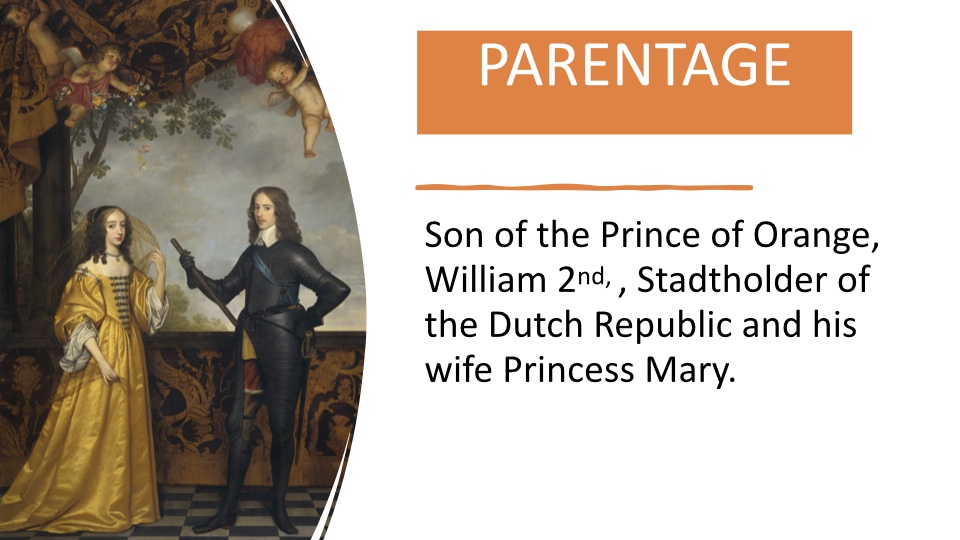
The future King William 3rd was only a few months old when his father William 2nd, the Stadtholder of the Dutch Republic died of smallpox. By virtue of the family’s unique position the United Provinces made him a ward of the State. As if being deprived of a father while very young was not a hard enough blow, being as ward of State would deprive him of all family life. This would be the first similarity that the Prince William would share with his very young, and future English bride.
William’s father died, however, in the midst of an internal conflict within the United Provinces. These provinces were a disparate union, who, while recognising the role of the House of Orange as Stadtholder, did not recognise monarchy, as the English did. To hold the provinces together would require political astuteness; this was something which the future young King William 3rd would acquire in the maelstrom of Dutch politics, when faced with their greatest challenge. We recognise providence at work in the land where he was reared, because he would require immense political judgement in leading an international alliance against the aggression of Louis 14th, while at the same time successfully removing James 2nd from the British throne, embedding a new and altogether different State.

To complicate matters even further he was his future bride’s , also Princess Mary, full cousin, with her father James 2nd being both an uncle and father-in-law; But we will come to that.
Now we pause briefly to understand William’s royal connections with the House of Stuart. His mother was the Princess Mary, daughter of King Charles 1st, the first royal to hold the title Princess Royal. When her father lost the English Civil War to Parliament, which led to his execution and the formation of the Commonwealth, Mary would see it as her mission to promote the House of Stuart abroad with a view to Restoration. This transpired in 1660 with the coronation of her brother Charles 2nd. King William 3rd was therefore a nephew to two English Kings (Charles 2nd and James 2nd) as well as being Charles 1st’s grandson and James 1st’s great-grandson. Therefore Scottish, English and European blood flowed in his veins, giving him the most cosmopolitan pedigree of any British monarch. It also made him a member of the House of Stuart.

For a future warrior King who would be distinguished for acts of bravery, the young Prince of Orange did not have the greatest of physical advantages. As a child he suffered from a curved spine, which necessitated the wearing of a corset. In later life he would be described as having a hunched back although the severity was probably exaggerated. Asthma was a childhood ailment, with which he struggled throughout his life. His appetite was poor as a child, which also continued with him into adulthood.
The most significant aspect of his upbringing, however, was his education as a ward of the State under the tutelage of Cornelius Trigland. He was a Dutch Reformed minister who had served in the famous assembly known as a the Synod of Dort. While the the term Calvinism springs from the teachings of John Calvin, the Geneva based French Reformer, it was in Holland where the theology was carefully defined. A Dutch theologian called Arminius produced a set of beliefs which caused controversy with their emphasis upon free will in a way that undermined the absolute sovereignty of God. The dispute was finally settled at the Synod of Dort with Ariminius and his supporters being excommunicated from the Protestant church. As a consequence there were no people in Europe as highly tuned theologically to Calvinism like the Dutch, with its emphasis upon total depravity, predestination and the absolute necessity of God’s grace. From a boy of five years of age William was exposed to this theology; obviously the impact was lifelong drawing him into assurance of sins forgiven. The doctrine of predestination in particular would be an anchor giving him boldness and a sense of destiny in what would be a turbulent life.
When he was nine years of age William was orphaned with the death of his mother. Mary, Princess of Orange and Princess Royal, was never particularly popular in Holland by virtue of her aloofness and suspicions as to her true religious sympathies. She never had been a powerful influence upon her young son.
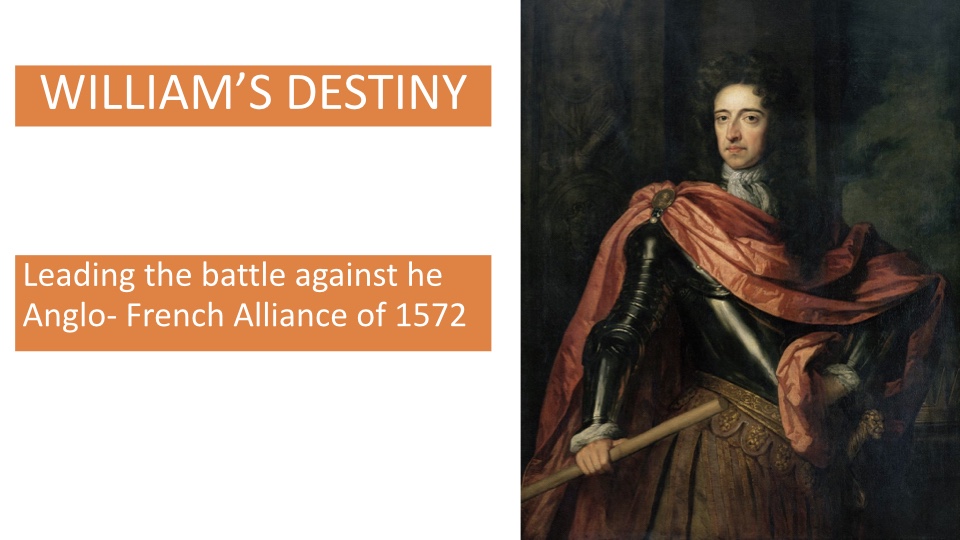
1572 was the year of national crisis for the United Provinces. Charles 2nd forsook an alliance with both the Netherlands and Sweden in favour of the financial support offered by the French King, Louis 14th, who was heading up Europe’s leading nation. England and France jointly declared war on the Netherlands in a bid to strip the Provinces of their autonomy. The motivation was partly financial. The Dutch, with their maritime coastline had developed into a most successful trading nation. For Louis , however, the extermination of Protestantism was, in his thinking as many of his disputes had, an underlying religious connotation. The most notable example of this was the revoking of the Edict of Nantes in 1685. The edict had for almost one hundred years guaranteed Protestant freedoms in France. The revoking of the Edict of Nantes led to renewed persecution of Protestants in France with 400,000 Huguenots, being forced to flee their homeland forever. These were years when Protestant freedoms were at stake, and Holland was thrust into the heart of the battle.
As a result of William’s minority and the early death of his father the office of Stadtholder had fallen into abeyance with powerful political factions ruling the United Provinces. This leadership proved ineffective, however, when faced with extinction. The English Navy bombarded the Dutch coastline while the French swamped the Provinces with 150,000 troops. At this critical juncture the Dutch people looked once again to the House of Orange. William proved most adept at engendering loyalty from those closest to him, while he displayed cunning as a military and naval commander. The English were the first to withdraw from the fray followed by the French in 1574. For the remainder of his life William would not only be Louis 14th’s nemesis but Europe’s foremost Protestant statesman. In illustrating just how intertwined and complicated 17th Century politics were, it is worthwhile reminding ourselves that Charles 2nd who attempted the naval conquest of the Netherlands was William’s uncle!

Let us now move the story to the second person in this royal duet, the young Princess Mary. She was the eldest of two daughters born to James Stuart, Duke of York, and his wife Anne Hyde, his Duchess. It is a remarkable fact that this family portrait contains the three future monarchs, Queen Anne being the last of the Stuarts and first monarch of the United Kingdom of Great Britain.
The future Queen Mary 2nd would be known for her resolute Protestant convictions and great piety. It is an astonishing miracle of providence that such a Queen would be born into such a family. Her father was a most immoral man. It is believed he fathered twenty-seven children of whom seven were borne by his mistresses. Anne Hyde was expecting their first baby when the couple were married in continental Europe, while causing scandal did not rule Anne out of the succession. James also converted to Roman Catholicism, and, as the heir to his brother’s crown, raised the spectre of the first Roman Catholic monarch since Mary 1st, otherwise known as “Bloody Mary”.

As a consequence of James’ Roman Catholicism and her place as third in line to the throne Charles 2nd made his nieces wards of State, as the Prince William had become in the Netherlands.
In the old Richmond Palace by the Thames the Villiers family raised Mary and Anne with Henry Compton, Bishop of London, being charged with their education. This particularly grieved James as Compton was known for his uncompromising Protestant beliefs. Despite the fact that Charles 2nd, ‘the merry king’, was known for his Roman Catholic sympathies, his persecution of English Puritans and Scottish Covenanters and his immoral lifestyle should make such a momentous decision as to unwittingly guide the future bride of the Prince of Orange to saving faith in Christ is a miraculous act of divine grace.
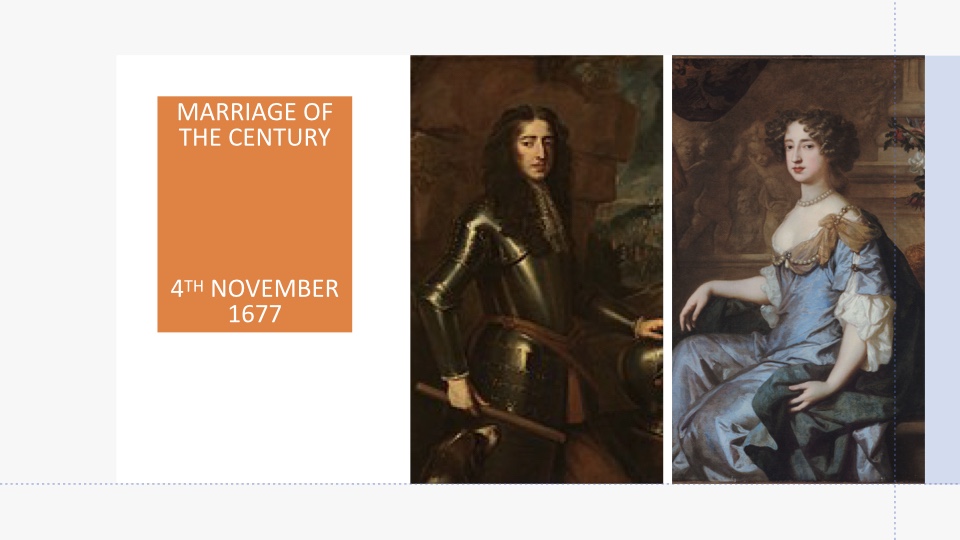
By 1577 the Prince of Orange was 27 years of age and contemplating marriage. Since the crisis of 1572 he was keenly aware of the importance of alliances which would protect the future independence of his beloved Netherlands. Therefore when the English Ambassador first suggested marriage to the Princess Mary, the heir to the English throne, he seriously considered the opportunity.
This may have been a most unromantic beginning to a great love affair, but there is no doubting that it was a match made in heaven. Poor Mary had no say whatsoever in the arrangement, her father’s input was nominal; Charles 2nd was the man who held the power over the marriage of the future heir. Having been humiliated by the Dutch Navy in the war of 1672 Charles 2nd could see certain advantages in forging an alliance with the Provinces. When William visited England Charles consented to the marriage but William unusually for the times, would agree only after meeting the young lady.
Mary, only fifteen years of age, burst into floods of tears when her father informed her she was to be wed to the Prince of Orange. William found the the Princess to be agreeable and the marriage date was set for 4th November 1577, William’s birthday.
The future hopes of England in days of crisis would rest on this marriage. The Scottish Covenanters would be saved from their years of blood letting by these bonds of matrimony. Ireland’s Protestants would have an aspiration to hold out for freedom because of these nuptials. The future of Protestantism in Europe and the world would be rescued as a result of this happy union between two young people.
It is therefore little wonder that Louis 14th said with a sense of despair and foreboding on hearing of this marriage; ; “The Duke had even given his daughter to the greatest enemy he had in the world”.

William and Mary spent eleven happy years together at The Hague. The faith that they shared gave them a common purpose and helped to cement their love. She grew to love the cleanliness and order of Dutch society as they grew to love her. They found her much more accceptable than the former Princess of Orange, William’s mother.
It seemed, however, that their marriage was constantly beset by problems.
Personally, it was a great disappointment to Mary, that she never bore William a child. She suffered at least two miscarriages. The latter Stuarts were not blessed with children and good health; if children were born they were invariably not healthy and died young.
A more serious problem, the work of the great enemy, was the slander to which they were subject. A rumour circulated that William had one mistress, one of his wife’s ladies in waiting, Elizabeth Villiers. It must be emphasised, however, that there is no evidence that such adultery was committed. In fact quite the contrary. Elizabeth was married in her late thirties and went on to be the mother of healthy children. It was most common for Kings in this period of history to have illegitimate children to their mistresses, something which William never had.
Another rumour, which circulated throughout William’s life, especially as he grew older was his alleged homosexuality. The accusations were based on his lack of mistresses and his fondness of male company. It is true that he had close male friends throughout his life as a soldier; the bonds of loyalty being reciprocated. Male friends are quite normal and in no way infers homosexuality! It seems the Prince of Orange was condemned on one hand for having a mistress and then condemned for having no mistresses. These slurs altogether have the hallmarks of Jesuitical cunning.
Another challenge to the young couple came from her father James. He was particularly concerned that his daughter should convert to Roman Catholicism. He sent her priests and he wrote to her to this end but she never budged. On one occasion she wrote a detailed theological response to him herself.
Louis 14th continued to be a constant threat to the peace of the Netherlands. While he never invaded the United Provinces again, his armies were constantly at work throughout Europe attempting to enlarge French territory. William eyed with anxiety his encroachments into the territory known as the Spanish Netherlands, recognising that if left unchecked Louis could once again threaten the United Provinces.
In 1685 a crisis began in England with the death of Charles 2nd. James, believing passionately in the divine right of Kings, saw it as his mission to restore Roman Catholicism to England and that no-one should stand in his way. He took control of the army, he filled it with Irish Roman Catholics and staffed it with Roman Catholic officers. He assumed a dispensing power to rule without Parliament. Roman Catholic priests from the continent were welcomed to the nation and Romanism was paraded in London in a way that it had not been since the days of Mary Tudor. William and Mary watched from Holland with increasing interest but William, while prepared to intervene was not minded to do so unless it was a prudent and achievable course of action. Nevertheless he began preparing an invasion force in readiness.
There was a school of thought in England that the King was old and, with the poor health that the Stuarts were inflicted with, would soon die and the Princess of Orange would be their Queen. This scenario changed in 1688 with the news that the James’ young wife was expecting a baby. When a son was born in June a permanent Roman Catholic succession became certain. This became one of the first, perhaps the greatest, conspiracy theories in royal history. Many were convinced that a healthy baby boy was smuggled into the Queen’s bed on a warming pan. The real truth, we will never know but the fact that this boy, who became “The Old Pretender” lived into old age is seen even by some modern writers as indicative that he was was not a true Stuart!

In 1687 and 1688 James introduced two indulgences for the purpose of granting Protestant Dissenters and Roman Catholics equal freedoms in the nation. While this was welcomed by many there was a strong sense that this was a pretext for restoring Roman Catholicism to the Church of England. When leading bishops in the Church of England refused to read out the required wording, seven including the Archbishop of Canterbury were committed to the Tower of London. The courts, however, acquitted the bishops, to the delight of the Protestant population and to the diminishing of James’ authority.
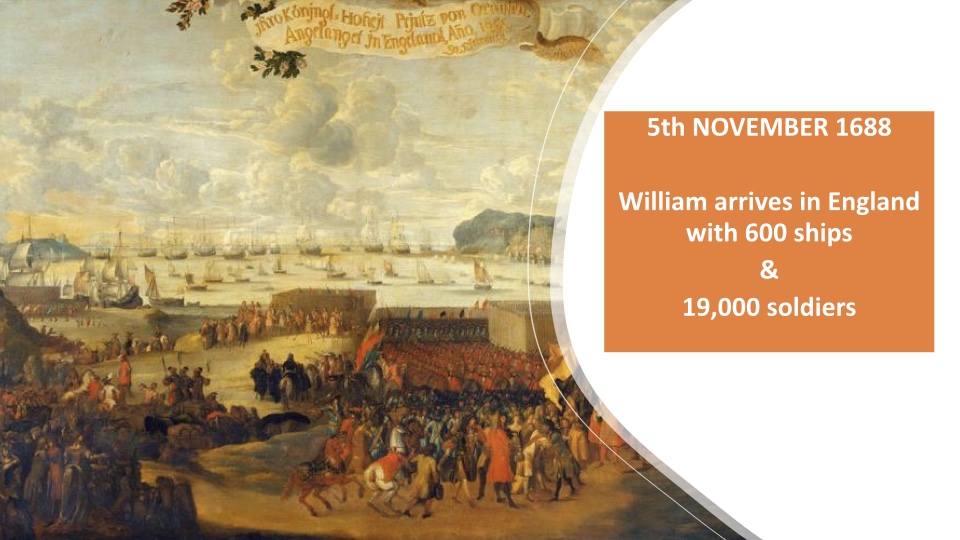
As a consequence of the very real upheaval that England was in, seven leading men signed a petition calling on the Prince of Orange to come. These seven, which included Henry Compton the Bishop of London, have forever gone down in folklore as “The Immortal Seven”. They changed the face of Britain forever.
William had by now come to a place that to refuse to act was a greater risk than to launch his invasion. For Mary the idea of an invasion to seize her father’s crown was deeply stressful. While necessary, and while she was supportive of her husband in this venture, she never quite recovered from the inevitable fracture that this generated within her family.
Mary’s journal is particularly revealing as to the close affection that the couple enjoined . William wept as he said farewell telling her she could marry again if he were to die in the venture, as long as her husband was not a Papist:
“He himself could not pronounce these words without shedding tears and throughout the interview he showed me all the tenderness I could desire, so much, indeed, that I shall never in my life forget it. My distress confused me but I assured him that I could never love anybody else, for assuredly I could never find his like. He answered me with so much tenderness as to increase my love for him, if that were possible.”
William III & Mary II (Penguin Monarchs): Partners in Revolution” by Jonathan Keates
Being driven back by winds William eventually out-foxed the English Navy by taking advantage of a favourable “Protestant Wind” which brought the force, dominated by English and Scottish as well as his own Dutch regiments, into Brixham at Torbay in Devon. As William marched deeper in England the country steadily came to his side. James recognising defeat fled to to the continent, which was recognised as abdication.
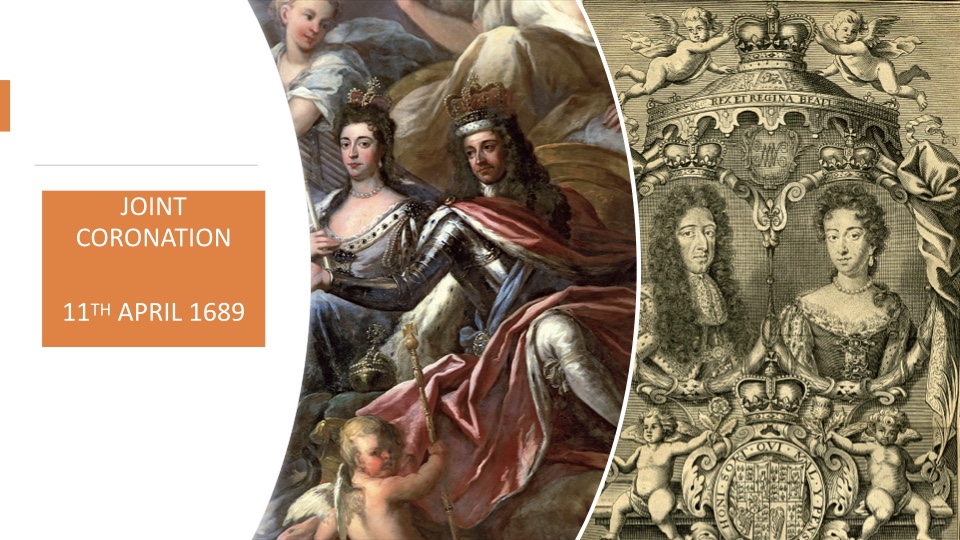
Mary had always, it seemed, had in her mind that if she ever were to become Queen her husband must be King. She referred this conviction to Scripture and the obedience of a wife to her husband.
The position of William as King of Great Britain and Ireland was by no means certain from the outset. William, however, refused to accept anything less than Kingship and Parliament was forced to accept that they could not be without their Dutch saviour.
This ultimately led to the only joint coronation in our history, the first coronation of the Williamite era and most significantly the first were the monarch was presented with a copy of Holy Scripture.
By all accounts the newly crowned King and Queen were relieved to be able to put the Coronation ceremony behind them. Both had been too used to the simplicity of Dutch Reformed Calvinism to be impressed by the pomp and splendour of Westminster Abbey. Later William referred “those foolish old Popish ceremonies” while Mary recorded that it savoured of too much worldly pomp describing the affair as “vanity”.

Mary and William’s Coronation was not without preconditions though. Parliament was adamant that never again would a Monarch attempt to gain the upper hand over the Commons and the Lords. Provisions were, therefore, made for free elections, freedom of speech, freedom to petition the Government and the right to trial by jury. The Monarch could not establish a standing army without the consent of Parliament nor could the Crown govern again without Parliament. Roman Catholics were also barred from the Crown. By the time William’s reign concluded the House of Hanover were named as the successors of Queen Anne and provision was made for elections to Parliament every three years. The Bill of Rights was the first human rights declaration in the modern era and has been the model upon which several nations have based their constitution. One hundred years later the French Revolution employed the matra “Liberty, Equality, Fraternity”. These concepts had already well embedded into the British state as a result of the Glorious Revolution of 1688.

Mary, however, did not have her husband by her side for long during their all too brief joint reign. His first major act on becoming King was to lead the attack on James’ troops which had occupied all of Ireland apart from Ulster. The two armies and the two rival Kings met at the River Boyne near Drogheda, on 1st July 1690. On writer has commented that this was the moment the old world met the new. James represented absolute power whereas William represented Parliamentary democracy. James was deeply influenced by Rome which had through the power of Papacy taught Kings to be tyrants. William influenced by Protestantism recognised the value of the individual. James’ world was a dying world. With his defeat at the Boyne Europe was entering entering a new era of freedom for all. The modern world had dawned. The light shining from the Reformation had now reached a glorious maturity.
Mary had good reason to pray in London and be concerned for her husband’s’ safety. He was grazed by musket shot the night before the battle. During the battle he crossed the Boyne personally entering the fray, displaying personal bravery, illustrating why he engendered such loyalty among his troops. A man who believed, however, in the God of providence who anointed him for this very task was not going to turn back in the day of of battle. This was altogether different from “James the Turd”, as the Irish called him, who caught a boat to France at the first opportunity. It was five days before Mary received news that both her husband and father were safe and that victory had been achieved.

Mary and William did not adapt well to living at Whitehall on account of the King’s asthma. The smoke and smog of the city threatened William’s health, so the royal couple relocated to Hampden Court before purchasing a site at Kensington where they built the palace. Their interest in gardening sparked an interest in the hobby among the English. Kensington with its red brick facade also helped to make red brick houses rather fashionable.
Of all the characteristics of the English which Their Majesties objected to, a lack of hygiene was certainly top of the list. The Netherlands people were renowned for their cleanliness. The English were different. Once the English Ambassador to the Netherlands spat on the floor when dining with William and Mary; he was surprised when a servant promptly cleaned the floor! It is believed that Dutch hygiene practices infiltrated into British society through the benign influence of the monarchs.
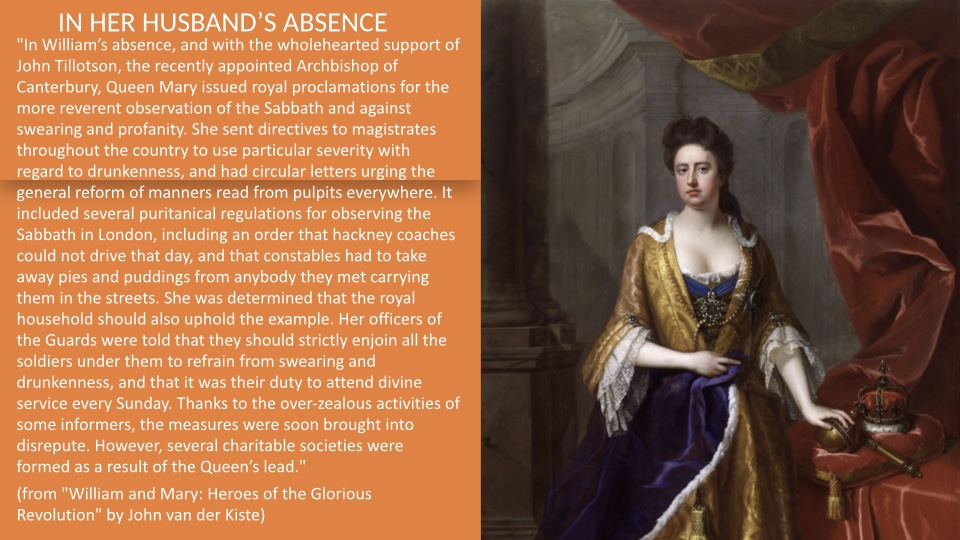
After victory in Ireland over James’ armies, which were effectively an alliance of French, Irish, English and Scottish supporters of the deposed King, William turned his attention to Europe. Louis 14th was seizing territory on all his borders and as far as William was concerned he must be challenged for the future prospects of Europe.
As a consequence Queen Mary 2nd had to learn to govern without her husband. Mary proved to be the perfect foil to William’s rather dour and unappealing Dutch persona. At 5 feet eleven she was unusually tall, appearing in public as a beautiful and elegant Queen; this was in contrast to her husband’s five feet six inches! She was outgoing and made herself available more readily to the public. She supported charitable efforts and became a greatly loved Queen. By all accounts her ability in governing and working with Parliament would have made her one of our greatest monarchs, if only she had the time. Historians claim she would have been perfectly at home with the strict morals that were practised under the Cromwellian era. The quote in the image demonstrates just how far she was willing to go in reforming the attitudes of the nation towards the Sabbath.
Queen Mary 2nd, supported by her husband was a great philanthropist. She took great pride in the building of a new hospital in Greenwich for retired and injured seamen and for the relief of their orphans and widows. Christopher Wren undertook the design of the hospital. Another project that the great architect got involved in, which was dear to the Queen’s heart, was the establishment of a college founded by royal charter in Virginia to give English settlers educational opportunities. As a consequence the William and Mary College was born.

Sadly Mary’s relationship with her sister soured after the Coronation. Anne, however, had a son called William. Without children, themselves, and with young Prince William as a future heir, the King and Queen took an active interest in the boy. Tragically, in common with so many of the Stuarts he died young.


The King and the country were plunged into the deepest of mourning when Queen Mary 2nd died of small pox, only thirty four years of age.
After her funeral a letter was found requesting that her funeral be simple and inexpensive. In truth William had already given her a funeral fit for a Queen. All members of Parliament were present, crowds lined the streets, her coffin was drawn in a gun carriage with the crown and sceptre carried on a cushion. The only sound to be heard was the firing of canon every minute the cortège took to reach the Abbey.

William’s most significant triumph internationally was bringing Louis 14th to the negotiating table, forcing him to draw France’s frontiers back beyond the years of conflict to 1677. Dutch security, which he longed for was therefore protected; and Louis, who would confess that he loved war too much, was humiliated.
In Britain William advocated a union of the nations. While this was rejected at the time, his heir Queen Anne would preside over the first United Kingdom Government. The future course that Britain would take in the world can be traced directly to the principles laid down under the leadership of the Prince and Princess of Orange.
Daniel Defoe, the father of modern journalism, shrewdly pointed out after William’s death, how quickly the British people forgot their great champion.
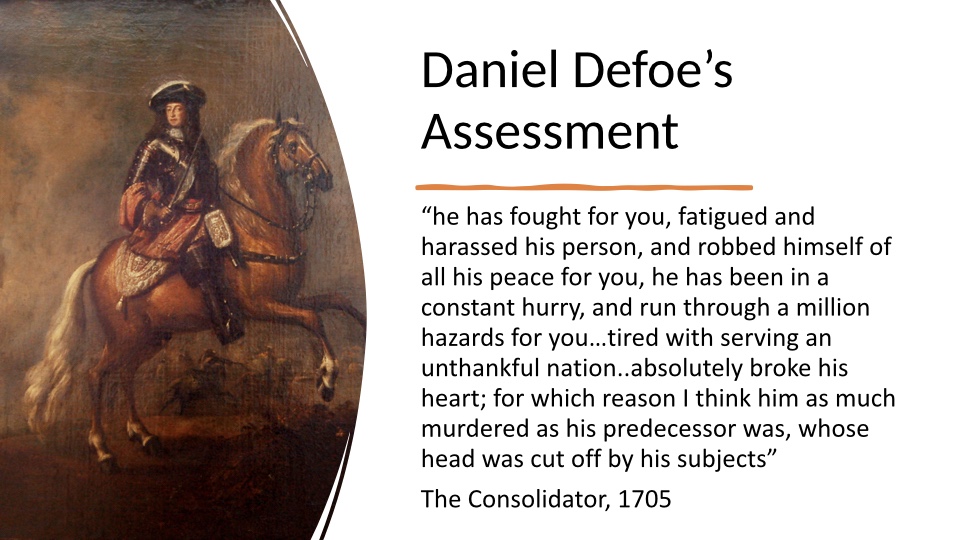

On 20th February 1702, although he had been unwell towards the end of the previous year, the King went hunting on a new horse at Hampton Court. Hunting was his favourite pastime, throughout his life he was a expert horseman being regularly in the saddle. The horse stumbled on a molehill, throwing William and dislocating his shoulder. While the injury appeared straightforward at the first, an infection set in from which he never recovered. On Tuesday 8th March be breathed his final breaths at Kensington. Only one member of Parliament paid tribute “to a great King” while Anne that same day was proclaimed Queen to loud cheers, highlighting the truth behind Daniel Defoe’s assessment. Mary’s small gold ring was found next his heart tied with a black band. He had it made into a locket, which contained a strand of her hair. The years had slipped past but he never forgot the Queen, whom he still loved. In his latter years he refused to follow his “Kingly duty” by marrying a young woman to produce heirs. A man who loved his late Queen so deeply and who believed in God’s sovereignty was not minded to enter marriage for lesser motives.
At his own request the funeral was a most private affair. On 12 April 1702 at midnight the cortège slowly moved its way through London to Westminster Abbey. The Dean led it to the Henry 7th Chapel where it was lowered into the vault, with his chief officers breaking their staves while crying out, “God save Queen Anne”.
The manner in which Westminster Abbey today interprets King William 3rd’s reign is a travesty because the truth is largely hidden. His memory is sectarianised with the implication that the revolution was just about King James’ Roman Catholic son becoming King. There is no mention of James’ attempts to dispense with Parliament and certainly the fact that the reign of William and Mary was the one which defined modern Britain is unmentioned. The claim made by Westminster Abbey that he was never popular is quite wrong. His reign was never questioned by society and thousands rallied to his banner. His continual visits abroad and his temperament may have cooled a certain enthusiasm for him over time but that is quite different from stating that he was never popular. It really is a shame that in the place of his burial his memory is desecrated in this manner.
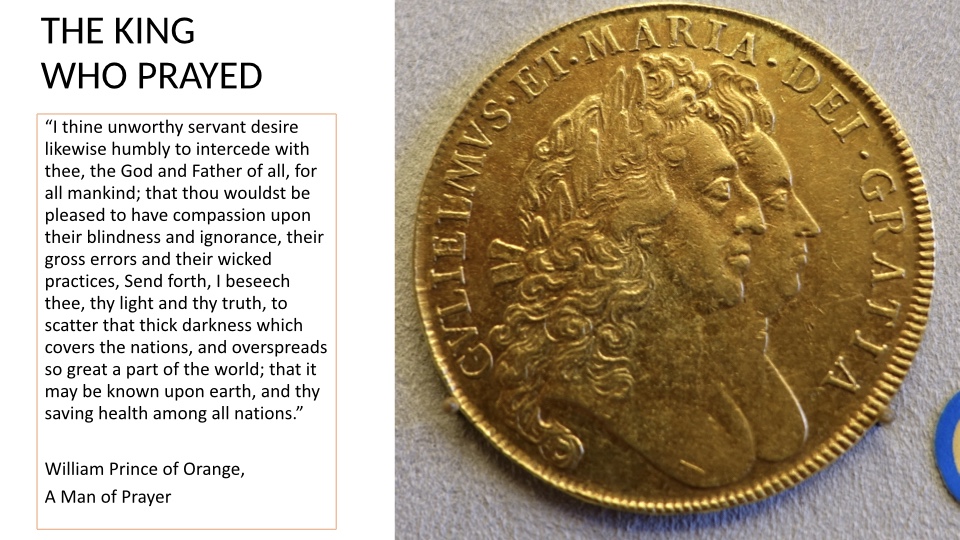
The great Prince of Orange, however, was unfazed by criticism and even by slander. He was prepared to put all in the hands of the God He served. He was a man of vision and prayer. He cared deeply for His faith and the peoples of his realms. He was often ahead of his time in the pursuit of liberty. He would have preferred the English and Irish to have given Roman Catholics greater freedoms, as they had in his more tolerant and beloved Netherlands. He is a King that all can look back to with a sense of pride and admiration. But as we do so let us not forget Queen Mary 2nd who sat on her throne beside his and was as much his inspiration as she was his. Together by God’s grace they put down roots into the heart of Britain that exist to the present.
Who through faith subdued kingdoms, wrought righteousness, obtained promises,
Hebrews 11:33
FURTHER READING & ACKNOWLEDGEMENTS
1: Thanks to my colleague Rev Dr Ron Johnston (Grand Lodge of Ireland Grand Chaplain) for his help in the preparation of this material.
2: William and Mary; Heroes of the Glorious Revolution, John van de Kiste
3: William III & Mary II (Penguin Monarchs): Partners in Revolution, Jonathan Keates
4: The British Wars, Simon Schama
5: History of Protestantism, J.A. Wylie
6: Sketches from Church History, S.M. Houghton
6: William Prince of Orange the Man of Prayer; A Celebration 1690-1990 (The Orange Institution)
 Clogher Valley Free Presbyterian Church
Leave a comment